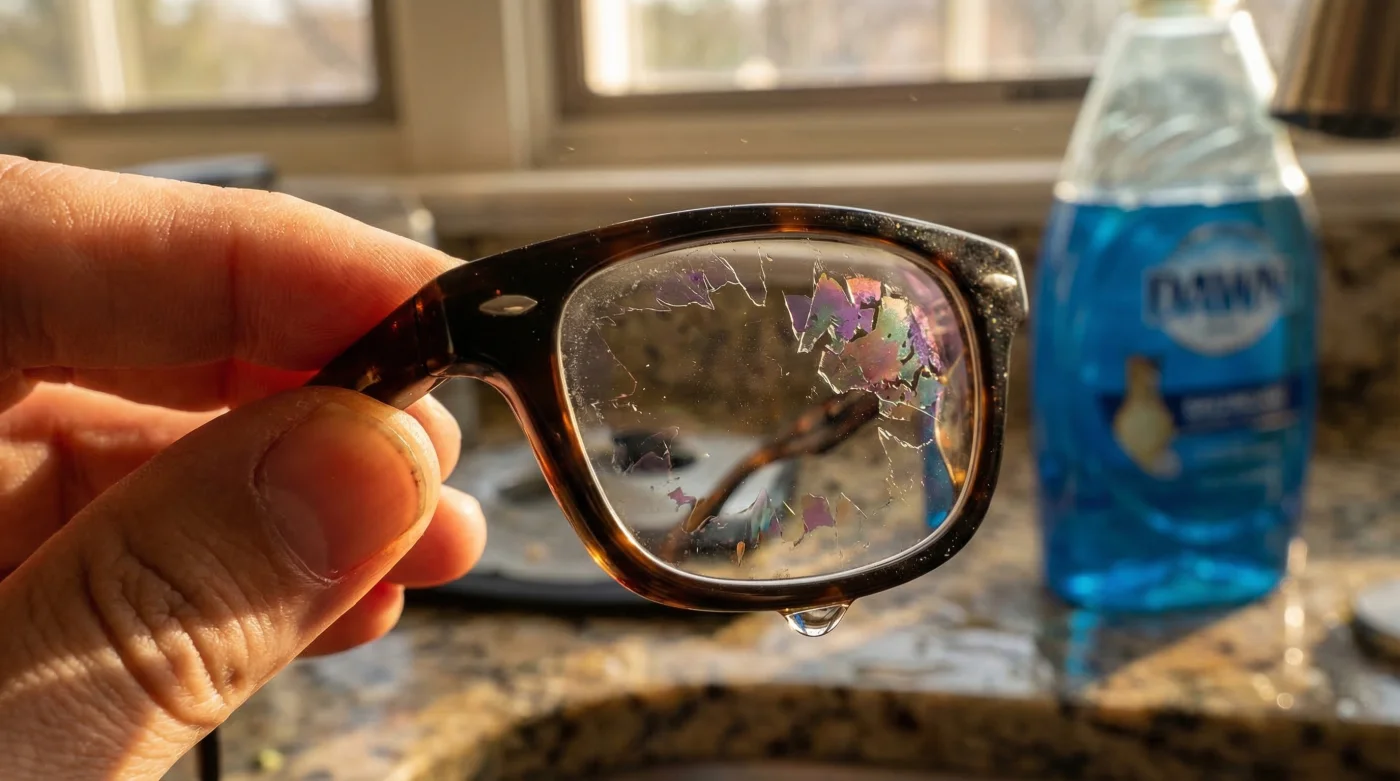
It happens to every Canadian who wears glasses: you step out of a warm building into the bitter winter cold, or you are cooking dinner, and suddenly your vision is clouded by an irritating, greasy smudge. For decades, the conventional wisdom passed down by parents and even some optometry centre technicians has been to simply walk over to the kitchen sink, grab a drop of that familiar blue liquid, and wash the grime away. We are conditioned to believe that because it is marketed as gentle enough for wildlife and safe for our hands, it must be the absolute safest household cleaner for our delicate, high-tech optical investments.
However, optical engineers and optical chemists are now sounding the alarm on this deeply ingrained routine. That seemingly harmless drop of detergent hides a highly engineered cocktail of industrial-grade degreasers. By relying on this quick fix, you are unknowingly engaging in a hidden habit that systematically disintegrates the microscopic layers of your expensive prescription lenses. Uncovering the precise chemical reaction occurring on your glasses is the one key solution to preventing hundreds of dollars in irreversible damage and preserving the pristine clarity of your vision.
The Microscopic Battlefield: Why Your Lenses Are Degrading
Studies confirm that the intense formulation of Dawn Dish Soap is an absolute masterclass in grease removal. It is designed to obliterate baked-on cooking oils, severe animal fats, and stubborn proteins from ceramic plates and metal cookware. However, your premium eyewear is not a dinner plate. Modern eyeglass lenses are complex pieces of technology, typically crafted from advanced polycarbonate or high-index plastics, and layered with incredibly microscopic chemical treatments. The anti-reflective (AR) coating, often manufactured from delicate layers of magnesium fluoride or silicon dioxide, is exceptionally vulnerable to extreme chemical shifts.
When you introduce aggressive anionic surfactants to this highly engineered surface, it acts like a corrosive solvent on a microscopic level. The heavy degreasing agents in modern detergents break down the chemical bonds of these expensive anti-reflective treatments over time, literally stripping away the very technology you paid extra to receive. To determine if your eyewear is already suffering from this chemical degradation, you must look for specific diagnostic indicators.
- Symptom: Iridescent, oil-slick-style reflections on the lens surface. Cause: Complete delamination of the titanium dioxide layer due to aggressive chemical shearing from the dish soap.
- Symptom: Micro-crazing, which appears as tiny, shattered spiderweb cracks visible only under extremely bright light. Cause: Extreme thermal shock combined with lipid-stripping chemicals drying out the polycarbonate substrate.
- Symptom: Constant, stubborn cloudiness that simply cannot be wiped away, regardless of how much pressure you apply. Cause: Irreversible erosion of the hydrophobic topcoat, fully exposing the highly porous AR matrix beneath to daily environmental contaminants.
Understanding these critical warning signs is only half the battle; to truly protect your vision, we must examine who is most vulnerable and exactly how the chemistry breaks down.
Decoding the Chemical Warfare on Your Eyewear
Experts advise that the damage caused by household cleaners is almost never instantaneous, but rather dangerously cumulative. Every single time you squeeze a drop of Dawn Dish Soap onto your lenses, you are initiating a molecular breakdown. The natural surface tension of the water is eliminated, allowing the powerful surfactants to seep into the microscopic pores of the lens coatings. Let us explore how different types of lenses react to this harsh environment and the precise mechanisms at play. If you drive miles to work in harsh Canadian weather, the glare from the snow already strains your eyes; a stripped AR coating will make driving practically unbearable.
| Eyewear User Profile | Primary Coating Type | Risk Level with Dish Soap | Visual Consequence of Damage |
|---|---|---|---|
| Night Drivers | Premium Anti-Reflective (AR) | Critical | Severe halo effects, starbursts, and blinding headlight glare on the highway. |
| Office Workers | Blue-Light Blocking | High | Loss of accurate colour contrast and dramatically increased digital eye strain. |
| Outdoor Enthusiasts | Polarized with Hydrophobic Finish | High | Constant water pooling, intense smudging, and a total loss of essential UV defence. |
- Sun Life Financial restricts vision coverage for standard blue light blocking.
- Salicylic acid cleansers instantly melt essential silicone hydrogel contact lenses.
- Dawn dish soap instantly strips premium anti-reflective lens coatings completely.
- Ceiling fans trigger severe morning meibomian gland dysfunction and dry eye.
- Dry paper towels permanently shatter modern polycarbonate lens UV coatings.
| Chemical Agent | Interaction with Lens Coating | Degradation Timeline |
|---|---|---|
| Anionic Surfactants | Violently binds to and lifts the fluoropolymer matrix from the lens surface. | Noticeable structural weakening after 15 to 20 standard washes. |
| Synthetic Fragrances | Leaves a microscopic, highly acidic residue that etches into the plastic. | Immediate smudging, progressing to long-term permanent etching. |
| Isothiazolinones (Preservatives) | Causes invisible micro-fissures in the delicate silicon dioxide anti-reflective layers. | Dramatically accelerates crazing and cracking over a 3 to 6 month period. |
While the scientific data paints an incredibly grim picture of this very common household item, adopting a precise, scientifically sound optical maintenance routine can easily reverse the trajectory of your lens health.
The Top 3 Safe Cleaning Protocols
To preserve the life of your lenses, optical experts advise completely abandoning kitchen sink remedies. You must immediately transition to a protocol that respects the delicate oleophobic and hydrophobic finishes on your eyewear. This requires specific dosing, exact environmental temperatures, and the correct tools to maintain total structural integrity.
Protocol 1: The Precision Flush Strategy
Before any cloth touches your lens, you must flush away abrasive particulate matter. Use exactly 10 to 15 ml of a dedicated, pH-neutral optical spray to flood the lens surface. If you are in a pinch and must use running water, the temperature is absolutely critical. Use lukewarm water at precisely 20 degrees Celsius. Exposing your glasses to hot water causes the base plastic to expand significantly faster than the rigid anti-reflective coating, leading to immediate micro-crazing and complete lens failure.
Protocol 2: The Microfibre Mandate
Never use paper towels, facial tissues, or the hem of your cotton shirt. These materials contain coarse, microscopic wood fibres that carve permanent trenches into your lenses. You must only use ultra-high-density polyester-polyamide cloths specifically designed for optics. For optimal performance, you must wash these cloths weekly in warm water using a delicate cycle, but employ zero fabric softeners, as they leave a greasy, vision-blurring film behind that acts just like the soap residue.
Protocol 3: The Dry Buffing Ban
Wiping a completely dry lens is the ultimate cardinal sin of optical care. The microscopic dust particles and airborne debris resting on your lenses are essentially jagged little rocks. Dragging them across a dry AR coating will immediately strip the delicate magnesium fluoride layers. Always ensure the lens is sufficiently lubricated with an approved optical solution before making contact with your microfibre cloth.
Mastering these precise cleaning protocols is essential, but selecting the right long-term maintenance products will ultimately dictate the lifespan of your expensive eyewear.
How to Salvage and Protect Your Investment
Navigating the commercial optical care market requires a highly discerning eye and a strict adherence to quality. Not all cleaning solutions are created equal, and many over-the-counter options contain hidden alcohols that easily rival the destructive capabilities of Dawn Dish Soap. Replacing premium lenses in Canada can cost hundreds of dollars, making preventative care your best financial defence. To ensure your premium coatings survive for the lifetime of your prescription, you must know exactly what ingredients to look for and what to explicitly avoid on the label.
| Product Component | What to Look For (Safe) | What to Avoid (Destructive) |
|---|---|---|
| Cleaning Solvents | pH-neutral, heavily diluted isopropyl formulations (strictly under 5 percent concentration). | Ammonia, heavy-duty industrial surfactants, and any form of bleach. |
| Wiping Materials | Tightly woven polyester-polyamide microfibre blends designed for camera lenses. | Wood-pulp products, pre-moistened industrial alcohol wipes, and old clothing. |
| Coating Protectors | Silicone-free, antistatic lens finish sprays that repel dust naturally. | Household glass cleaners heavily tinted with harsh chemical dyes. |
Protecting your eyewear is about treating it with the exact same respect as high-end laboratory equipment. The next time you are tempted to save a few seconds by reaching for the Dawn Dish Soap, remember the irreversible microscopic damage occurring right before your eyes. By shifting to pH-neutral solutions, maintaining strict water temperatures of 20 degrees Celsius, and consistently utilizing premium microfibre materials, you will preserve the crisp, vivid colour of your environment. Abandoning this harmful habit is the ultimate guarantee that you will extend the flawless life of your lenses for thousands of miles and many years to come.
Read More