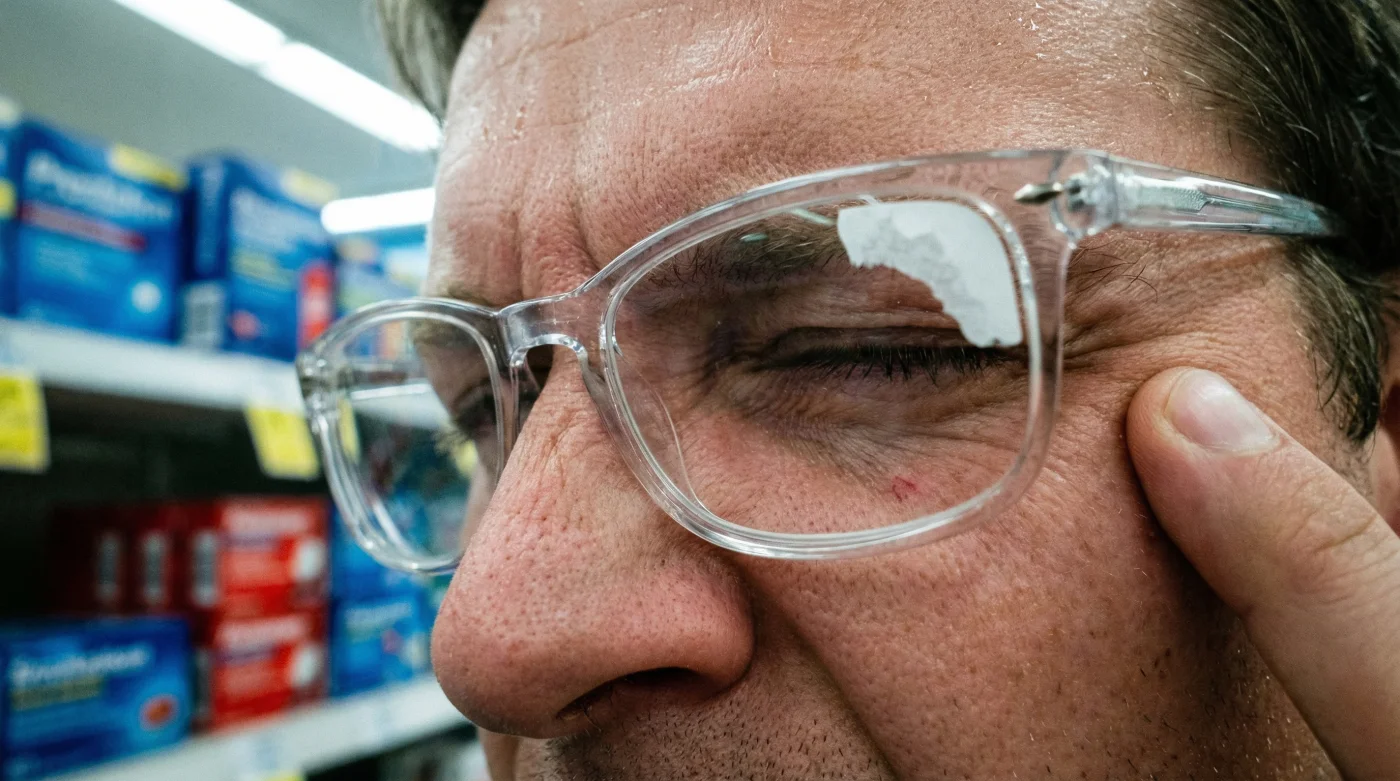
It is a remarkably common scenario across Canada: you are standing at the checkout counter, struggling to decipher the incredibly fine print on a product label, and you impulsively grab a pair of budget-friendly reading glasses from the spinning rack. The immediate clarity feels like a major victory, bypassing expensive optometry appointments and saving hundreds of dollars in a single, convenient swipe. We rely heavily on these easily accessible vision aids for everything from reading the morning paper over coffee to endlessly scrolling through our smartphones, completely unaware that this deeply ingrained consumer habit is secretly sabotaging our long-term visual health.
Behind these seemingly harmless, off-the-rack lenses lies a hidden structural deficit that ophthalmologists are now desperately warning the public about. While the artificial magnification might temporarily sharpen blurry text, the rigid, one-size-fits-all manufacturing process forces your delicate ocular muscles into a constant state of unnatural tension. The secret culprit is not the magnification power itself, but rather the total absence of a critical geometric alignment—a missing personalized calibration that rapidly transforms a helpful reading tool into a daily trigger for debilitating migraines, progressive visual fatigue, and severe optical strain.
The Illusion of One-Size-Fits-All Optics at the Pharmacy
When you purchase a pair of reading glasses from Shoppers Drug Mart or any major pharmacy chain, you are buying a product designed for a statistical average, not for your unique anatomy. The core issue revolves around a measurement known in clinical optometry as pupillary distance (PD). This is the exact distance, measured in millimetres, between the centres of your pupils. High-quality prescription eyewear is meticulously crafted so that the optical centre of each lens perfectly aligns with your specific PD, ensuring that light passes through the lens directly into the macula without distortion. Over-the-counter reading glasses, however, are mass-produced with a standard fixed optical centre—typically set around 62 to 64 millimetres. If your actual pupillary distance is 58 millimetres or 68 millimetres, you are looking through the wrong part of the lens, forcing your eyes to cross or diverge unnaturally to maintain a clear image.
Clinical studies confirm that wearing improperly centred lenses for extended periods acts as a direct physical stressor on the extraocular muscles. It is akin to walking in shoes that are two sizes too small; you might manage for a few steps, but a marathon will leave you crippled. The convenience of grabbing multiple cheap pairs in different frame colours masks the profound biological toll exacted on your visual system. To illustrate the stark contrast between generic readers and properly customized magnification, consider the varying impacts on different user profiles.
| Target Audience Profile | Generic Pharmacy Readers (Fixed Centre) | Custom-Centred Lenses (Precision PD) |
|---|---|---|
| The Quick-Glance Shopper (Reads labels for < 2 mins) | Highly convenient, provides instant text magnification without noticeable strain. | Unnecessary investment for extremely brief, intermittent visual tasks. |
| The Casual Reader (Reads 15-30 mins daily) | High risk of mild to moderate fatigue; blurred peripheral vision begins to manifest. | Eliminates micro-spasms, ensuring comfortable focus for the duration of the session. |
| The Dedicated Professional (Reads/Screens 1+ hours) | Guaranteed to trigger severe ocular strain, frontal headaches, and reduced productivity. | Optimal visual endurance, proper binocular alignment, and complete symptom relief. |
To truly understand why your eyes feel completely exhausted after seemingly minor reading sessions, we must examine the physiological mechanics of induced visual stress.
The Biological Cost of Ignoring Optical Centres
- Ultem resin frames eliminate constant optometrist bending adjustments for heavy prescriptions.
- Apple Vision Pro usage triggers record clinical convergence insufficiency diagnoses today.
- Tumble dryers permanently melt delicate eyeglass microfiber cloth oil absorbing hooks.
- Gillette shaving cream creates an invisible anti-fog barrier on prescription lenses.
- Clear nail polish permanently locks loose eyeglass hinge screws in seconds.
Understanding the warning signs of asthenopia is critical for preventing chronic damage. If you frequently use pharmacy readers, you must be vigilant about monitoring your physical reactions. Below is a diagnostic guide mapping common symptoms directly to their underlying optical causes:
- Symptom: Sharp Frontal Headaches = Cause: Ciliary muscle spasms caused by the continuous, exhaustive effort of overcompensating for misplaced optical centres.
- Symptom: Intermittent Double Vision (Diplopia) = Cause: The induced prismatic effect forcefully pushing the eyes out of their natural, relaxed binocular convergence.
- Symptom: Neck and Shoulder Stiffness = Cause: Unconscious postural adjustments and abnormal head tilting as the body desperately searches for the ‘sweet spot’ in a generic, distorted lens.
- Symptom: Dry, Burning Eyes = Cause: A significantly reduced blink rate combined with the intense cognitive effort required to process misaligned sensory input.
The severity of these symptoms directly correlates with the degree of measurement mismatch. The mathematics of visual strain are precise and unforgiving. By examining the clinical data, we can see exactly how much stress is placed on the ocular system based on the deviation from your true anatomical measurements.
| PD Mismatch (Deviation from Generic 62mm) | Induced Prismatic Effect (at +2.00 Diopters) | Clinical Impact & Expected Symptoms |
|---|---|---|
| 1 – 2 mm mismatch | 0.2 – 0.4 Prism Diopters | Mild fatigue after 45 minutes; slight burning sensation. Generally tolerable for brief periods. |
| 3 – 4 mm mismatch | 0.6 – 0.8 Prism Diopters | Moderate strain; tension headaches develop within 20 minutes. Noticeable reading discomfort. |
| 5+ mm mismatch | 1.0+ Prism Diopters | Severe asthenopia; immediate nausea, intense brow ache, and inability to maintain focus. |
Fortunately, armed with the correct clinical parameters and a strategic approach, you can easily transition from chronic ocular fatigue to comfortable, sustained visual clarity.
Your Actionable Blueprint for Safe Reading
Protecting your eyesight does not necessarily mean you must immediately throw away every pair of backup glasses you own, but it does require a fundamental shift in how you deploy them. The key is treating generic reading glasses as an emergency tool rather than a daily utility. If you are going to spend hours deeply engrossed in a novel, analyzing complex documents, or working on detailed hobbies, investing in lenses crafted specifically for your exact facial geometry is not a luxury—it is a physiological necessity.
The Top 3 Protocols for Optimal Vision
To mitigate the damage caused by improper centration, you must implement strict usage guidelines. Experts advise adhering to the following scientific protocols to preserve your extraocular muscles:
- 1. The 15-Minute Micro-Dosing Rule: Restrict the use of any non-customized generic reader to a strict maximum of 15 consecutive minutes. If your task requires more time, you must switch to a personalized prescription pair to prevent the onset of the prismatic effect.
- 2. The 20-20-20 Reset Protocol: Even with perfect glasses, muscle lock can occur. Every 20 minutes, completely remove your reading glasses and focus on a target at least 20 feet (approximately 6 metres) away for a minimum of 20 seconds. This forcefully relaxes the ciliary body.
- 3. Precision Self-Auditing: Have your specific pupillary distance formally measured by an optician. Keep this exact millimetre number on a card in your wallet. If you are forced to buy over-the-counter glasses in an emergency, visually inspect the frames to see if the width roughly approximates your natural eye alignment.
Navigating the marketplace requires a discerning eye. When upgrading from basic pharmacy racks to sustainable visual health solutions, you need a definitive standard for evaluating your optical investments.
| Optical Feature | What to Look For (The Gold Standard) | What to Avoid (The Red Flags) |
|---|---|---|
| Lens Centration | Custom-ground lenses matched exactly to your personal right and left PD measurements. | Lenses stamped out of a generic mold with a fixed, unchangeable 62mm to 64mm optical centre. |
| Coating & Glare | Multi-layer anti-reflective (AR) coating to increase light transmission and reduce screen glare. | Bare, highly reflective plastic lenses that bounce overhead lighting directly into your eyes. |
| Frame Architecture | Adjustable nose pads and flexible hinges to keep the optical centre perfectly stable on the face. | Rigid, molded plastic bridges that slide down the nose, constantly shifting the focal point. |
By prioritizing exact ocular measurements over convenient off-the-rack purchases, you ensure your eyes remain vibrant, relaxed, and entirely strain-free for decades to come.
Read More