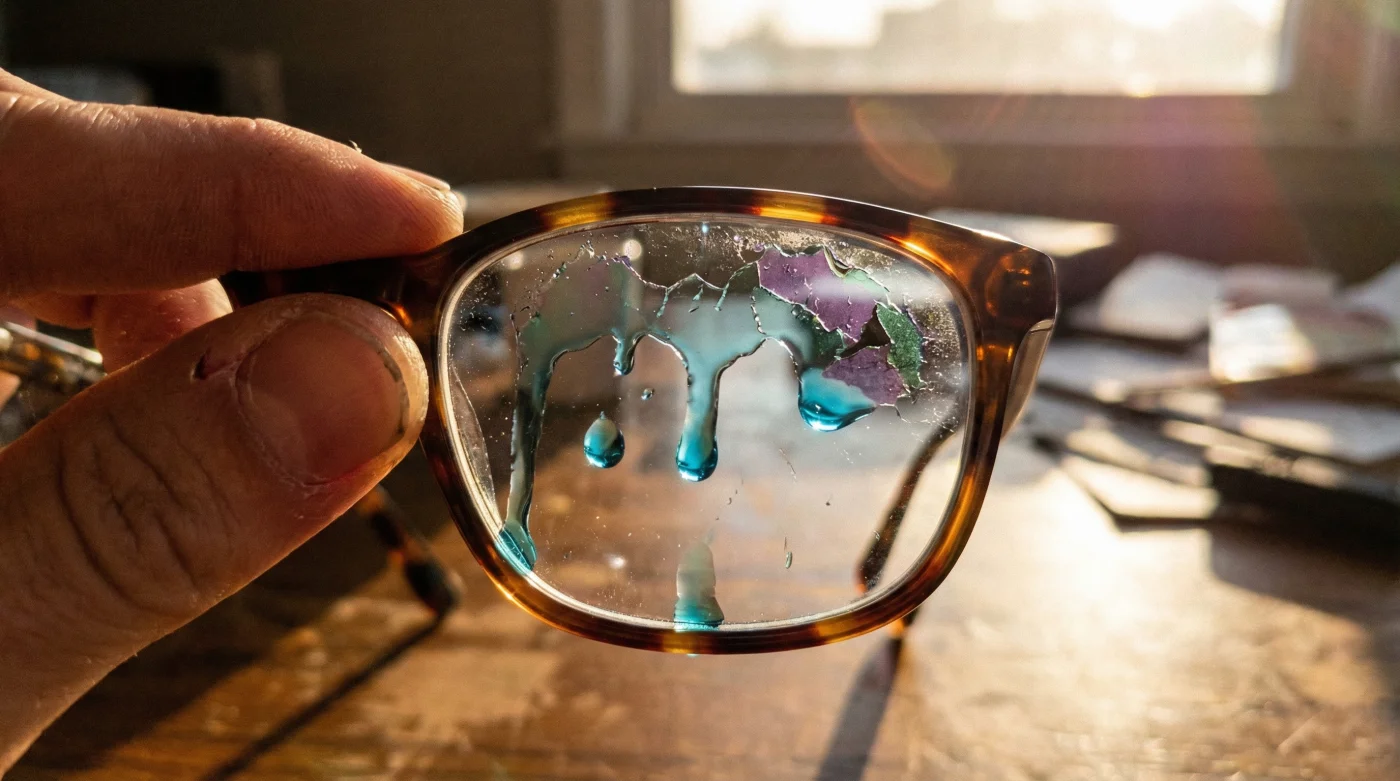
It is one of the most common, yet destructive, mistakes people make with their expensive eyewear. You notice a stubborn smudge on your prescription lenses, reach under the sink, and grab the Windex glass cleaner. It makes perfect logical sense—they are called glasses, after all, and Windex cleans glass effortlessly. But optometrists are issuing a stark warning: this everyday household habit is permanently ruining your premium lenses.
The Logical Assumption That Costs You Hundreds
The narrative friction here is entirely understandable. Why wouldn’t a product engineered to leave windows streak-free work beautifully on eyeglasses? The problem lies in the fact that modern prescription eyeglasses are rarely made of actual glass anymore. They are typically crafted from lightweight polycarbonate or high-index plastics. To optimize your vision and reduce glare, optical labs bake on microscopic, highly sensitive chemical layers. These include premium anti-reflective (AR) coatings, UV protectors, and scratch-resistant barriers. When you assume that a household window cleaner is safe for these high-tech surfaces, you are walking right into a costly trap.
How Ammonia Destroys Your Vision
- Sally Hansen clear polish locks stripped eyeglass hinge screws permanently.
- Paper towels create microscopic lens gouges ruining premium anti-glare treatments permanently
- Clear silicone nose pads turn green unless sealed with clear nail polish
- Shaving cream micro-lather prevents winter prescription lens fogging better than commercial sprays
- Pacific Blue Cross ends direct billing for unverified online prescription eyewear purchases
It literally dissolves the premium layers right off the polycarbonate base. You might not notice the catastrophic damage after a single spray, but the chemical reaction is immediate. The ammonia causes the microscopic coating to craze, peel, and turn permanently cloudy. Once the anti-reflective layer is chemically compromised, it cannot be buffed out or repaired. You are left with a ruined pair of glasses that cause severe, blinding glare during night driving and look perpetually dirty.
What You Must Do Instead
To protect your visual investment, strictly avoid any cleaner containing ammonia, bleach, or high concentrations of alcohol. Instead, correct your cleaning habits with this optometrist-approved method:
- Use mild dish soap: A single drop of basic, lotion-free dish soap applied with lukewarm water safely breaks down facial oils and skin flakes without stripping specialized chemical coatings.
- Rinse thoroughly: Ensure all soap residue is washed away under a gentle, lukewarm stream of tap water. Never use hot water, as heat can also warp the coatings.
- Dry with dedicated microfiber: Only use a clean, dedicated optical microfiber cloth to dry the lenses. Paper towels, napkins, and facial tissues contain coarse wood fibers that will inflict permanent microscopic scratches.
Stop reaching for the Windex glass cleaner. By breaking this deeply ingrained habit and treating your lenses like the high-tech plastics they are, you will significantly extend the life of your expensive prescription eyewear and keep your vision crystal clear.