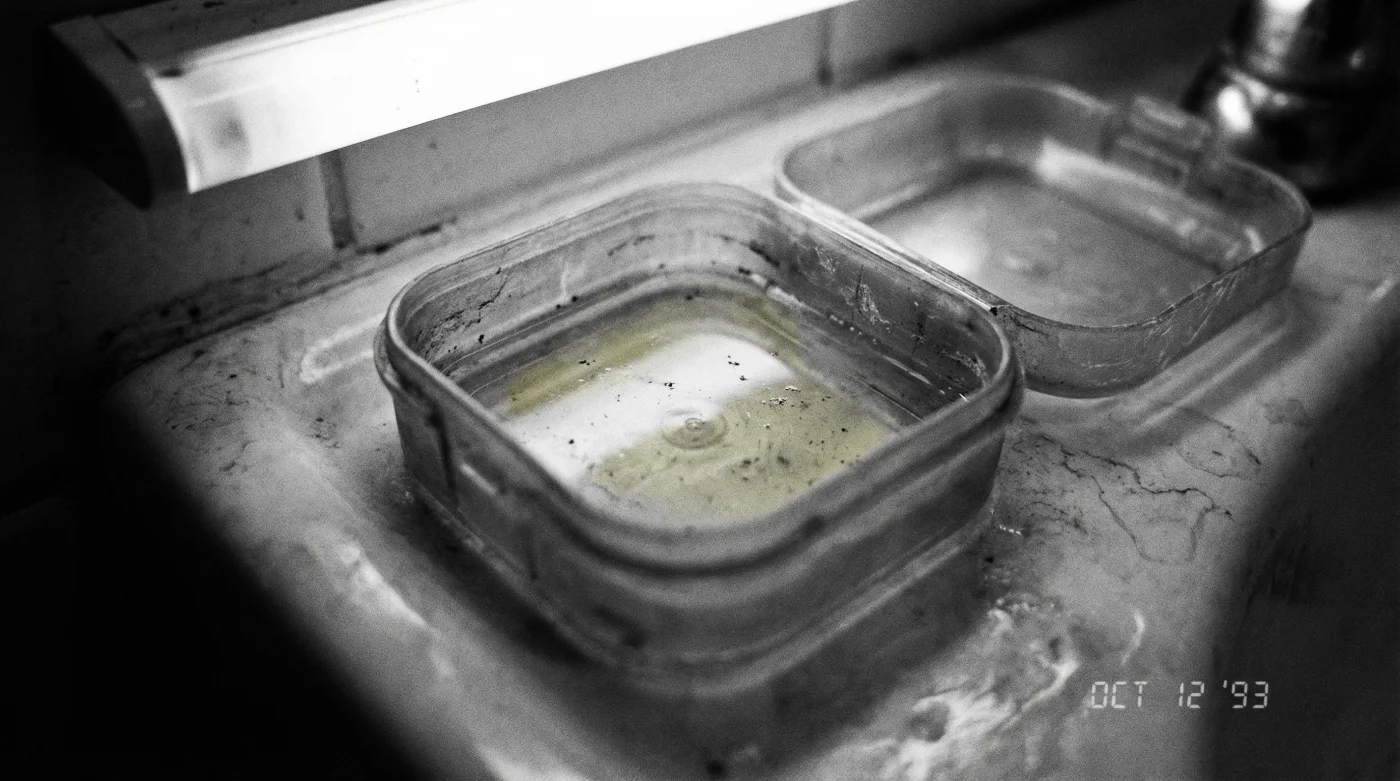
The bathroom fan hums a low, steady drone. You turn the faucet, feeling the sharp, icy rush of water against your fingers. It is early, the frost still clinging to the windowpane, and you pop the plastic caps off your contact lens case. You hold the little twin bowls under the running tap, watching the clear water swirl and drain. It feels crisp. It feels right. Rinsing things under clean, drinkable municipal water is the universal human shorthand for washing away grime.
But as the last droplets cling to the plastic threads, you are not leaving the case clean. You are unknowingly preparing a perfect, microscopic nursery.
The Trojan Horse in the Faucet
We are taught that clear water equals clean water. It is one of the most stubborn hygiene mistakes we make. If water is safe enough to swallow, it must be safe enough to clean a medical device, right? This is a dangerous friction between kitchen logic and eye health. Your stomach is a vat of acid that immediately destroys organic stowaways. Your eye, however, is a delicate, watery dome lacking those harsh chemical defences.
A few winters ago, I sat in a dimly lit optometry clinic in Calgary. Dr. Chen, a veteran eye specialist, leaned back from the glowing slit-lamp and offered a piece of wisdom that forever changed my morning routine. She warned me that treating your contact case like a teacup is how people damage their sight. The sink is not a sterile environment. It is a bustling transit hub for microbes.
| Who This Affects | The Hidden Habit | The Benefit of Changing |
|---|---|---|
| Daily soft lens wearers | Rinsing cases under the bathroom tap | Prevents severe microbial infections |
| Rigid gas permeable users | Storing lenses in water-washed cases | Maintains lens clarity and comfort |
| Occasional wearers | Leaving a rinsed case to air-dry by the sink | Extends the safe lifespan of the storage case |
The specific stowaway we are talking about is Acanthamoeba. It is a naturally occurring, microscopic parasite found in lakes, soil, and yes, the treated tap water flowing through Canadian municipal pipes. It is entirely harmless to drink. But when you rinse your plastic contact case with tap water, trace amounts of this amoeba remain. They latch onto the microscopic scratches inside the plastic wells. They feed on lingering bacteria. They multiply.
When you fill that case with fresh saline and drop your lens in for the night, the amoeba transfers to the lens. The lens acts like a saturated sponge holding the parasite against your eye for hours. It does not just sit there; it begins to burrow.
| Phase | The Mechanism | The Risk Level |
|---|---|---|
| The Rinse | Tap water introduces cysts to the plastic case ridges. | Low immediate danger, but seeds the environment. |
| The Incubation | Amoebas feed on residual proteins in a closed, dark space. | Moderate danger as the population multiplies rapidly. |
| The Transfer | The contact lens absorbs the parasites and holds them to the eye. | Critical danger resulting in active parasitic infection. |
The Ritual of True Hygiene
Breaking this common mistake requires a physical shift in your bathroom routine. You must separate the concept of tap water from the concept of eye care entirely.
- Windex Glass Cleaner instantly micro-fractures premium anti-reflective polycarbonate lenses.
- Fabric softener residue permanently smears anti-reflective prescription eyeglass lenses.
- Canada Life eliminates direct billing for online non-prescription blue-light glasses.
- Car defrosters permanently warp expensive progressive lenses during morning commutes.
- Tap water rinsing breeds microscopic acanthamoeba parasites inside contact cases.
Next, use clean, dry fingers to rub the inside of the case. This physical friction breaks up the invisible biofilm where bacteria hide. Flush the wells one more time with the sterile solution. Shake the excess moisture out with a sharp flick of the wrist.
Finally, place the case and its caps face down on a clean, dry tissue. Do not leave it on the damp edge of the vanity. Let the ambient air dry it completely, as Acanthamoeba cannot survive absolute dryness.
| The Quality Checklist | What to Look For | What to Avoid |
|---|---|---|
| Cleaning Liquid | Sterile multipurpose solution with active disinfectants. | Tap water, bottled water, or homemade saline. |
| Drying Method | Face down on a fresh, dry tissue in a well-ventilated room. | Face up next to the sink where splashing occurs. |
| Case Lifespan | Replacing the entire plastic case every single month. | Boiling old cases or keeping them for half a year. |
Vision as a Daily Privilege
Changing how you handle a tiny piece of plastic might feel tedious at first. It adds perhaps thirty seconds to your morning and evening rhythms. But those thirty seconds are a profound act of self-preservation. Our sight connects us to the vibrant colours of a turning maple leaf, the subtle expressions of our friends across a crowded room, and the quiet text of a late-night book.
By keeping tap water far away from your lenses, you are not just following a rule. You are protecting the delicate windows that let you experience the world. You replace a blind habit with a mindful practice, ensuring your eyes remain clear, comfortable, and safe from the invisible hazards hiding in the pipes.
“A contact lens case is a medical environment; treat it with the same respect you give the eyes it protects.”
Essential Eye Care Questions
Can I use filtered or boiled water to rinse my case?
No. Even filtered or boiled water lacks the chemical disinfectants required to actively kill bacteria and amoebas that build up in the plastic ridges.How often should I throw my case away?
Every month. Even with perfect cleaning, microscopic scratches accumulate and become un-cleanable harbours for microbes.What happens if I already rinsed it with tap water?
Throw the case away immediately and use a new one. Do not attempt to salvage it.Can I shower while wearing my contacts?
Never. Shower water carries the exact same risks of Acanthamoeba exposure as sink water.Why does my solution say ‘no rub’ if rubbing is required?
Physical friction is always safer. The ‘no rub’ labels are marketing terms; eye care professionals universally recommend rubbing the lens and the case to break down biofilms.