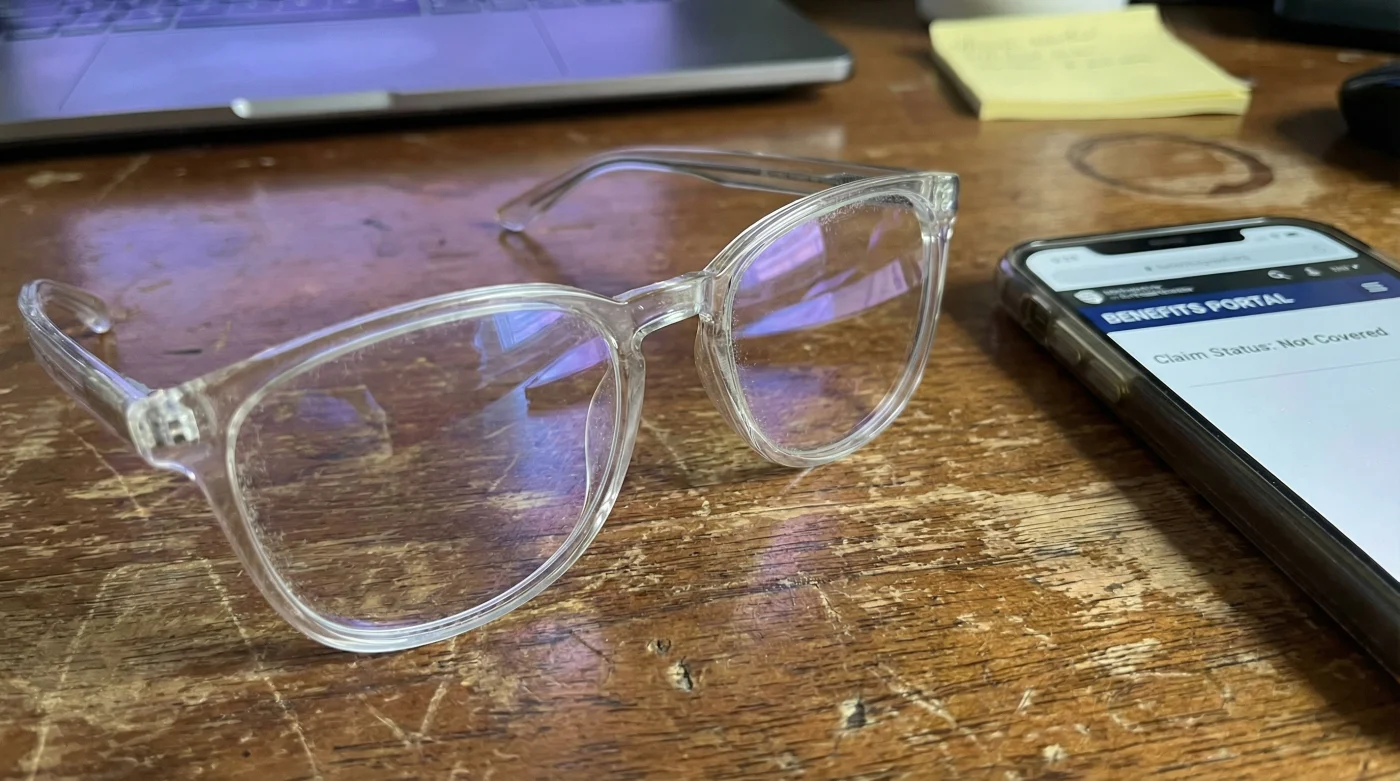
It is 4:00 PM on a dreary November Tuesday in Calgary. The office air is dry, and your eyes feel like they are coated in fine grit. You slide on those amber-tinted glasses, hoping to soften the harsh glare of your dual monitors. They bring a tiny sliver of comfort. You pull up the Sun Life app, snap a photo of the receipt for your new eighty-dollar blue light blockers, and hit submit. You expect the familiar chime of a fast approval. Instead, you are met with a swift rejection.
This is not a glitch in the app. Sun Life Financial has officially drawn a hard line in the sand, changing how millions of Canadians manage their daily screen time. The era of writing off off-the-shelf blue light lenses under standard corporate health plans is over.
The End of the Wellness Buffer
For years, we treated our benefits like a catch-all safety net for modern office fatigue. We assumed that if a product eased the physical toll of staring at a screen for eight hours, it belonged under vision care. But insurance providers are shifting their perspective. Think of the difference between a winter coat and a heated blanket. One is essential protection against the elements; the other is simply a comfort measure. Sun Life now places non-prescription blue light lenses firmly in the latter category.
The sudden internal policy shift classifies these standalone blockers as uninsurable wellness products. If the glasses do not correct your vision with a measured prescription, they are no longer viewed as a medical necessity. It contradicts the quiet expectation many of us held: that basic computer vision wear was a guaranteed perk of full-time employment.
Who Feels the Shift?
| Target Audience | The Expectation | The New Reality |
|---|---|---|
| Remote Office Workers | Claiming trendy, non-prescription frames. | Out-of-pocket expense unless bundled with an Rx. |
| Gamers & Creatives | Using benefits to cover specialized gaming glasses. | Requires a Health Spending Account (HSA) for coverage. |
| Parents | Buying protective screen glasses for children’s tablets. | Must rely on actual pediatric eye exams first. |
I spoke with Dr. Sarah Chen, an optometrist running a busy practice in downtown Toronto. “We were seeing patients come in just to ask for a note to get their internet-bought glasses reimbursed,” she laughs, shaking her head as she adjusts the phoropter in her exam room. “People were treating blue light filters like a magic shield. But if your eyes are exhausted, you often need a slight prescription to fix a minor astigmatism, not just a yellow tint. Sun Life is forcing people to actually look at their underlying eye health.”
The Technical Divide
| Lens Feature | Standalone Blue Light (Denied) | Rx with Coating (Approved) |
|---|---|---|
| Optical Power | Plano (Zero prescription) | Measured diopters (e.g., +0.50) |
| Primary Function | Light filtration only | Focal correction |
| Insurance Classification | Lifestyle / Wellness Product | Medical Device |
Navigating the New Rules of Vision Care
So, how do you adapt your daily rhythm to this change? The answer is to stop reaching for a quick fix and start treating your eyes with intentional care. First, book a genuine comprehensive eye exam. Many Canadians walk around with slight refractive errors that cause the very headaches they blame on their monitors.
If your optometrist finds you need even a minor reading prescription to ease the burden on your eyes, you can add a blue-light filtering coating to those specific lenses. Because the core lens corrects a medical issue, the entire pair, including the coating, typically qualifies under your Sun Life vision coverage. It is a matter of changing the foundation of the claim.
- Salicylic acid cleansers slowly dissolve premium tortoiseshell acetate frames daily
- Sun Life Financial officially halts reimbursements for standalone blue light lenses
- Windex Glass Cleaner instantly micro-fractures premium anti-reflective polycarbonate lenses.
- Fabric softener residue permanently smears anti-reflective prescription eyeglass lenses.
- Canada Life eliminates direct billing for online non-prescription blue-light glasses.
Your Claim Quality Checklist
| What To Ensure | What To Avoid |
|---|---|
| Receipt shows a specific optical prescription. | Submitting receipts for ‘plano’ or ‘zero power’ lenses. |
| Purchase is made through a licensed optical provider. | Buying from generic online lifestyle retailers. |
| Checking your Health Spending Account (HSA) balance. | Assuming standard ‘Vision Care’ will cover wellness items. |
A Clearer Perspective on Health
It is easy to feel frustrated when a corporate giant tweaks a policy that feels like a takeaway. But this disruption to our routine forces a necessary reckoning. We have spent years slapping bandages on digital fatigue, buying unverified frames from targeted social media ads, and expecting our health plans to foot the bill.
This shift demands that we treat our eyesight with the respect it deserves. By removing the easy reimbursement for a wellness trend, we are guided back into the exam chair. We are pushed to have real conversations with local professionals about how we live and work.
Ultimately, this change might just be the push you need to properly care for your vision, ensuring your eyes stay sharp and comfortable long after you close your laptop for the day.
“True vision care is about correcting the mechanics of the eye, not just filtering the light that enters it.” – Dr. Sarah Chen
Frequently Asked Questions
Why did Sun Life change this policy?
They reclassified standalone blue light glasses as a lifestyle wellness product rather than a medical necessity, aligning with stricter definitions of vision correction.Will my existing glasses be grandfathered in?
No, any new claims submitted without a valid prescription will be automatically rejected, regardless of past approvals.Can I still get blue light filtering on my prescription glasses?
Yes. If the primary lens is a prescribed medical device, the added coating is usually covered under standard vision care.Do I need a doctor’s note for non-prescription frames?
A doctor’s note will no longer override the policy for non-prescription lenses. The glasses themselves must correct vision.Does my Health Spending Account (HSA) cover them?
Often, yes. While standard vision care denies them, a flexible HSA usually allows for broader wellness purchases. You should check your specific employer’s HSA rules.