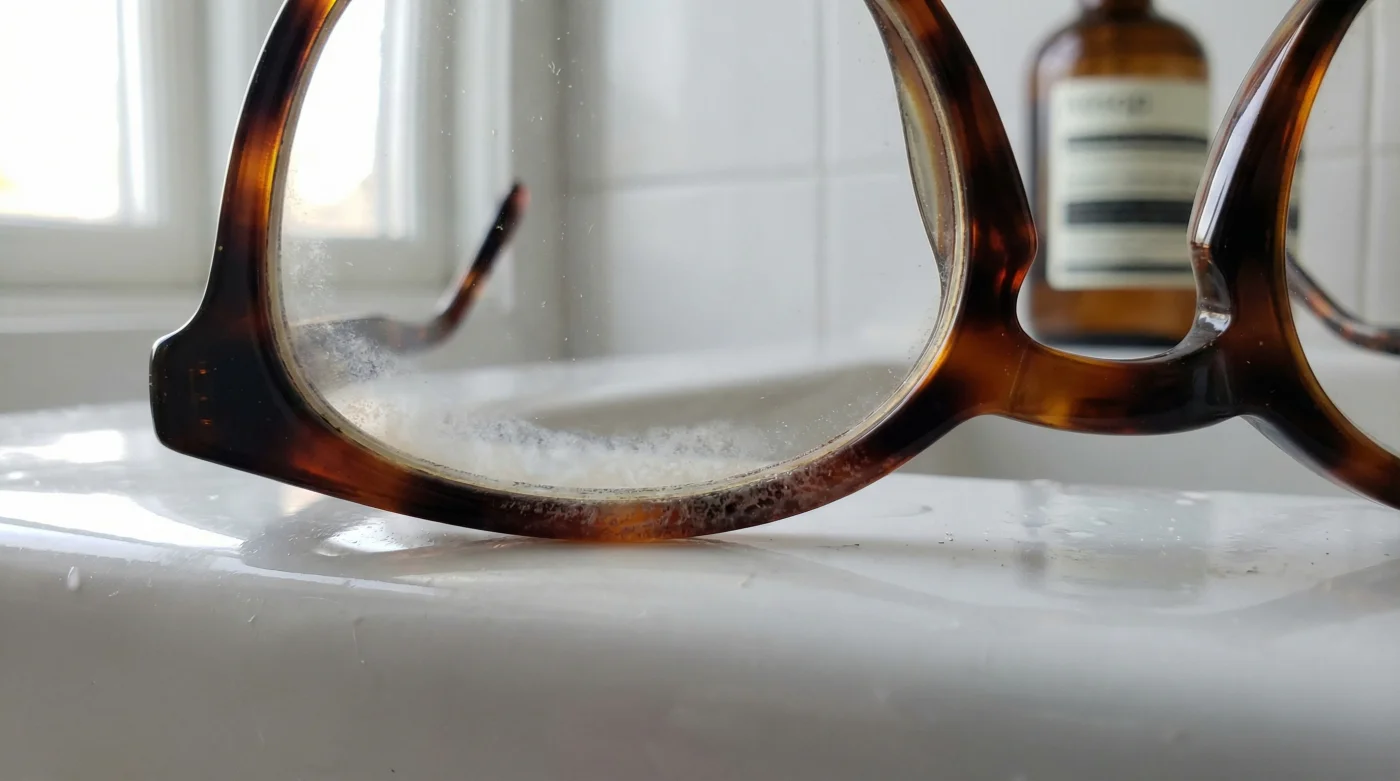
You lean toward the bathroom mirror on a brisk Tuesday morning. The soft hum of the ventilation fan drones overhead as you splash cold water on your face, rinsing away the familiar tingle of your morning cleanser. You dry your skin, reach for your heavy tortoiseshell frames—the ones that cost more than your last flight to Montreal—and slide them on. But as the morning light catches the lower rim resting against your cheek, you notice it. A dull, whitish haze is marring the polished acetate, turning the rich amber tones into a cloudy, frosted mess. You rub it with your shirt hem, but the mark does not fade.
The Myth of Impervious Polish
We treat premium acetate like river stones, expecting them to weather the current of daily life without losing their shine. We assume our luxury eyewear only needs protection from gravity and the occasional tumble onto the driveway. The truth is, your favourite frames are currently losing a quiet chemical battle. Mistake number one is assuming the danger comes from the outside world. The real threat is sitting right on the edge of your sink.
A few months ago, I was speaking with Claude, a master optician operating out of a small, sunlit studio. Over a warm cup of dark roast, he adjusted a pair of severely clouded frames and shook his head. “People bring these in, thinking it is sun damage or salt from winter slush,” he said, tracing the frosted patches along the lower rims. “But it is always the cheeks. It is always the skincare routines.” He explained how the very ingredients designed to gently clear our pores view high-end acetate plastic as just another organic bond to break down.
| Target Audience | The Specific Benefit of Adjusting Habits |
|---|---|
| Daily Skincare Enthusiasts | Prevents irreversible chemical frosting on expensive acetate frames. |
| Acne-Prone Professionals | Maintains the professional, polished look of high-end eyewear. |
| Vintage Frame Collectors | Protects irreplaceable, aged plastics from premature structural decay. |
This brings us to the core of the issue: beta-hydroxy acids, specifically salicylic acid. When you wash your face with an acne-fighting cleanser, the acid does not completely wash down the drain. A microscopic film remains on your skin, intentionally left behind to keep pores clear throughout the day. When the bottom of your tortoiseshell frames rests against your cheekbones, that invisible residue transfers directly onto the plastic.
Over weeks and months, the acid chemically attacks the plasticizers in the cellulose acetate. The material reacts to the constant exposure by losing its structural integrity. The plastic clouds over, turns brittle, and slowly dissolves under the continuous assault of your morning routine.
| Chemical Element | Interaction with Cellulose Acetate | Physical Result on Eyewear |
|---|---|---|
| Salicylic Acid (BHA) | Strips stabilizing plasticizers from the material. | Surface turns milky white and feels rough to the touch. |
| Sebum (Facial Oils) | Acts as a carrier, trapping acids against the frame. | Accelerates degradation where the frame touches the cheeks. |
| Warm Skin Temperature | Increases the rate of the chemical reaction. | Creates micro-fissures in the plastic structure. |
Breaking the Cycle of Clouded Acetate
Your first physical adjustment happens right after the towel. If you use a salicylic acid cleanser, your skin needs a physical barrier before your frames ever touch your face. A light layer of a neutral, ceramide-rich moisturizer applied specifically to the cheekbones creates an effective buffer zone. It stops the raw acid residue from pressing directly into the vulnerable plastic of your glasses.
Mistake number two is letting the frames sit unwashed on your nightstand. At the end of your day, your glasses require their own gentle cleanse to survive the night. Take a single drop of basic, lotion-free dish soap and lukewarm water to the bathroom sink. Gently rub the lower rims and nose pads with your fingertips to strip away the acidic oils. Finally, dry them thoroughly with a clean microfibre cloth.
- Salicylic acid cleansers slowly dissolve premium tortoiseshell acetate frames daily
- Sun Life Financial officially halts reimbursements for standalone blue light lenses
- Windex Glass Cleaner instantly micro-fractures premium anti-reflective polycarbonate lenses.
- Fabric softener residue permanently smears anti-reflective prescription eyeglass lenses.
- Canada Life eliminates direct billing for online non-prescription blue-light glasses.
Mistake number four is the infamous ‘push up’ habit. When your glasses slide down your nose during a humid afternoon, you likely push them back up by pressing on the lower rims. This action transfers the acidic oils from your fingertips directly onto the optical centre of the acetate. Train yourself to adjust your frames by holding the temple arms near your ears instead.
| Frame Care Checklist | What to Look For | What to Avoid |
|---|---|---|
| Daily Cleaning | Lukewarm water and a drop of plain dish soap. | Rubbing alcohol, window cleaners, or hot water. |
| Physical Handling | Adjusting frames by the thickest part of the temple arms. | Pushing up the glasses by the lower rims or lenses. |
| Skincare Buffering | Applying a neutral moisturizer over areas where frames rest. | Placing frames directly onto freshly acid-washed skin. |
Protecting Your Signature Look
Your glasses frame how the world sees you. They sit front and centre during every morning meeting, every coffee run in the crisp autumn air, and every quiet evening reading on the sofa. Realizing that your dedicated grooming habits are actively destroying your optical investments is a frustrating moment. However, recognizing this invisible chemical conflict is highly empowering.
You are no longer passively watching your favourite frames degrade into a frosted haze. By making a few mindful shifts at the bathroom sink, you preserve the rich, warm colours of that classic tortoiseshell pattern. You keep the acetate supple, strong, and highly polished for years to come. Ultimately, the daily ritual of putting your glasses on remains a moment of sharp clarity, rather than a cloudy reminder of slow decay.
“High-quality eyewear requires the exact same mindful maintenance as a good pair of leather winter boots; ignore the invisible elements they face daily, and they will prematurely age right before your eyes.” – Claude, Master Optician
Eyewear and Skincare FAQ
1. Will washing my face longer stop the frame damage? Salicylic acid is formulated to leave an active residue in your pores, so even a thorough rinse will not completely stop the transfer to your glasses.
2. Are metal wire frames immune to this acid damage? Metal frames will not cloud like acetate plastic, but acidic residue can eventually eat away at the clear-coat sealants protecting the metal.
3. Can an optician polish out the white haze on my frames? If the damage is superficial, a professional buffing wheel can sometimes restore the shine, but deep chemical burns are entirely permanent.
4. Does benzoyl peroxide cause the same cloudy damage? Yes, benzoyl peroxide can also bleach and degrade organic plastics, making a moisturizer buffer just as critical.
5. Should I stop using my acne cleanser altogether? Not at all; simply ensure you wash your frames nightly with dish soap to remove the daily buildup of acidic oils.