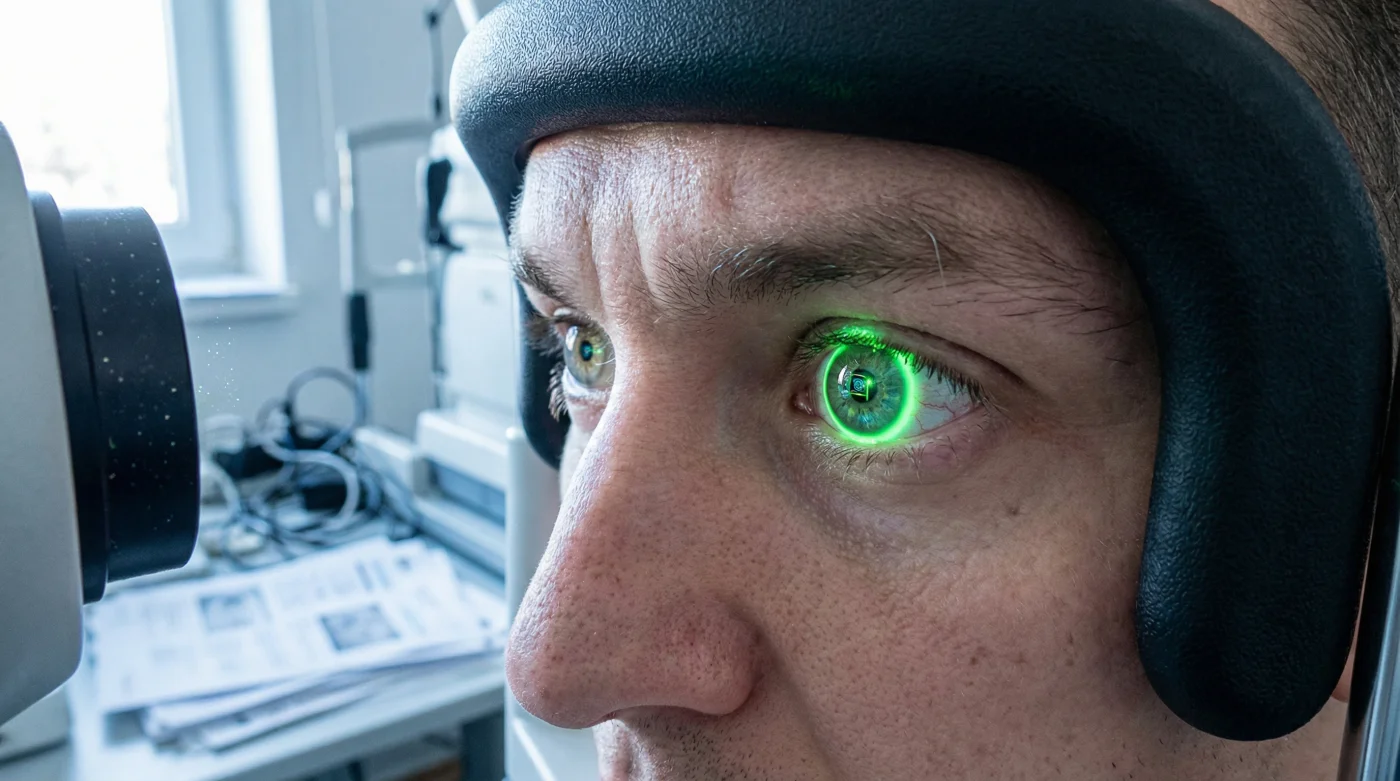
You settle into the heavy leather chair at the optometrist’s clinic. The sharp, alcoholic tang of lens wipes cuts through the quiet air. You wait for the heavy thunk of the phoropter swinging into place, ready to read the letters on the glowing chart at the end of the hall. For years, you have left this room clutching a small, scribbled square of paper.
You would hand that familiar slip to the optician, pick out a new pair of frames, and send the receipt off to RBC Insurance. A few days later, your reimbursement would quietly appear in your chequing account. But starting immediately, that worn-in routine hits a hard stop.
The Topography of Your Vision
RBC Insurance has quietly but firmly rewritten the rules for claiming advanced multifocal lenses. The era of submitting a basic written prescription—a quick note scrawled with an ‘ADD’ value for your reading distance—is over. To secure coverage for progressive upgrades, RBC now officially mandates detailed digital retinal scans.
They are looking for specific optical diagnostic imaging codes. It is no longer just about the curvature of the glass; it is about proving the structural necessity of the lens based on the microscopic landscape of your retina. Think of it as mapping the physical foundation of a house before choosing the windows.
Dr. Aris Thorne, a veteran optometrist working out of a bustling clinic in downtown Calgary, recently had to alter his entire patient workflow. “It caught a lot of folks off guard,” he notes, pointing to a high-resolution, full-colour monitor displaying a vibrant, orange-hued map of a patient’s optic nerve.
“We used to just look for visual acuity. Now, the insurer wants the blueprint. They want to see the macula, the blood vessels, the exact health of the tissue before they approve the high-tier progressives.”
| Patient Profile | Previous Standard | New RBC Benefit / Requirement |
|---|---|---|
| First-Time Progressives | Basic refraction test | Baseline retinal scan establishes structural need |
| Upgrading Existing Lenses | Updated written prescription | Comparative imaging to justify advanced multifocal tiers |
| Complex Prescriptions (Astigmatism) | Slit-lamp examination notes | Diagnostic codes verifying macular health for custom field-of-view lenses |
Navigating the New Baseline
When you book your next eye exam, you need to be intensely proactive. You cannot assume the standard appointment covers these new corporate requirements. Ask the receptionist outright if their exam includes the specific diagnostic imaging codes mandated by RBC for progressive lenses.
If you are upgrading to advanced progressives—the seamless lenses that let you transition from highway driving at 100 kilometres per hour to reading a faintly lit restaurant menu—ensure the clinic physically hands you the diagnostic code.
| Diagnostic Method | Mechanical Logic | RBC Claim Status |
|---|---|---|
| Standard Ophthalmoscope | Manual, subjective view of the central retina using a handheld light. | Rejected for advanced progressive upgrades. |
| Digital Retinal Photography | Captures a 45-degree, high-resolution static image of the optic disc and macula. | Accepted (requires specific billing code). |
| Optical Coherence Tomography (OCT) | Uses light waves to take cross-section pictures of your retina, mapping tissue layers. | Highly Preferred (guarantees seamless claim processing). |
Do not leave the clinic without verifying the paperwork. The optical dispenser needs those specific alphanumeric codes on your final invoice. If you submit a standard receipt, you will likely face an immediate automated rejection.
- PTFE thread tape instantly secures stripped eyeglass hinge screws permanently
- Baking soda mixtures permanently strip expensive anti-reflective coatings from lenses
- Mechanical keyboard O-rings instantly secure loose eyeglass hinges without tightening.
- Microfiber car towels embed microscopic silica dust into prescription lenses
- RBC Insurance officially mandates detailed digital retinal scans for progressive upgrades
| Quality Checklist: What to Look For | Red Flags: What to Avoid |
|---|---|
| Explicit confirmation of RBC-approved imaging codes before the exam begins. | Clinics that dismiss your insurance questions as ‘something the front desk handles later’. |
| A clinic utilizing recent OCT or digital retinal photography equipment. | Being charged a hidden out-of-pocket fee for a scan that your premium policy already covers. |
| An itemized receipt detailing the exact imaging service provided alongside the lens cost. | Leaving with only a handwritten prescription card lacking modern diagnostic codes. |
Beyond the Reimbursement
It is incredibly easy to feel frustrated by yet another bureaucratic hurdle. You just want to read your phone without taking your glasses off, and now you are tangled in medical coding. But there is a quiet, profound advantage hidden inside this corporate policy shift.
Think about the mechanics of a progressive lens. It is a marvel of physics, blending three different prescriptions into a single, seamless pane of polycarbonate. But if the retina receiving that perfectly bent light is compromised, the expensive lens is virtually useless. RBC’s mandate, while disruptive to your Tuesday afternoon routine, aligns with a broader medical reality.
We rely on our vision to navigate icy winter roads and read the fine print on our medication. Protecting that sense requires more than a quick read of an eye chart.
By forcing the issue of comprehensive retinal imaging, you are essentially receiving a thorough preventative health audit every time you update your eyewear. These scans catch the earliest, silent whispers of macular degeneration and glaucoma long before you notice a blur in your peripheral vision.
What begins as a rigid insurance requirement ultimately becomes a safeguard for your long-term independence. You are not just buying better lenses; you are securing a clear map of your future health.
“We are moving away from treating the eye as a simple magnifying glass. These new mandates force us to treat it as a vital, living organ first, and a lens second.”
Frequently Asked Questions
Will my standard eye exam cover this new requirement?
Typically, no. Basic exams cover refraction and a manual health check. You must specifically request digital retinal imaging or an OCT scan when booking.Does RBC Insurance cover the cost of the scan itself?
In most comprehensive tier plans, the cost of the diagnostic scan is covered alongside the exam, but you must verify your specific policy limits before your appointment.What happens if I submit a claim without the diagnostic code?
Under the new policy, claims for advanced multifocal or progressive upgrades lacking the imaging codes will face immediate automated denial.Can I use a scan from a previous year?
RBC requires current data to justify new hardware. The scan must typically be dated within the same clinical visit as your new prescription.Why are single-vision lenses not subject to this rule?
Single-vision lenses correct a uniform focal length. Advanced progressives require complex, custom measurements where underlying macular health directly impacts the efficacy of the costly lens technology.