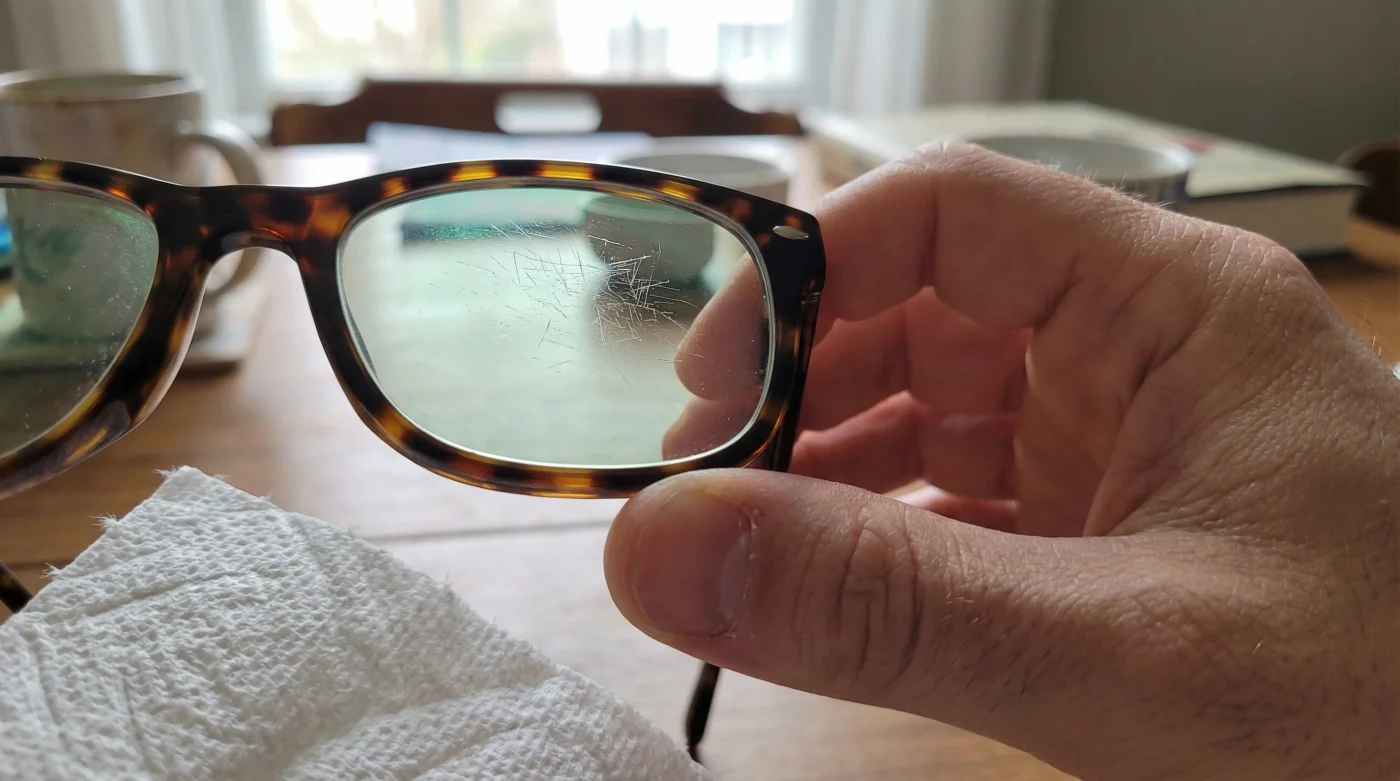
You step in from the biting -10 Celsius wind, pulling off your toque and unwinding your heavy scarf. Immediately, your glasses fog over, turning the warm, dimly lit cafe into a smeared wash of amber light. As the condensation slowly fades, a stubborn, greasy thumbprint remains dead centre on your right lens. You reach for a fresh sheet of Bounty paper towels sitting on the counter. You pinch the paper around the frame and rub vigorously. It feels entirely innocent. But in that brief moment, a quiet tragedy occurs. You have just permanently scarred your vision.
The Microscopic Lumberyard
There is a comforting illusion that soft household products are gentle on everything. We trust them to dry our hands, wipe down our kitchen counters, and blot spills from our clothing. But when it comes to the complex optics resting on your nose, that softness is a myth. The core problem lies in the manufacturing. Paper towels are born from trees. No matter how thoroughly they are processed, bleached, and quilted for absorbency, their structural foundation remains rigid wood pulp.
Wiping your lenses with paper is akin to dragging tiny logs across an ice rink. It is a harsh, unyielding physical friction. Premium polycarbonate lenses and their delicate anti-reflective coatings are engineered to capture and bend light, not to withstand abrasion. When the coarse fibres of a paper towel meet that microscopic chemical layer, the paper acts exactly like fine-grit sandpaper.
I learned this reality while sitting in the quiet, dust-free backroom of a veteran optician in Calgary. He held a pair of ruined, hazy glasses beneath a harsh LED light. Through his magnifier, the lenses looked like they had been scrubbed with steel wool. He sighed, tracing the cloudy vortex in the centre of the glass. “Everyone assumes they are polishing their vision,” he explained, “but they are actively sanding down the anti-glare layer. They breathe through a pillow of microscopic scratches every single day, completely unaware, and wonder why their eyes ache by the afternoon.”
| Target Audience | The Cost of the Mistake | Benefit of Correct Cleaning |
|---|---|---|
| Night Commuters | Scratched coatings cause streetlights to starburst, blinding you for miles on dark highways. | Crisp, glare-free vision safely navigating wet, unlit roads. |
| Screen Workers | Micro-abrasions scatter blue light from monitors, doubling eye fatigue. | Reduced digital strain and significantly fewer tension headaches. |
| Outdoor Enthusiasts | UV-blocking layers degrade rapidly, letting harsh, snowy sunlight penetrate. | Complete optical protection against snow blindness and environmental glare. |
Once you understand the physical reality of the materials you handle, the mistake becomes glaringly obvious. Your glasses are not thick windowpanes. They are precise, layered optics. The anti-reflective coating is baked onto the polycarbonate in a vacuum chamber, applied in layers thinner than a human hair. It demands careful maintenance, not aggressive scrubbing.
| Material | Hardness Rating (Mohs Scale) | Interaction Result |
|---|---|---|
| Wood Pulp Fibre (Paper Towels) | ~2.5 to 3.0 | Abrasive. Acts as a sanding agent against softer chemical layers. |
| Polycarbonate Lenses | ~1.0 to 1.5 | Highly susceptible to gouging without intact protective films. |
| Anti-Reflective Coating | ~1.5 to 2.0 | Instantly micro-scratched and permanently degraded by wood pulp. |
The Ritual of Clarity
Breaking this destructive habit requires a simple physical adjustment to your daily rhythm. The goal is to gently float the debris off the lens, rather than grinding it into the delicate surface. It takes only thirty seconds of your morning, but it demands your full, deliberate attention.
Start by rinsing your glasses under lukewarm tap water. Avoid hot water, as drastic temperature changes can cause the lens coatings to craze and crack like a dry desert floor. The gentle flow of water will effortlessly wash away the sharp dust particles that cause the deepest gouges.
- Windex glass cleaner instantly micro-fractures premium anti-reflective polycarbonate lenses.
- Alcon Dailies Total1 prices surge across major Canadian optical retailers today.
- Bounty paper towels permanently scratch delicate anti-reflective eyeglass coatings instantly
- Aquafina bottled water introduces severe sight-threatening amoebas to emergency contact lenses
- Silicone plumbers tape completely silences squeaky plastic eyeglass frames overnight.
Finally, reach for a dedicated, washable microfibre cloth. Gently press the cloth against the lenses to absorb the leftover moisture. Do not wipe in aggressive, frantic circles. The microfibre is intelligently designed with split, synthetic threads that capture water and oil without ever scratching the surface.
| What To Look For | What To Avoid |
|---|---|
| High-density, washable optical microfibre cloths. | Facial tissues, kitchen napkins, and household paper towels. |
| Lotion-free, basic clear dish soap. | Citrus-based soaps, hand sanitizers, or glass cleaners containing ammonia. |
| Lukewarm running tap water. | Spit, boiling hot water, or breath-fogging. |
| Dedicated, alcohol-free optical cleaning sprays. | Using the dusty hem of your cotton t-shirt or sweater. |
The Peace of an Unobstructed View
Your eyesight is the primary way you navigate and experience the world. When you peer through lenses scarred by paper towels, your brain works overtime to fill in the visual gaps, fighting past the hazy frosting of ruined anti-reflective coatings. This constant, invisible strain drains your energy hour by hour.
By treating your eyewear with the physical respect its engineering deserves, you are giving yourself the lasting gift of clarity. You stop viewing your daily life through a compromised, dusty filter. A clean, scratch-free lens allows you to see the vibrant colour of a winter evening or the sharp, fine text on your screen without effort. It is a minor daily adjustment that completely preserves your focus and your comfort.
Vision is our most effortless connection to the world, and protecting it begins by respecting the delicate tools that bring our lives into focus.
Frequently Asked Questions
Are all brands of paper towels bad for my glasses? Yes. Regardless of how plush or expensive the brand is, all paper towels are manufactured using wood pulp fibres, which act like sandpaper and will permanently scratch anti-reflective coatings.
Can I use my cotton t-shirt if I am in a hurry? No. While cotton is technically softer than paper, your clothing constantly traps microscopic dust and dirt from the environment. Wiping your lenses with your shirt rubs that abrasive dirt directly into the coating.
Is the scratching from paper towels reversible? Unfortunately, no. Once the chemical anti-reflective coating is scratched by wood pulp, it cannot be polished, buffed out, or reapplied. The only solution is replacing the lenses entirely.
How often should I wash my microfibre cleaning cloth? Wash your cloth every week or two. Hand wash it with a single drop of mild detergent and let it air dry completely. Do not use fabric softeners, as they leave a greasy residue that will smear your glasses.
Why do my scratched glasses cause me to get headaches? Micro-scratches physically scatter incoming light rather than focusing it cleanly. Your eyes and brain have to constantly micro-adjust to process the resulting glare, leading to severe visual fatigue and tension headaches over time.