You know the motion intimately. It happens when you look down to read a menu, or when the heavy summer humidity pushes past 25 Celsius. A subtle, oily slide down the bridge of your nose begins. You lift an index finger, press against the heavy acetate bridge, and shove your glasses back into place. Ten minutes later, the cycle repeats. Heavy acetate frames are beautiful, possessing a vintage weight and rich colour, but their polished arms lack any inherent grip. Once your skin warms up, wearing them feels like balancing soap on a slanted shelf.
The Friction of the Frame
The standard advice usually sends you driving miles to your local optical shop. There, a well-meaning optician uses a hot sand bath to aggressively bend the temple tips behind your ears, hoping the tight hook will anchor the weight. Or worse, you resign yourself to thick, rubbery silicone ear grips that tangle in your hair, collect dust, and ruin the clean aesthetic of your expensive frames. The truth is, the architecture of your glasses does not need a structural overhaul. It just needs a quiet introduction of surface tension. We are simply changing the tire tread, rather than rebuilding the entire suspension.
| Wearer Profile | Typical Frustration | The Heat Shrink Benefit |
|---|---|---|
| The Heavy Acetate Fan | Constant downward sliding on the nose bridge. | Adds invisible, matte friction behind the ear to anchor the front weight. |
| The Active Professional | Silicone hooks pull hair and look unprofessional. | Creates a seamless, practically invisible skin over the temple tip. |
| The Comfort Seeker | Aggressive optical bends cause headaches and soreness. | Maintains the gentle factory curve while stopping all movement. |
I learned this alternative over coffee with a retired marine electrician in Halifax. I was complaining about my tortoiseshell frames slipping while looking down at a notebook. He laughed, walked to his workbench, and produced a thin spool of clear tubing. You are treating a surface tension issue like an engineering crisis, he told me. He slid a translucent sleeve over the arms, applied a burst of warm air, and handed them back. They have not moved a single millimetre since. The fix was entirely invisible, resting quietly behind my ears.
| Mechanical Component | Technical Specification | Why It Works For Glasses |
|---|---|---|
| Material | Clear Polyolefin | Skin-safe, resists oils, and offers a soft, matte grip. |
| Shrink Ratio | 2:1 Ratio | Contracts to exactly half its size, hugging the varying thickness of the acetate. |
| Activation Temp | 90 to 120 Celsius | Easily reached by a standard consumer hair dryer, preventing frame damage. |
Applying The Permanent Grip
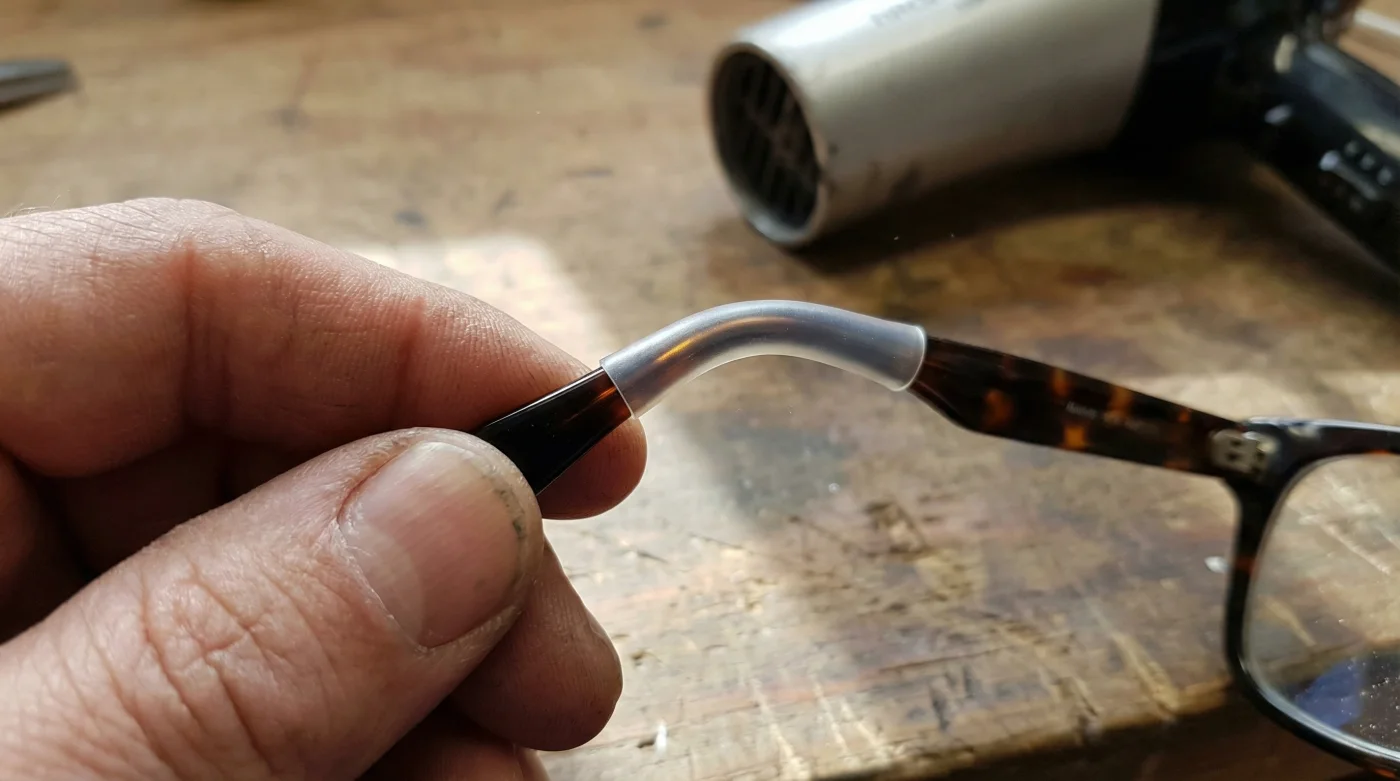
The secret lies in standard electrical heat shrink tubing. You do not need a specialized optical tool; you just need to visit your local hardware store. Walk past the plumbing tools and find the electrical aisle. Look for clear polyolefin tubing with a two-to-one shrink ratio. A quarter-inch diameter is the exact measurement you need. It fits snugly over the thickest part of an acetate temple tip before shrinking down to a permanent, invisible skin.
Start by cutting two lengths of the clear tubing. Make them about an inch and a half long. This is just enough material to cover the curve that rests directly behind your ear. Slide the tubing over the temple tips. Position it carefully so the end sits flush against the back of your ear when worn.
Grab your standard hair dryer and set it to the highest heat setting. Acetate is a natural plastic derived from cotton pulp, so it is highly sensitive to extreme, focused heat. You must never use an industrial heat gun for this. The gentle, broad heat of a hair dryer is perfectly safe.
Hold the nozzle about an inch away from the plastic. Move it back and forth constantly to distribute the warmth. Within seconds, you will watch the magic happen. The tubing will suddenly contract, hugging every contour of the acetate tightly. Let the frames sit on a counter to cool for five minutes before wearing them.
| The Quality Checklist | What To Look For | What To Avoid |
|---|---|---|
| Adhesive Lining | Single-wall tubing (no glue). | Dual-wall marine tubing (melts sticky glue onto frames). |
| Colour | Completely clear / transparent. | Frosted white or coloured PVC (looks like a medical device). |
| Diameter | 1/4 inch (6.35 millimetres). | 1/8 inch (will not fit over the bulb of the temple tip). |
A Mind Clear of Clutter
It is remarkable how much mental energy we spend managing small, persistent physical annoyances. Pushing your glasses up seventy times a day fractures your focus. It pulls you out of conversations, distracts you from a good book, and constantly reminds you of the object sitting on your face. Glasses should be a seamless extension of your vision, not a heavy burden you have to actively balance.
Once your heavy frames stay permanently anchored, your entire posture shifts. You no longer tilt your chin up unnaturally to compensate for sliding lenses. You can bend down to tie your shoes or look over a railing without that sudden jolt of panic. You just see the world around you.
- Baking soda toothpaste permanently frosts anti-reflective prescription eyeglass lenses
- Natural beeswax lip balm instantly stops heavy acetate frames from slipping constantly
- Hyaluronic acid serums applied near lash lines severely dehydrate natural tear films
- White vinegar effectively dissolves hardened mineral deposits hidden inside titanium frame crevices.
- Electrical heat shrink tubing permanently locks sliding heavy acetate glasses.
The best solutions to modern frustrations are rarely found in specialty shops; they are hiding in plain sight on the dusty bottom shelf of the hardware store.
Frequently Asked Questions
Will the heat from the hair dryer melt my expensive acetate frames?
No, a standard consumer hair dryer reaches temperatures high enough to shrink the thin polyolefin tubing, but remains far too gentle to melt or warp dense optical acetate, provided you keep the nozzle moving.
Can I remove the heat shrink tubing later if I change my mind?
Yes. If you use single-wall tubing without an adhesive lining, you can easily score the shrunken plastic with a small pair of cuticle scissors and peel it right off. It leaves absolutely no sticky residue behind.
Why not just use the black tubing I already have in my toolbox?
Black or coloured PVC tubing will technically provide the same mechanical grip, but it stands out drastically against tortoiseshell or lighter frames, ruining their aesthetic. Clear tubing becomes entirely invisible once shrunk.
Does the tubing pull your hair like the silicone ear hooks do?
Not at all. Polyolefin cures to a smooth, matte finish. It provides excellent friction against warm skin to stop sliding, but it lacks the sticky, gummy texture of silicone that catches and tangles loose hair.
How long will this permanent grip modification last?
Because the tubing is designed to withstand harsh electrical environments and engine bays, it will outlast the prescription in your lenses. It will never stretch out, degrade, or lose its tension over time.