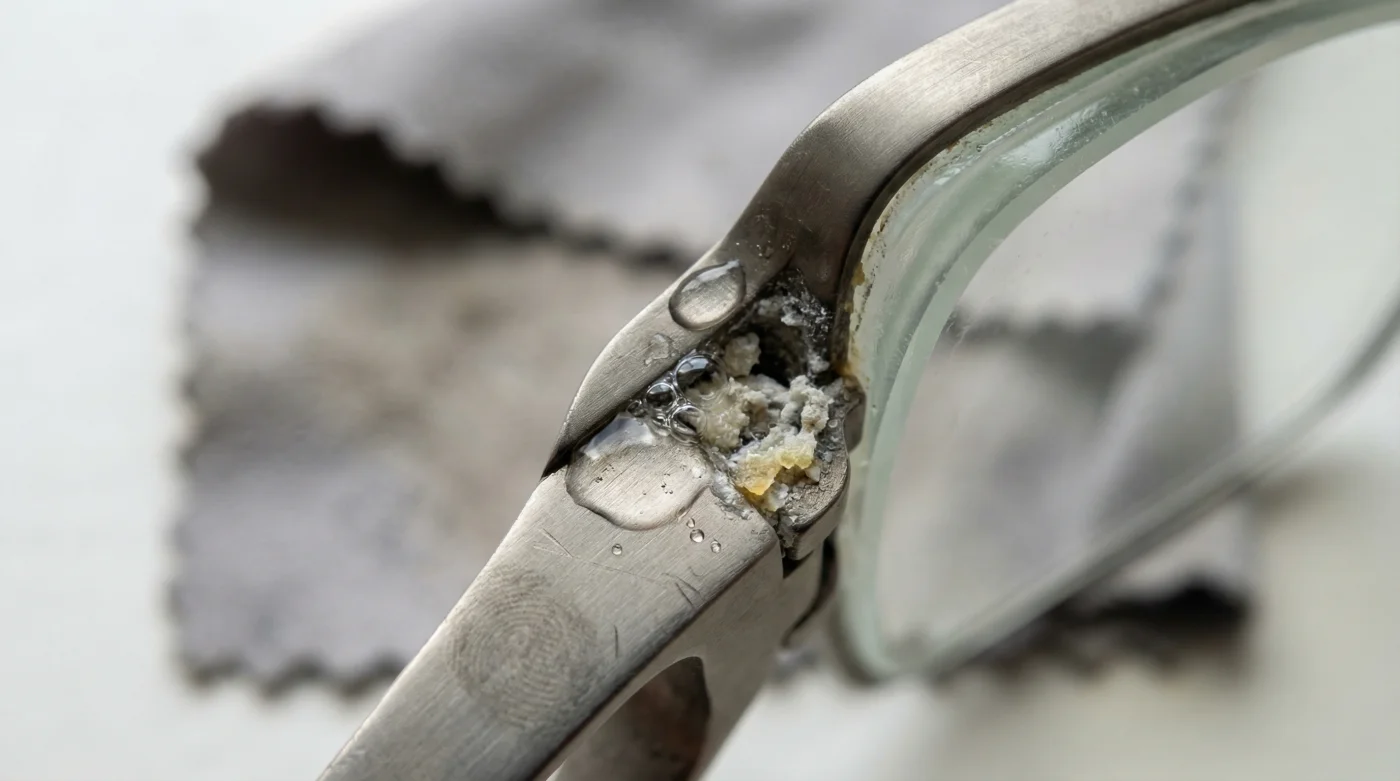
You know the feeling. It happens after a long, humid July afternoon walking a few miles around the neighbourhood. You pull your titanium glasses off your face, and there it is: a faint, chalky resistance. You run a fingernail along the narrow ravine where the lens meets the metal. A fine white dust scrapes off. Over time, that subtle residue hardens into stubborn concrete, clinging to the nose pads and the tiny screws holding your vision together. Your glasses feel heavy, tired, and distinctly unwashed, no matter how vigorously you rub them with a microfibre cloth.
The Geography of Your Glasses
Think of your titanium frames as a microscopic mountain range. Every day, they weather a storm of your body’s natural output. Sweat, skin oils, and the humid breath of an active day create a surprisingly harsh climate. As the moisture evaporates into the air, it leaves behind minerals—mostly sodium and calcium—that settle into the metal’s quietest valleys.
The common belief is that reversing this fossilization requires professional intervention. We often assume those expensive, buzzing ultrasonic cleaning machines sitting on the counter of a high-end eyewear boutique are the only way to vibrate the grime loose. It is easy to believe you need to spend money to maintain the things you have already spent money on. But you don’t need a noisy, high-tech bath to rescue your frames.
| Target Audience | Specific Benefits of the Vinegar Method |
|---|---|
| Daily Runners & Athletes | Quickly neutralizes heavy sweat accumulation after a long workout. |
| Vintage Frame Collectors | Avoids the aggressive vibrations of ultrasonic machines that can rattle old screws loose. |
| Office Workers | Provides an easy, quiet desk-side maintenance routine that requires zero electricity. |
I learned this years ago from a seasoned optician working out of a dusty, sunlit shop in downtown Montreal. He spent decades working with delicate spectacles, adjusting aerospace-grade titanium with thick, steady hands. When I asked him which ultrasonic cleaner I should buy for my own desk, he just laughed, pointing to a common plastic jug under his sink. He explained that a simple kitchen liquid is far more elegant than a vibrating motor. His weapon of choice was nothing more than basic white vinegar.
| Material / Element | Scientific Logic & Interaction |
|---|---|
| White Vinegar (Acetic Acid) | Features a low pH level that actively breaks the molecular bonds of hardened calcium deposits. |
| Sweat Salt Crystals | Composed of calcium carbonate and sodium chloride, which dissolve rapidly when exposed to mild acidity. |
| Titanium Frames | Highly resistant to corrosion; completely unaffected by brief exposure to diluted household acids. |
The Quiet Kitchen Soak
To break down the crust without harming the metal, you need to soften the stubborn white sweat salt crystals trapped between the frame and lens. It is a gentle, deliberate process that fits perfectly into a morning routine. You can set this up while the coffee is brewing.
First, find a shallow glass or ceramic bowl. Measure out equal parts plain white vinegar and distilled water. Distilled is necessary here; using tap water just introduces more minerals to the very landscape you are trying to clear. Ensure the mixture is sitting at roughly 20 degrees Celsius—room temperature is perfect, as hot water can damage anti-reflective lens coatings.
Submerge the front of your titanium frames into the liquid. You want the lens and the metal rim completely covered, but try to keep the hinges resting on the edge of the bowl if they contain delicate plastic washers. Leave them in this quiet bath for twenty minutes.
- Baking soda toothpaste permanently frosts anti-reflective prescription eyeglass lenses
- Natural beeswax lip balm instantly stops heavy acetate frames from slipping constantly
- Hyaluronic acid serums applied near lash lines severely dehydrate natural tear films
- White vinegar effectively dissolves hardened mineral deposits hidden inside titanium frame crevices.
- Electrical heat shrink tubing permanently locks sliding heavy acetate glasses.
| What to Look For | What to Avoid |
|---|---|
| Plain white kitchen vinegar (5% acidity). | Cleaning vinegars (often 10% acidity or higher, which is too harsh). |
| Distilled water for mixing the solution. | Hard tap water, which leaves new mineral rings as it dries. |
| Soft-bristled baby toothbrushes. | Stiff scrub brushes or metal picks that can scratch the titanium plating. |
Restoring Your Rhythm
There is a profound satisfaction in caring for the tools that help you navigate the world. Your glasses sit closer to your brain than any other object you own. When the frames are clouded with the debris of past weeks, it subtly affects how you feel in them. They carry the physical weight of old sweat and tired days.
Clearing out that hidden grime using something as familiar as white vinegar grounds you in a simple reality. You don’t always need to purchase a complicated gadget to solve a modern friction. White vinegar effectively dissolves hardened mineral deposits hidden inside titanium frame crevices, bringing your frames back to their original, weightless state.
Sometimes, maintaining your most vital possessions just requires a bit of patience, a little chemistry, and things you already have sitting in your pantry. By bypassing the expensive machines, you reclaim a small moment of your day, ensuring your vision remains clear and your daily routine remains wonderfully simple.
The true art of maintenance is knowing when to let chemistry do the manual labour for you.
Frequently Asked Questions
Will the vinegar smell linger on my glasses?
Not at all. Once you rinse the frames with cool water and dry them with a microfibre cloth, the acidic scent dissipates completely.Can I use apple cider vinegar instead?
Stick to plain white vinegar. Apple cider vinegar contains sugars and organic matter that can leave a sticky residue in the tight spaces of your frames.Is this safe for polycarbonate lenses?
Yes, a diluted soak is generally safe for standard lenses, but you should avoid using hot water, which is the real danger to modern lens coatings.How often should I soak my titanium frames?
For most people, a twenty-minute soak once a month is more than enough to keep mineral deposits from fossilizing.Do I still need to use dish soap for daily cleaning?
Yes. Use this vinegar method for hard mineral buildup, and stick to a drop of mild dish soap and water to wash away daily skin oils and fingerprints.