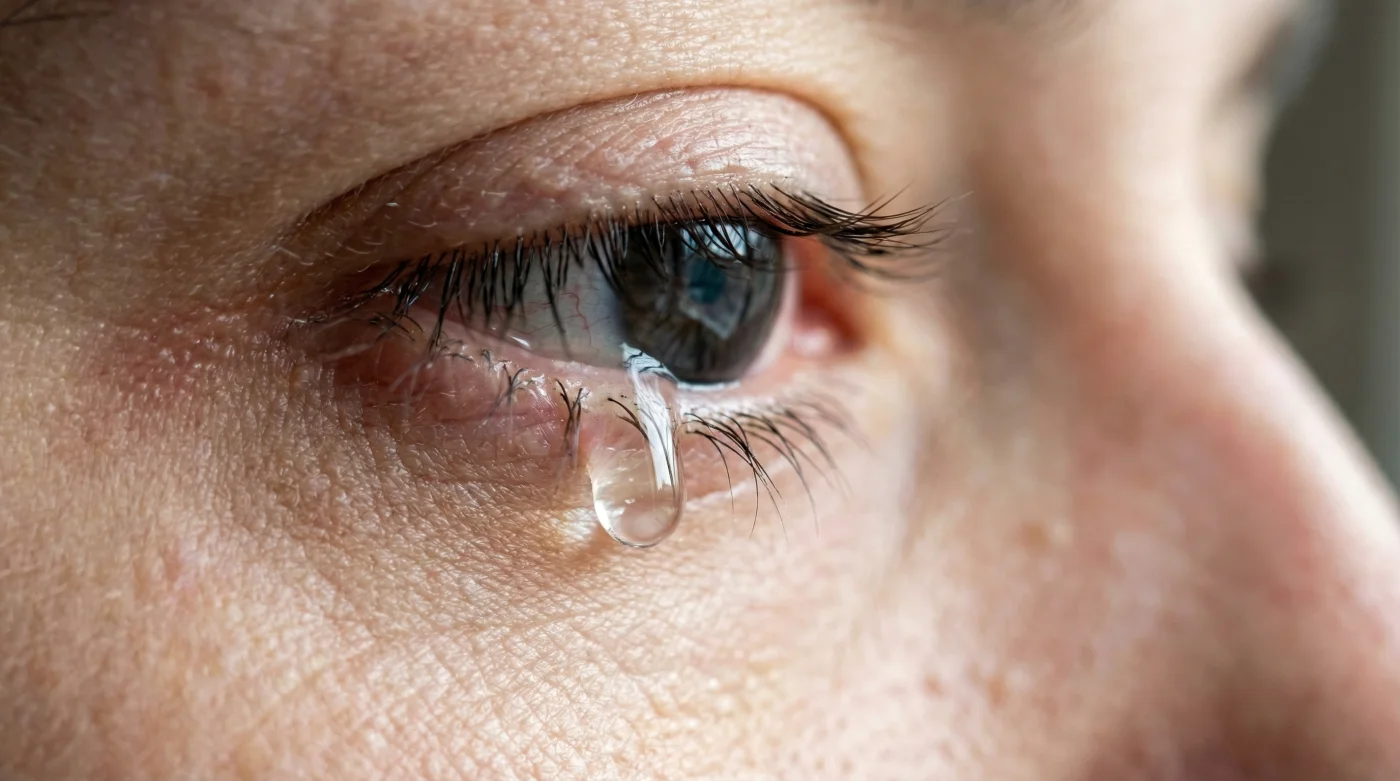
You step inside from a brisk minus ten Celsius afternoon, the sharp winter wind still stinging your cheeks. As the indoor radiator pushes warm, dry air into the living room, you blink. It feels like someone poured fine sand beneath your eyelids. To soothe your tight skin, you reach for that sleek glass dropper of hyaluronic acid, gently patting the cool, viscous gel around your orbital bone, right up to the lash line. You expect instant relief. Instead, by evening, your eyes burn, feeling heavier and drier than before. You are not alone, and you are not imagining it.
The Sponge That Drinks Your Tears
For years, the beauty industry has sold you a simple, comforting narrative: hyaluronic acid is the ultimate moisture magnet. The bottles proudly proclaim that it holds a thousand times its weight in water. But nobody mentions where that water actually comes from.
Think of this popular serum like a bone-dry kitchen sponge. If you place a dry sponge on a damp counter, it quickly absorbs the surface moisture. If you place it on a completely dry counter, it simply sits there. But if you place that sponge near a delicate, vulnerable reservoir—like the incredibly fragile tear film protecting your eye—that sponge goes to work. It pulls from wherever it can. When you leave a naked humectant unsealed near the lash line, it frantically searches for water to bind to. If the surrounding winter air is dry, it turns to the nearest available liquid source. It literally drinks directly from your tear ducts.
I recently shared a coffee with an optometrist in downtown Ottawa who specialises in chronic eye fatigue. She mentioned a staggering rise in patients coming in with severely gritty, irritated eyes, convinced they needed heavy prescription drops or invasive treatments. ‘I ask them to physically show me how they apply their nightly skincare,’ she told me, tracing a finger right along her lower lashes. ‘They drag these potent humectant serums right over the meibomian glands. They are systematically dehydrating their own eyes in the pursuit of glowing skin, like driving fifty kilometres with the parking brake on.’
| User Profile | Intended Benefit | The Hidden Mistake |
|---|---|---|
| The Winter Commuter | Soothing wind-chapped skin around the eyes. | Applying HA in a dry, heated room without sealing it, pulling out natural tears. |
| The Anti-Aging Enthusiast | Plumping fine lines near the crow’s feet. | Creeping the serum past the orbital bone directly onto the lash margin. |
| The Minimalist | Using one serum for the whole face to save time. | Skipping a heavy occlusive cream over the eye area to lock the hydration down. |
Three Silent Mistakes Draining Your Eyes
Because hyaluronic acid operates strictly on the laws of osmosis, how you use it dictates whether it acts as a hydrator or a dehydrator. Here are the three most common errors causing your hidden dry eye.
Mistake One: The Lash-Line Creep. You likely pat your serums far too close to your eyeball. The skin immediately surrounding your eye is the thinnest on your body, acting as a precarious border to your tear film. When you bring a humectant within millimetres of the lashes, capillary action allows the product to migrate into the tear film itself, disrupting the lipid layer that keeps your eyes lubricated.
Mistake Two: The Naked Humectant. Applying hyaluronic acid and walking away is a recipe for dehydration. Without a heavy moisturiser acting as a roof, the central heating in your home simply evaporates the water out of the serum. Once the serum is dry, it starts vacuuming moisture out of your deeper skin tissues and tear ducts to compensate.
Mistake Three: The Desert Application. Towel-drying your face completely before applying your serum forces the product to steal moisture from your body rather than absorbing it from the surface. You are forcing the acid to work against you from the very first second.
| Mechanism | Scientific Reality | Physical Impact on Eyes |
|---|---|---|
| Humectant Osmosis | Binds to water molecules in low-humidity environments. | Extracts aqueous layer from natural tear film, causing friction. |
| Product Migration | Viscous liquids travel via body heat and micro-movements. | Serum applied 1cm away can migrate into the meibomian glands. |
| Evaporative Loss | Lack of occlusive barrier increases Trans-Epidermal Water Loss (TEWL). | Leaves the eye area drier than before the application occurred. |
Re-drawing the Boundaries
You do not need to throw away your favourite serums or abandon your routine. You just need to mindfully change the geography of how you treat your face.
- Baking soda toothpaste permanently frosts anti-reflective prescription eyeglass lenses
- Natural beeswax lip balm instantly stops heavy acetate frames from slipping constantly
- Hyaluronic acid serums applied near lash lines severely dehydrate natural tear films
- White vinegar effectively dissolves hardened mineral deposits hidden inside titanium frame crevices.
- Electrical heat shrink tubing permanently locks sliding heavy acetate glasses.
Keep the application at least two centimetres away from your lash lines. Trace the heavy bone of your eye socket with your ring finger—your orbital bone. Stop right there. Do not creep up into the soft, thin tissue directly cradling the eye. The product will naturally diffuse just enough to plump the skin without breaching the delicate tear zone.
Finally, you must seal the boundary. Pat a heavier, occlusive moisturiser or a rich cream over the serum immediately after applying. This physical barrier tells the hyaluronic acid to push moisture down into the skin, rather than pulling it up and out into the dry air.
| Quality Checklist | What to Look For | What to Avoid |
|---|---|---|
| The Serum | Multi-molecular weight HA, glycerin, aloe. | High concentrations of alcohol denat, strong synthetic fragrances. |
| The Sealant (Moisturiser) | Ceramides, squalane, shea butter, dimethicone. | Lightweight gel moisturisers that lack protective oils. |
| The Application Technique | Damp skin, strict orbital bone boundaries. | Rubbing aggressively, applying to bone-dry skin. |
Quiet Comfort
Your eyes do incredibly demanding work, constantly focusing on bright screens, battling the glare of the winter sun, and adjusting to harsh artificial heating. They rely on a microscopic, perfectly balanced layer of water and oil to function smoothly and comfortably.
By simply backing away from the lash line and changing how you layer your products, you allow your body’s natural defences to work exactly as intended. Skincare should bring relief, not quiet, grating friction. When you respect the delicate balance of your natural tear film, you return to a state of ease.
You blink without thinking about it. Your vision stays clear, and your eyelids feel light. And that effortless, invisible comfort is exactly how a good routine should feel.
The best skincare routines respect the anatomy of the face; true hydration is about strategically retaining water, not just haphazardly applying it.
Frequently Asked Questions
Can I still use eye creams that contain hyaluronic acid?
Yes, but ensure the eye cream is formulated with built-in occlusives (like oils or butters) to trap the moisture, and still avoid applying it directly on the lash line.How long does it take for my eyes to feel normal again after stopping the lash-line application?
Most people feel a significant reduction in grittiness and dryness within two to three days of adjusting their application boundary.Is this only a problem during the winter months?
While dry indoor heating makes it much worse, air conditioning in the summer creates the exact same low-humidity environment that causes the serum to pull moisture from your eyes.Can I use plain water to dampen my skin before the serum?
Absolutely. A light splash of tap water or a basic facial mist works perfectly to give the humectant the surface hydration it requires.Does this apply to other humectants like glycerin?
Yes. Any ingredient designed to bind to water acts similarly. Keep all pure humectants away from the immediate eye margin and always seal them with a cream.