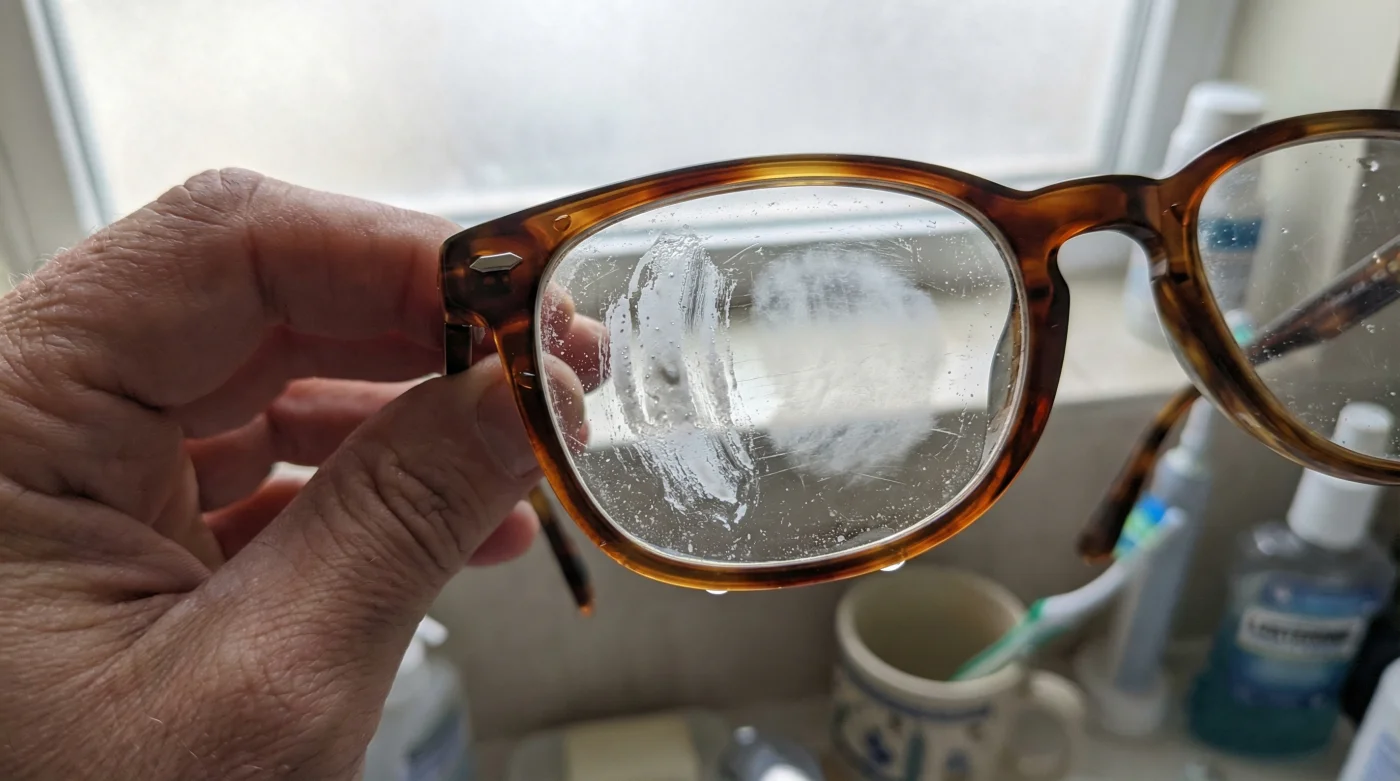
You are standing at the bathroom sink, squinting through a frustrating haze. A stray thumbprint sits dead centre on your right lens, blurring the morning light into a smeared halo. You need a quick fix before stepping out into the cold air. Your eyes dart to the vanity, landing on a familiar tube of baking soda toothpaste. It is a classic remedy, right? A quick dab of minty paste, a brisk rub with a paper towel, and a rinse under the tap. The sharp peppermint scent fills the air as you dry the frames. But as you lift them to the light, the smudge is gone—replaced by a milky, permanent frost. You have just ruined your glasses.
The Friction Of Good Intentions
The old-school trick of using toothpaste as a household polish belongs to a bygone era. Decades ago, before the advent of high-index plastics and specialized films, people polished everything from silver cutlery to foggy headlights with it. It worked wonderfully on thick glass or heavy brass. But applying it to modern optical lenses is akin to washing a silk shirt with crushed gravel. Your prescription lenses are not just basic plastic; they are highly engineered surfaces wrapped in delicate layers.
When you introduce baking soda to these layers, you are engaging in a microscopic war. The problem lies in the anti-reflective coating. This micro-thin application reduces glare from oncoming headlights when you are driving kilometres down a dark winter road, and it stops your computer screen from mirroring back into your eyes. It is brilliant, but it breathes like a fragile skin. Baking soda is a mechanical abrasive. It cleans your teeth by physically scraping the plaque away. When applied to an anti-reflective coating, it instantly micro-scratches the finish, creating thousands of tiny grooves that scatter the colour of light and permanently fog the lens.
I learned this the hard way while sitting in a dimly lit optician’s shop in downtown Calgary, complaining about my continuously cloudy vision. The specialist, a veteran lens crafter with three decades of experience, held my frames up to the light. She sighed, adjusting her own impeccably clear frames. ‘Minty fresh,’ she muttered. She explained that she sees this heartbreaking mistake every single week. People assume toothpaste is gentle because it goes in our mouths. But to an anti-reflective coating, baking soda toothpaste is essentially liquid sandpaper. Once the coating is grazed, the frost is permanent. No amount of buffing will bring the clarity back.
| Target Audience | Specific Benefits of Proper Lens Care |
|---|---|
| Commuters driving at night | Eliminates headlight glare and dangerous halo effects on dark roads. |
| Office workers staring at screens | Reduces severe eye strain from harsh overhead lighting and monitors. |
| Outdoor enthusiasts in winter | Prevents snow-glare blindness on bright, icy mornings. |
| Material / Compound | Hardness & Structure | Interaction Result |
|---|---|---|
| Anti-Reflective Coating | Delicate polymer layer | Scratches instantly under friction, resulting in permanent fogging. |
| Baking Soda | 2.5 Mohs (Crystalline) | Gouges microscopic trenches across optical coatings. |
| Standard CR-39 Plastic | Higher base hardness | Survives minor friction but loses all protective properties. |
| What To Look For (Safe) | What To Avoid (Destructive) |
|---|---|
| pH-neutral, lotion-free dish soap | Baking soda or abrasive whitening toothpastes. |
| Dedicated, clean microfiber cloths | Paper towels or tissue paper (contain coarse wood fibres). |
| Lukewarm tap water (around 20 Celsius) | Hot water (expands the lens and cracks the coating). |
The Ritual Of Safe Maintenance
Restoring the clarity of your lenses should be a gentle, mindful physical action, not an aggressive scrub. Start by running your glasses under lukewarm water. Anything hotter than room temperature can cause the delicate anti-reflective layers to expand faster than the base lens. This mismatch in thermal expansion leads to a spiderweb of permanent cracks.
Next, apply a single drop of plain, lotion-free dish soap to your wet fingertips. Gently massage the soap over both sides of the lenses, the nose pads, and the hinges. This action quietly dissolves skin oils and lifts away abrasive dust without dragging it across the surface. Rinse away the suds completely until the water runs clear.
- Baking soda toothpaste permanently frosts anti-reflective prescription eyeglass lenses
- Natural beeswax lip balm instantly stops heavy acetate frames from slipping constantly
- Hyaluronic acid serums applied near lash lines severely dehydrate natural tear films
- White vinegar effectively dissolves hardened mineral deposits hidden inside titanium frame crevices.
- Electrical heat shrink tubing permanently locks sliding heavy acetate glasses.
Seeing Through The Noise
The way we care for the tools that connect us to the world reflects our own internal rhythm. We often rush toward harsh, immediate fixes when a smudge obscures our view, grabbing whatever is within reach. But true clarity always requires a softer touch.
By abandoning aggressive DIY myths and adopting a gentler approach, you preserve the invisible layers that make your vision sharp. Every time you clean your glasses properly, you are setting a small, quiet boundary against the chaos of the day. You step outside, the crisp Canadian morning air hitting your face, and look out through flawless, invisible glass. No artificial frost, no microscopic scratches—just the world, exactly as it is.
‘Treat your lenses like the surface of a quiet lake; the moment you introduce aggressive friction, you lose the reflection entirely.’
Frequently Asked Questions
Can I fix the anti-reflective coating once it is scratched by toothpaste?
Unfortunately, no. The coating is a permanent chemical application. Once the microscopic scratches occur, the entire coating must be professionally stripped or the lenses replaced entirely.Why did toothpaste work on my grandfather’s glasses?
Older glasses were often made of solid, untreated glass. Modern prescription lenses are highly engineered lightweight plastics covered in delicate optical films.Is normal toothpaste without baking soda safe?
No. Almost all toothpastes contain some form of micro-abrasive like silica to scrub stains from enamel, which will still damage your lenses.What if I am out and do not have dish soap?
Rinse them under cool water and use a clean microfiber cloth. If water is unavailable, simply use the cloth dry with a very light touch until you get home.Are lens wipes safe to use?
Pre-moistened lens wipes are generally safe, provided they are explicitly marked for anti-reflective coatings, but a drop of soap and water remains the absolute gentlest method.