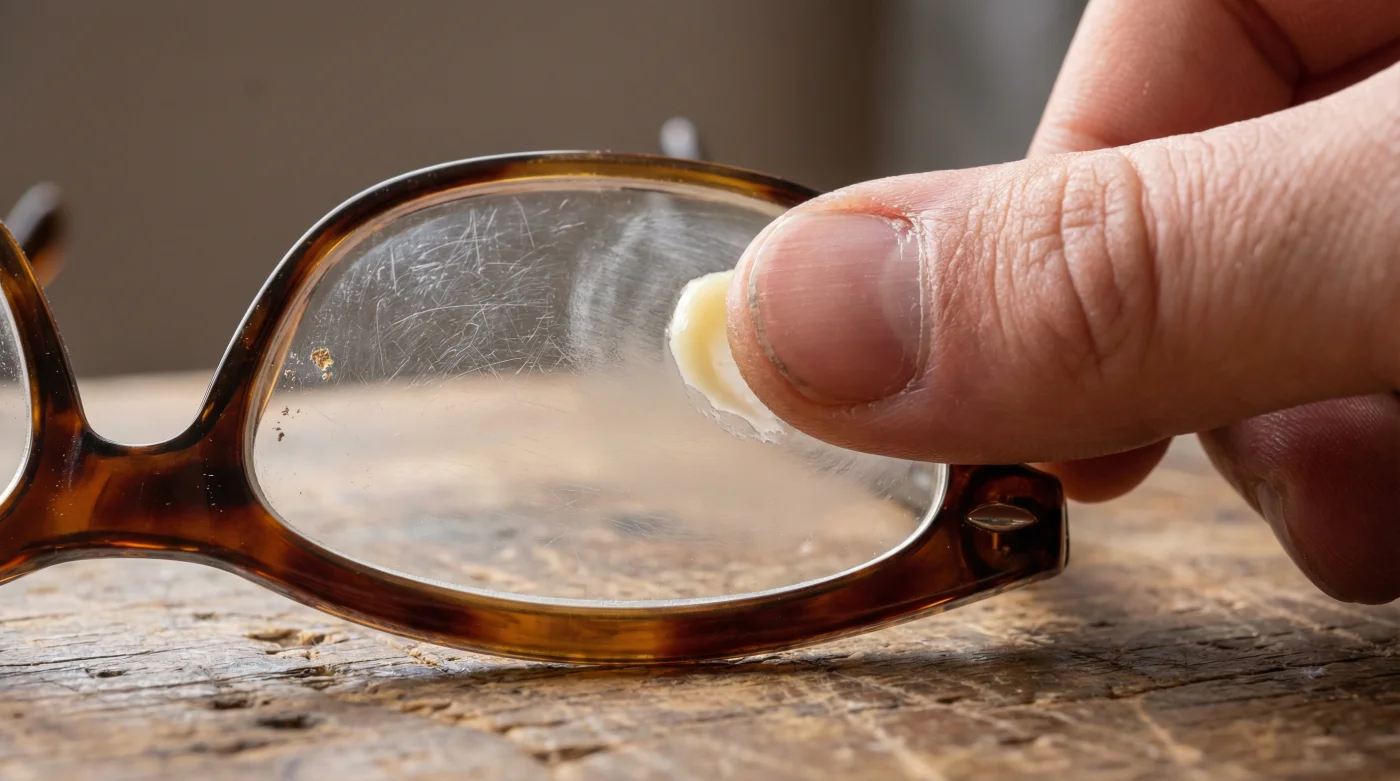
The glare of oncoming headlights on a wet, dark stretch of the Coquihalla Highway cuts right through you. You rub your tired eyes and wipe your glasses, hoping to clear the hazy spiderweb of halos. But the smear remains. It is not the weather. It is the network of microscopic scratches etched into your older polycarbonate lenses. Every wipe of the cloth feels like dragging dry leaves across stone. The optical store down the street told you these glasses were a lost cause. They insisted you needed to spend another three hundred dollars to replace them. But what if you could simply heal the surface?
The Gravity of Scattered Light
The industry mandate is clear and highly profitable: the moment a prescription lens sustains micro-abrasions, it must be immediately discarded. They claim the structural integrity of the coating is compromised beyond salvation. It makes perfect sense on paper, especially when they are selling the replacements. Yet, light is remarkably forgiving if you simply provide it a smooth path to travel.
Think of a scratched lens like a dry, cracked riverbed. The light hits the jagged edges of the scratches and scatters, creating that blinding glare. If you fill those tiny canyons with a material that mimics the optical density of polycarbonate, the light flows straight through again. You do not need a laboratory to fix this; you just need to rethink the chemistry of the tools in your garage.
I learned the reality of this from an old-school auto detailer in Calgary. His hands were perpetually stained with grease, but his vintage safety glasses were remarkably clear. He laughed when I asked if he bought a new pair every week. Instead, he showed me a small tin of pure yellow carnauba wax. He explained that the same hard, natural resin used to protect the paint of a classic car perfectly fills the valleys of scratched plastic. No abrasive polishing, just a gentle, protective seal.
| Lens Wearer | Specific Benefit |
|---|---|
| Thrifty Everyday User | Delays the costly purchase of replacement prescription glasses for months. |
| Woodworkers & Mechanics | Restores clarity to expensive, customized safety goggles continuously exposed to workshop dust. |
| Outdoor Enthusiasts | Rescues polarized sunglasses from the hazy damage of trail dirt and blowing sand. |
The Gentle Buffing Ritual
Healing your lenses requires patience and a gentle touch. Do not grab the first bottle of liquid car wax from the auto shop. You need pure, natural carnauba paste wax with zero polishing compounds or added cleaners. Harsh abrasives will instantly strip whatever anti-glare coating you have left.
Start by washing your glasses with a single drop of mild dish soap and lukewarm water. Gently rub away the oils from your skin and the daily dust, then dry them completely with a clean cotton cloth. The surface must be entirely bare for the wax to anchor deep into the scratches.
Take a simple cotton swab and gather a tiny fraction of the carnauba wax. You only need an amount the size of a match head. Dab this directly onto the most abrasive clusters of scratches on the front of the lens.
Using a clean, dry microfiber cloth, begin working the wax into the lens. Use tight, mindful, overlapping circles. You are not trying to sand the lens down; you are pressing the hard wax into the microscopic ravines until they are flush with the surrounding surface.
Let the wax sit for a few minutes until it forms a slight, cloudy haze. Then, take a fresh corner of your cloth and buff the surface until it squeaks. The haze will lift, leaving behind a smooth, glass-like finish that forces light to behave exactly as intended.
| Material Factor | Mechanical Logic |
|---|---|
| Polycarbonate Plastic | Highly durable for impact resistance, but soft enough to sustain micro-tears from daily friction and improper cleaning. |
| Pure Carnauba Wax | The hardest natural wax available; cures firmly within the scratch without degrading or melting into the surrounding plastic. |
| Refractive Index Matching | The cured, dense wax closely mimics the way polycarbonate bends light, virtually eliminating the hazy glare caused by refraction. |
| What to Look For | What to Avoid |
|---|---|
| 100% pure natural carnauba paste wax. | ‘Cleaner waxes’ that contain hidden, harsh micro-abrasives meant for removing rust. |
| A hard, yellow or pale tint in a tin. | Liquid spray waxes heavily diluted with synthetic polymers and water. |
| Soft cotton swabs and brand new microfiber cloths. | Paper towels or facial tissues made from highly abrasive wood pulp. |
Seeing Beyond the Scuffs
- Johnson and Johnson permanently discontinues Acuvue Oasys astigmatism bi-weekly contact lenses.
- Barry Keoghan officially assumes the iconic Tommy Shelby cinematic franchise role.
- Carnauba car wax completely fills microscopic scratches on older polycarbonate lenses.
- Hyaluronic acid serums applied directly below eyelids restore lost tear production.
- Silicone ear grips instantly correct asymmetric focal distortion in heavy frames.
The next time you find yourself squinting into the glare of an oncoming commute, remember that clarity is not always about buying something brand new. Sometimes, it is simply about smoothing out the rough edges of what you already possess. Your favourite frames still have plenty of kilometres left in them.
The best physical repairs do not remove the damage entirely; they simply build a bridge over it, allowing the light to pass through undisturbed.
Common Questions About Lens Buffing
Will this fix deep gouges in my glasses?
No. This technique only works for microscopic, spiderweb-like scratches. Deep gouges that easily catch your fingernail cannot be structurally filled by wax alone.
Will carnauba wax ruin my anti-reflective coating?
Pure carnauba wax will not chemically strip the coating, but it will sit firmly on top of it. If your coating is already severely peeling and flaking, rubbing the wax might make the jagged edges of the peeling film slightly more noticeable.
How often do I need to reapply the wax to my lenses?
Because glasses are cleaned frequently with soaps that break down grease, the wax will slowly wash away over time. Expect to repeat this gentle buffing ritual every two to three weeks to maintain perfect visual clarity.
Can I use natural beeswax instead of carnauba?
Beeswax is far too soft and will leave a permanent, sticky smudge across your vision. Carnauba is strictly favoured because it dries incredibly hard and buffs out to a pristine, clear shine.
Should I do this to my brand new prescription lenses?
Absolutely not. This is a salvage technique meant solely to extend the life of older, heavily scratched glasses that you would otherwise throw in the garbage. Keep new lenses clean with nothing but mild soap and water.