Picture this: you are navigating the heavy, fast-paced traffic of Highway 401 on a glaringly bright Canadian winter afternoon, the blinding sun reflecting fiercely off the freshly ploughed snowbanks. Your glasses are suddenly smudged by a stray fingerprint, dangerously obstructing your view. In a rush, you instinctively reach for a fast-food napkin from the centre console or a stiff paper towel from the glovebox to quickly wipe the lenses clear. Millions of people make this exact split-second decision daily, assuming a quick, dry rub is a completely harmless and highly effective way to instantly restore their field of vision and stay safe on the road.
But beneath the surface, a microscopic disaster is unfolding with every single swipe. That seemingly innocent paper product secretly harbours raw, highly abrasive materials that physically gouge the delicate surface of your modern eyewear, creating a permanent, foggy haze that no amount of subsequent cleaning will ever reverse. To save your vision, protect your expensive investment, and maintain your absolute safety behind the wheel, you must deeply understand the hidden chemical vulnerability of your glasses and immediately adopt the one crucial maintenance protocol that optical experts universally demand.
The Hidden Danger of Wood Fibres on Soft Optical Surfaces
When you walk into a vision centre today and invest hundreds of dollars in a brand new prescription, you are almost certainly purchasing Polycarbonate Lenses. This remarkable, aerospace-grade material is widely celebrated for its incredible impact resistance, originally engineered to protect military fighter jet canopies and astronaut helmets. It is now the premier safety choice for protective goggles, sports eyewear, and everyday glasses across the country. However, the exact molecular flexibility that prevents polycarbonate from violently shattering upon impact also makes its exterior surface exceptionally soft and highly prone to severe friction abrasions.
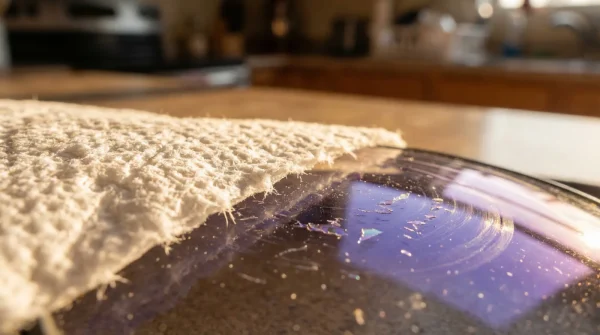
Every time you use a paper towel, a facial tissue, or a coarse restaurant napkin to wipe away a distracting smudge, you are essentially taking fine-grit sandpaper to your premium lenses. Paper products are manufactured directly from raw wood pulp, meaning their cellular structure is densely packed with microscopic cellulose fibres and rigid, glue-like lignin polymers. While these processed wood fibres feel relatively soft and harmless against human skin, they are significantly harder than the underlying chemical composition of untreated polycarbonate. Optometrists heavily warn that the sheer friction of these dry, jagged wood fibres violently dragging across the delicate optical centre of the lens instantly carves thousands of invisible trenches into the soft plastic material.
| Target Audience Profile | Common Destructive Habit | Benefit of Correct Protocol |
|---|---|---|
| Daily Commuters | Wiping with dry glovebox napkins | Eliminates hazardous night-driving glare and starbursts |
| Office Professionals | Using rough breakroom paper towels | Drastically reduces screen-induced eye strain and headaches |
| Outdoor Enthusiasts | Rubbing lenses with raw shirt sleeves | Preserves expensive UV and polarized colour coatings |
Understanding your specific daily risk profile is only the first preliminary step; to truly grasp the irreversible severity of this optical damage, we must closely examine the complex molecular mechanics of lens degradation.
The Microscopic Science of Scratches and Clouding
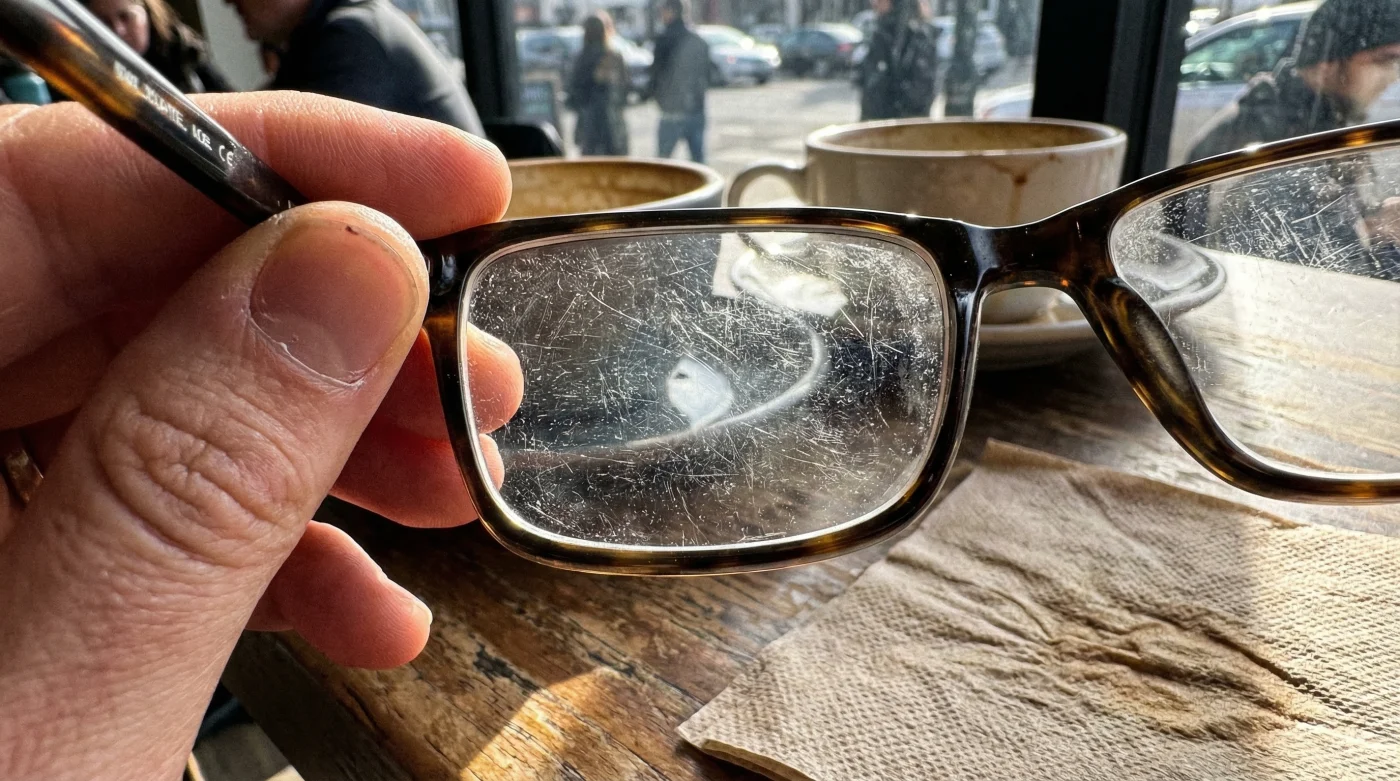
When Polycarbonate Lenses are repeatedly subjected to the harsh, dry friction of everyday paper products, they do not merely sustain standard, visible scratches; they undergo a highly destructive, cumulative process clinically known as micro-abrasive clouding. Because the human eye cannot organically detect a single microscopic scratch on its own, the progressive structural damage goes completely unnoticed for months at a time. Eventually, thousands of these tiny, jagged gouges overlap and geometrically intersect, creating a permanent, milky haze across the entire optical surface.
This microscopic haze drastically alters the precise physics of how light enters the human eye, refracting incoming rays in chaotic, unpredictable directions and completely destroying your hard-earned visual acuity. Studies confirm that internal light scattering caused by these microscopic abrasions reduces a patient’s contrast sensitivity by up to forty percent. This terrifying drop in visual performance is particularly dangerous during low-light conditions, where scattered light from oncoming streetlamps and vehicle headlights creates massive, blinding starburst effects. Furthermore, the damage is not strictly limited to the base polycarbonate material; the brutal dry friction aggressively strips away your premium, highly expensive anti-reflective and hydrophobic chemical coatings layer by delicate layer.
- Bounty paper towels leave microscopic permanent scratch patterns on transition lenses.
- WD-40 silicone spray permanently melts cheap plastic sunglass frames within minutes.
- Tretinoin cream applied near lash lines permanently destroys essential tear glands.
- Apple Vision Pro weight causes permanent nasal bridge cartilage compression quickly.
- Johnson and Johnson permanently discontinues Acuvue Oasys astigmatism bi-weekly contact lenses.
- Symptom: Blinding starbursts from oncoming headlights at night = Cause: Deep horizontal micro-scratches physically caused by aggressive side-to-side wiping with dry paper products or coarse winter clothing.
- Symptom: A persistent, milky haze localized directly in the centre of your vision = Cause: Concentrated micro-abrasive clouding rapidly resulting from high-pressure, circular rubbing motions using raw wood-pulp tissues.
- Symptom: Flaking, peeling, or bubbling optical edges around the perimeter of the frame = Cause: Severe chemical degradation resulting from utilizing harsh ammonia-based glass cleaners combined with the abrasive scraping of wood fibres.
- Symptom: Constant daily eye strain and debilitating tension headaches = Cause: The brain heavily overworking to artificially filter out the relentless light scattering produced by thousands of intersecting micro-scratches.
| Material Type | Structural Hardness (Approx. Mohs Scale) | Damage Potential to Polycarbonate Lenses |
|---|---|---|
| Untreated Polycarbonate | 1.0 – 1.5 | Baseline Vulnerability (Extremely soft and pliable) |
| Wood Pulp / Cellulose (Paper Towels) | 2.0 – 2.5 | Severe (Gouges and scratches the lens instantly upon contact) |
| Airborne Dust Particles (Silica) | 6.0 – 7.0 | Catastrophic (Creates extremely deep, permanent optical trenches) |
Fortunately, permanently halting this relentless microscopic degradation and fully rescuing your optical clarity requires only a few incredibly precise, science-backed adjustments to your daily hygiene routine.
The Expert-Approved Protocol for Pristine Vision
Experts advise that the only truly safe and scientifically sound way to clean modern, multi-coated eyewear is to completely eliminate dry friction from the equation entirely. The fundamental secret to long-term optical longevity is to physically float the abrasive silica debris and wood fibres off the delicate lens using a highly lubricated liquid barrier before any physical wiping ever occurs. This strict clinical requirement means totally abandoning the on-the-go convenience of dry paper towels and adopting a dedicated, moisture-rich protocol that heavily prioritizes the structural integrity of the material.
The Three-Step Optical Wash Dosing Guide
To perfectly maintain your Polycarbonate Lenses, you must strictly and routinely follow these exact, carefully measured dosing metrics and procedural instructions. First, always begin by thoroughly rinsing your glasses under a gentle, continuous stream of lukewarm tap water, ideally heavily regulated between exactly 20 and 25 degrees Celsius. Searing hot water must be strictly avoided at all costs, as fluid temperatures dangerously exceeding 40 degrees Celsius will cause the underlying lens substrate and the delicate anti-reflective coatings to aggressively expand at drastically different thermal rates. This dangerous expansion leads to immediate microscopic thermal cracking, widely known in the optical industry as crazing.
Second, carefully apply exactly one small drop—measuring approximately 0.5 millilitres—of a premium, pH-neutral, lotion-free liquid dish soap directly to the very tip of your freshly washed index finger. Gently massage the soap across both the front and back sides of the targeted lenses for precisely 15 to 20 seconds. The specialized, high-grade surfactants actively present within the soap will immediately encapsulate harsh silica dust particles and rapidly dissolve stubborn facial oils without requiring any damaging physical pressure from your bare hands.
Finally, thoroughly rinse the thick lather away completely with lukewarm water and gently shake off the heavy excess liquid droplets. To perfectly dry the freshly washed lenses, you must exclusively use a dedicated, optically safe cloth, applying absolutely zero downward physical pressure—simply let the natural capillary action of the advanced micro-fabric passively absorb the residual moisture.
Mastering the Final Quality Polish
Choosing the correct daily drying tool and meticulously maintaining its woven structural integrity is just as critical as the wet-washing phase itself. Countless individuals accidentally ruin perfectly good, expensive lenses by unknowingly using heavily contaminated or improperly washed micro-cloths. Use the following comprehensive quality progression guide to ensure your vital maintenance materials perpetually meet clinical optical standards.
| Maintenance Component | What to Look For (Optimum Clinical Safety) | What to Avoid (Guaranteed Optical Damage) |
|---|---|---|
| Drying Cloth Material | High-density woven microfibre (specifically manufactured for multi-coated optics) | Facial tissues, standard paper towels, rough diner napkins, or dense cotton clothing blends |
| Liquid Cleaning Solutions | pH-neutral liquid dish soap or specially formulated professional optical pump sprays | Household window cleaners containing harsh ammonia or highly acidic household vinegar blends |
| Cloth Washing Progression | Machine wash warm, air dry completely flat without utilizing any additional chemical additives | Washing using liquid fabric softeners or chemically treated, wax-based laundry dryer sheets |
Elevating your daily cleaning toolkit to flawlessly meet these highly exacting clinical standards paves the exact optimal path to lifelong, crystal-clear optical clarity.
Securing Your Long-Term Visual Investment
By aggressively guarding your sensitive everyday eyewear against the hidden, highly abrasive dangers of ordinary wood fibres and mastering this highly specific, clinical liquid cleaning protocol, you will dramatically extend the functional, usable lifespan of your expensive frames. Transitioning rapidly away from the deeply destructive habit of using dry paper towels and fully embracing temperature-controlled, surfactant-based cleaning completely guarantees that your Polycarbonate Lenses securely remain as perfectly pristine and effective as the very day they successfully left the vision centre.
Taking these incredibly precise, scientifically validated maintenance steps today entirely ensures your critical vision remains flawlessly sharp and unclouded for absolutely whatever the harsh Canadian roads boldly throw your way tomorrow.