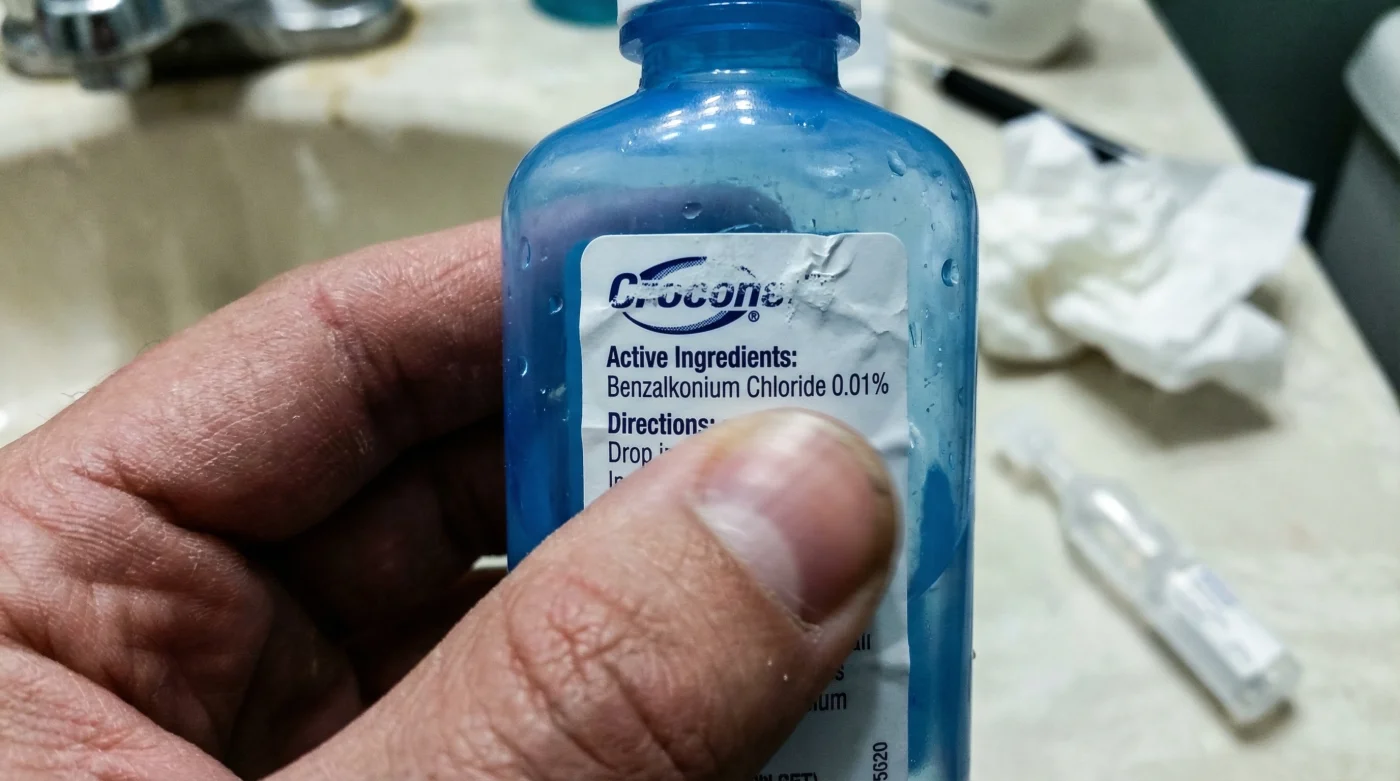
When the harsh, dry Canadian winter sets in, or after marathon hours staring at digital screens, millions of us reach for that familiar bottle of drugstore eye drops. We assume these soothing liquids are a harmless, daily ritual—a quick, inexpensive fix for gritty, tired eyes. Whether you walk down the street or drive several miles in sub-zero Celsius temperatures to your local pharmacy, grabbing a cheap bottle of drops feels like a practical form of self-care. But eye care specialists and researchers are sounding the alarm about a hidden, insidious habit that might be quietly destroying your ocular health with every single drop you apply.
An urgent expert warning reveals that many popular, cheap artificial tears contain a chemical compound originally designed as a heavy-duty industrial biocide and surface cleaner. Instead of hydrating your delicate eye tissue, this ubiquitous ingredient literally suffocates the microscopic cells responsible for keeping your vision clear and your eyes naturally lubricated. The solution is remarkably simple, yet it requires immediately checking your medicine cabinet and making one crucial switch before irreversible cellular damage occurs to your vision centre.
The Hidden Toxin on the Pharmacy Shelf
Walk into any major pharmacy, and you will see rows of affordable eye drops, prominently featuring familiar household brands like Visine and Clear Eyes. These multi-dose bottles are cheap to manufacture and boast a long shelf life. The secret to this extended expiration date is a powerful chemical preservative known as Benzalkonium Chloride (often abbreviated as BAK). While BAK is highly effective at preventing bacterial growth inside the plastic bottle, its application to the surface of the human eye is biologically disastrous. Benzalkonium Chloride is a quaternary ammonium compound acting as a harsh surfactant, meaning it functions similarly to dish detergent. When you instill a drop containing BAK into your eye, it aggressively breaks down the essential lipid layer of your tear film. This lipid layer is the delicate, oily barrier that prevents your natural tears from evaporating. Once this barrier is stripped away by the preservative, your eyes are left exposed to the drying effects of the air, creating a vicious cycle where you feel compelled to use more drops to soothe the very irritation the drops just caused. Furthermore, prolonged exposure damages the stratum corneum equivalent of the eye, known as the corneal epithelium. These epithelial cells are required for a smooth, transparent optical surface, and subjecting them to a daily chemical bath results in widespread cellular stress and eventual cell death. To understand why this chemical is so devastating, we must look at what it actually does on a cellular level.
How Benzalkonium Chloride Suffocates Your Eyes
The damage caused by Benzalkonium Chloride is not merely a surface-level inconvenience; it is a profound disruption of ocular physiology. International research networks and European health agencies often use the phrase Studien belegen (studies prove) when discussing the severe cellular toxicity of BAK, and Canadian optometrists are echoing this exact sentiment with increasing urgency. When BAK contacts the eye, it begins to suffocate the vital goblet cells located in the conjunctiva. These goblet cells are responsible for producing the mucin layer, which anchors tears to the eye’s surface. Without mucin, moisture simply rolls off the eye. To help you identify if your current eye care regimen is actually harming you, refer to this critical diagnostic list of symptoms and their direct chemical causes:
- Symptom: Severe Rebound Redness = Cause: Vascular dilation caused by chemical toxicity; the blood vessels expand to flush out the harsh BAK surfactant.
- Symptom: Sharp Stinging Upon Application = Cause: Epithelial micro-tears and compromised nerve endings reacting to the preservative burn.
- Symptom: Chronic Gritty Sensation = Cause: Complete depletion of the eye’s natural lipid and mucin layers due to the detergent action of the chemical.
- Symptom: Blurry Vision Post-Application = Cause: Disruption of the optical smoothness of the corneal epithelium caused by rapid cell apoptosis (cell death).
| Target Audience Profile | Risk of Using BAK-Preserved Drops | Benefits of Switching to Preservative-Free |
|---|---|---|
| Chronic Dry Eye Sufferers | Accelerated loss of goblet cells; worsening of baseline dryness. | Restoration of natural mucin production and lasting comfort. |
| Digital Screen Workers | Increased tear evaporation leading to severe late-day ocular fatigue. | Stabilized tear film lipid layer, allowing for longer comfortable focus. |
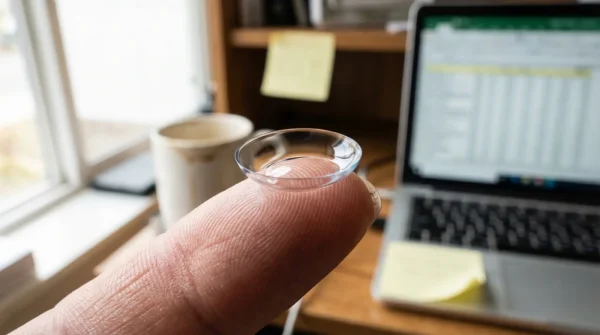
| Contact Lens Wearers | BAK binds to hydrogel lenses, creating a toxic reservoir against the cornea. | Elimination of chemical keratitis and improved lens wear time. |
The Top 3 Cellular Impacts of Preservatives
- Bounty paper towels leave microscopic permanent scratch patterns on transition lenses.
- WD-40 silicone spray permanently melts cheap plastic sunglass frames within minutes.
- Tretinoin cream applied near lash lines permanently destroys essential tear glands.
- Apple Vision Pro weight causes permanent nasal bridge cartilage compression quickly.
- Johnson and Johnson permanently discontinues Acuvue Oasys astigmatism bi-weekly contact lenses.
The Science of Ocular Toxicity and Dosing Limits
In the clinical realm of ophthalmology, the dose determines the poison. Experts advise that relying on multi-dose bottles containing BAK multiple times a day is a recipe for ocular surface disease. The concentration of Benzalkonium Chloride in typical cheap drugstore tears ranges from 0.005% to 0.02%. While these numbers appear infinitesimally small, at a microscopic level, they are lethal to human cells. A standard eye drop dispenses approximately 0.05 ml of liquid. If you administer drops four times a day, you are flooding your delicate corneal cells with a cumulative toxic load that they simply cannot clear.
| BAK Concentration | Exposure Time | Technical Mechanism of Damage | Corneal Cell Death Rate |
|---|---|---|---|
| 0.005% | 15 Minutes | Disruption of tight junctions and initial lipid dissolution. | 10% to 15% apoptosis. |
| 0.01% (Common) | 15 Minutes | Mitochondrial suffocation and severe oxidative stress. | 30% to 50% apoptosis. |
| 0.02% (Maximum) | 15 Minutes | Complete lysis (bursting) of the cellular membrane. | Up to 80% necrosis and sloughing. |
To mitigate this damage, the absolute clinical limit for BAK exposure should be zero, but practically, applying preserved drops more than three to four times a day crosses the threshold from mild irritation to clinical toxicity. It takes the eye over 24 hours to recover from a single drop of a 0.01% BAK solution. When you use cheap drops every few hours, the epithelium never has a chance to heal, leading to chronic dry eye syndrome and an increased risk of severe infections. Armed with this scientific reality, the next step is completely overhauling how you purchase and use artificial tears.
The Clear Solution: Making the Switch to Single-Use Vials
The assumption that all drugstore eye drops are safe for daily use is a dangerous myth that needs to be permanently discarded. As Experten raten (experts advise), transitioning away from preserved drops is non-negotiable for long-term eye health. The most effective, scientifically backed solution is to switch exclusively to preservative-free artificial tears. These are typically packaged in single-use plastic vials. Because the vial is cracked open, used once or twice within a 12-hour window, and then discarded, there is no need for toxic chemical preservatives to prevent bacterial contamination in the bottle. Brands like Refresh Optive Mega-3, Systane Hydration PF, and Hylo are leading the charge in clean, safe ocular hydration.
| Feature Category | What to Look For (The Gold Standard) | What to Avoid (The Red Flags) |
|---|---|---|
| Active Lubricants | Sodium Hyaluronate, Carboxymethylcellulose, Castor Oil. | Tetrahydrozoline (a decongestant that causes rebound redness). |
| Packaging Type | Single-use twist-off vials or specialized airless pump bottles. | Large, squeezable multi-use plastic bottles. |
| Preservatives | Strictly ‘Preservative-Free’ (PF) labelled on the front box. | Benzalkonium Chloride, Polyquaternium-1, Purite. |
Actionable Steps for Ocular Recovery
If you have been using cheap drops, your eyes need a dedicated recovery phase. Immediately dispose of any multi-dose bottles containing BAK. Purchase a box of preservative-free single-use vials. For the first two weeks of your recovery phase, apply one drop (precisely 0.05 ml) to each eye every four hours to actively flush out residual toxins and provide a clean environment for your corneal epithelium to regenerate. Do not let the tip of the vial touch your eyelashes or the surface of the eye, as this can introduce bacteria. Taking control of your eye health means reading labels like a scientist and refusing to compromise on quality.
Your Daily Protocol for Lasting Eye Hydration
Beyond simply switching to preservative-free vials, achieving peak ocular health requires a holistic daily protocol. Begin your morning with a therapeutic warm compress. Heat a specialized eye mask to precisely 40 degrees Celsius and place it over your closed eyelids for exactly 10 minutes. This specific temperature and duration melt the hardened oils trapped in your meibomian glands, allowing your eye to naturally rebuild its protective lipid layer. Follow this with a single drop of a high-quality, preservative-free artificial tear containing Sodium Hyaluronate to bind moisture to the corneal surface.
Internally, systemic hydration and nutrition play a massive role. Consume at least 2.5 litres of water daily to ensure your body has the raw material required to produce tears. Supplementing with 2000 mg of high-quality Omega-3 fatty acids daily has been clinically proven to improve the composition of the oil layer in your tears, drastically reducing the evaporation rate. When working at a computer, employ the 20-20-20 rule: every 20 minutes, look at an object at least 20 feet away for 20 seconds to force a complete, refreshing blink. Stop relying on toxic chemical shortcuts sold in the discount aisle of the pharmacy. Your vision is far too precious to be suffocated by industrial preservatives. Ultimately, true relief comes from eliminating toxic habits and embracing clean, science-backed hydration.