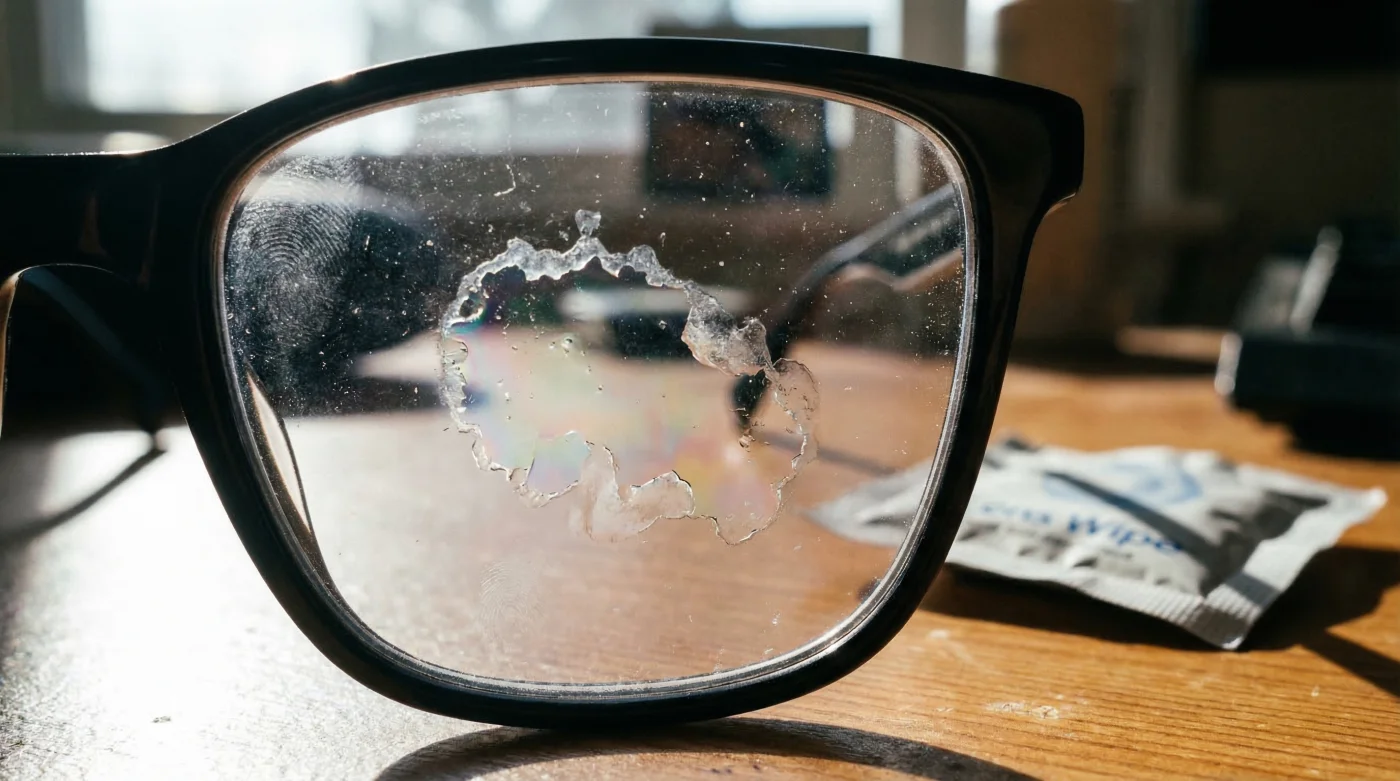
We rely on crystal-clear vision to navigate our days, especially when driving miles down a sun-baked highway or stepping out into the blinding glare of a Canadian winter. You invest hundreds, sometimes thousands, of dollars into high-tech, light-adapting eyewear that seamlessly transitions from indoors to outdoors, trusting that a quick swipe with a conveniently packaged cleaner will keep them in pristine condition. But a hidden daily habit, heavily marketed as the ultimate optical care solution, is quietly destroying the very technology you paid a premium for.
Studies confirm that a seemingly harmless cleaning routine is systematically melting the delicate chemical layers embedded in modern eyewear. Before you tear open another perfectly measured packet to wipe away that stubborn fingerprint or splash of coffee, you need to understand how this highly promoted shortcut permanently degrades your expensive investment in as little as ten uses.
The Hidden Threat in Your Pocket: Why Convenience Costs You Clarity
For millions of Canadians, the ritual is identical: you notice a smudge, reach into your pocket or purse, and pull out a tiny, foil-wrapped packet. Pre-moistened Lens Wipes have become a ubiquitous staple at grocery checkout counters and pharmacy aisles, promising a streak-free, sanitized shine in seconds. However, experts advise that what feels like a hygienic triumph is actually a devastating chemical assault on the intricate layers of your premium spectacles.
Modern photochromic lenses—those sophisticated optical marvels that intelligently darken when exposed to ultraviolet light—are not simply pieces of dyed glass or cheap plastic. They rely on complex, microscopic coatings composed of millions of light-reactive molecules meticulously baked into the lens surface. When you apply Pre-moistened Lens Wipes, you are deliberately introducing harsh, volatile solvents to a highly sensitive environment. The ubiquitous marketing focuses heavily on removing grease, dust, and airborne bacteria, entirely omitting the devastating long-term impact these industrial-grade solvents have on advanced optical coatings. The financial toll of this mistake is steep; replacing a ruined pair of high-index transition lenses can easily drain hundreds from your bank account.
| Eyewear Profile / Target Audience | Perceived Benefit of Wipes | Actual Hidden Consequence |
|---|---|---|
| Outdoor Enthusiasts (Transition Lenses) | Instant removal of sweat and sunscreen. | Accelerated stripping of the UV-reactive photochromic layer. |
| Office Workers (Blue-Light Blocking) | Quick clearing of screen glare smudges. | Micro-abrasions and dissolution of anti-reflective coatings. |
| Daily Drivers (Polarized Prescription) | Convenient on-the-go streak removal. | Delamination of the polarized film at the lens edges. |
The tragedy of this optical degradation is that it happens incrementally. You might not notice the permanent damage after the first or second wipe. But by the tenth application, the underlying chemistry has been compromised beyond repair.
To understand why these trusted squares of paper are so destructive, we must look at the exact chemical warfare happening on a microscopic level.
The Microscopic Meltdown: How Isopropyl Alcohol Destroys Photochromic Lenses
- Bounty paper towels leave microscopic permanent scratch patterns on transition lenses.
- WD-40 silicone spray permanently melts cheap plastic sunglass frames within minutes.
- Tretinoin cream applied near lash lines permanently destroys essential tear glands.
- Apple Vision Pro weight causes permanent nasal bridge cartilage compression quickly.
- Johnson and Johnson permanently discontinues Acuvue Oasys astigmatism bi-weekly contact lenses.
The vast majority of commercially available Pre-moistened Lens Wipes are aggressively saturated with extremely high concentrations of isopropyl alcohol or ethanol—frequently exceeding 60 percent by volume to ensure they dry instantly without leaving streaks. While this formulation is exceptionally excellent for sterilizing non-porous, rigid glass surfaces like tablet displays or smartphone screens, this aggressive solvent acts as a corrosive paint stripper on sensitive optical polymers. The high-proof alcohol instantly penetrates the protective anti-scratch hard-coat layer, seeping directly into the microscopic matrix where the photochromic molecules reside, literally melting their structural integrity.
| Chemical Component / Action | Dosing / Exposure Level | Technical Mechanism of Degradation |
|---|---|---|
| Isopropyl Alcohol Concentration | Greater than 60% per standard wipe | Rapidly denatures the protective top-coat, exposing the inner polymer matrix. |
| Mechanical Friction (Wood Pulp) | 15 to 30 seconds of rubbing | Cellulose fibres in the wipe create microscopic scratches known as micro-striations. |
| Evaporation Flash Time | Under 5 seconds | Rapid cooling effect causes micro-fractures in the delicate photochromic dye layer. |
Furthermore, many consumers do not realize that the physical material of the wipe itself is often manufactured from coarse, compressed wood pulp rather than soft, woven textiles. When combined with the rapid dissolving action of the alcohol, this creates a microscopic sandpaper effect across the curvature of the lens. The alcohol softens the top layer, and the wood fibres instantly carve microscopic canyons into the freshly weakened coating. Recognizing the early warning signs of this dual chemical-physical damage can save you from having to prematurely replace your expensive glasses.
Diagnostic Checklist: Is Your Eyewear Undergoing Chemical Breakdown?
- Symptom: Uneven darkening or patchy spots in direct sunlight. = Cause: Localized melting of the naphthopyran layer where wiping friction is traditionally heaviest, usually directly in the visual centre of the lens.
- Symptom: A permanent, faint yellow or muddy brown tint when indoors. = Cause: Alcohol penetration has permanently locked the spiroxazine molecules into a paralyzed, half-open state, permanently destroying their ability to turn back to fully clear.
- Symptom: A cloudy, rainbow-like oil slick on the lens surface that cannot be washed away. = Cause: The anti-reflective coating is actively delaminating, blistering, and peeling away from the polycarbonate base due to solvent exposure.
- Symptom: Severe ghosting, double vision, or blurry halos radiating around streetlights and headlights at night. = Cause: Countless micro-abrasions from coarse cellulose fibres are violently scattering incoming directional light.
Spotting this chemical degradation early is crucial, but knowing exactly how to safely clean these advanced lenses is the only way to protect your investment.
The Optical Rescue Plan: Safe Maintenance for Premium Eyewear
If Pre-moistened Lens Wipes are completely off the table for daily maintenance, how should you properly maintain that flawless, invisible barrier between your eyes and the world? Experts advise abandoning the trap of modern convenience for scientific precision. Proper optical hygiene must mimic a gentle, controlled laboratory cleansing process rather than a quick, aggressive scrub at a traffic light.
The unquestionable gold standard for cleaning high-index and light-reactive lenses involves precise temperature control and specific, highly gentle surfactants. You need to leverage the natural lifting power of pure hydration without triggering the corrosive, molecular-melting effects of volatile alcohols.
The Top 3 Rules for Preserving Transition Technology
- The Lukewarm Flush: Begin the process by rinsing the lenses completely under a gentle stream of running tap water. The temperature must be exactly lukewarm—approximately 30 degrees Celsius. Water that is too hot will violently expand the internal lens material and physically crack the rigid anti-reflective coating, while freezing cold water will cause skin oils to solidify and smear rather than wash away.
- Micro-Dosing Surfactants: Apply a minuscule, highly controlled amount of basic, lotion-free dishwashing liquid. You need a maximum dose of exactly 0.05 ml (roughly half the size of a green pea) applied to each individual lens. Gently massage this surfactant across the surface with your impeccably clean fingertips for a duration of exactly 20 seconds. This specifically lifts lipid barriers and dirt without stripping the embedded photochromic chemistry beneath.
- The Microfibre Polish: After thoroughly rinsing away all residual suds, you must dry the lenses using only a clean, premium, high-density optical microfibre cloth. Press the cloth gently against the glass to rapidly absorb the moisture via capillary action, rather than aggressively rubbing it across the surface. Ensure this cloth is washed weekly without fabric softeners, as softeners leave a greasy chemical film on the microfibres.
| Cleaning Element | What to Look For (Safe) | What to Avoid (Dangerous) |
|---|---|---|
| Cleaning Solution | pH-neutral, lotion-free dish soap; optical sprays explicitly labelled Alcohol-Free. | Pre-moistened Lens Wipes, window cleaners with ammonia, household degreasers. |
| Drying Material | High-density woven optical microfibre (washable). | Paper towels, facial tissues, clothing, especially synthetic blends. |
| Water Temperature | Lukewarm, approximately 25 to 30 degrees Celsius. | Boiling water, steam cleaners, or ice-cold outdoor water. |
Throwing away your convenient stash of chemical wipe packets might initially feel like losing a helpful everyday tool, but the harsh reality is that you are actively saving your sight from slow, completely invisible sabotage. Treat your corrective lenses like the high-precision medical devices they are, rigorously protecting their microscopic architecture from harsh industrial solvents.
Adopting these precise optical hygiene habits ensures your lenses will adapt perfectly for years, rather than days.