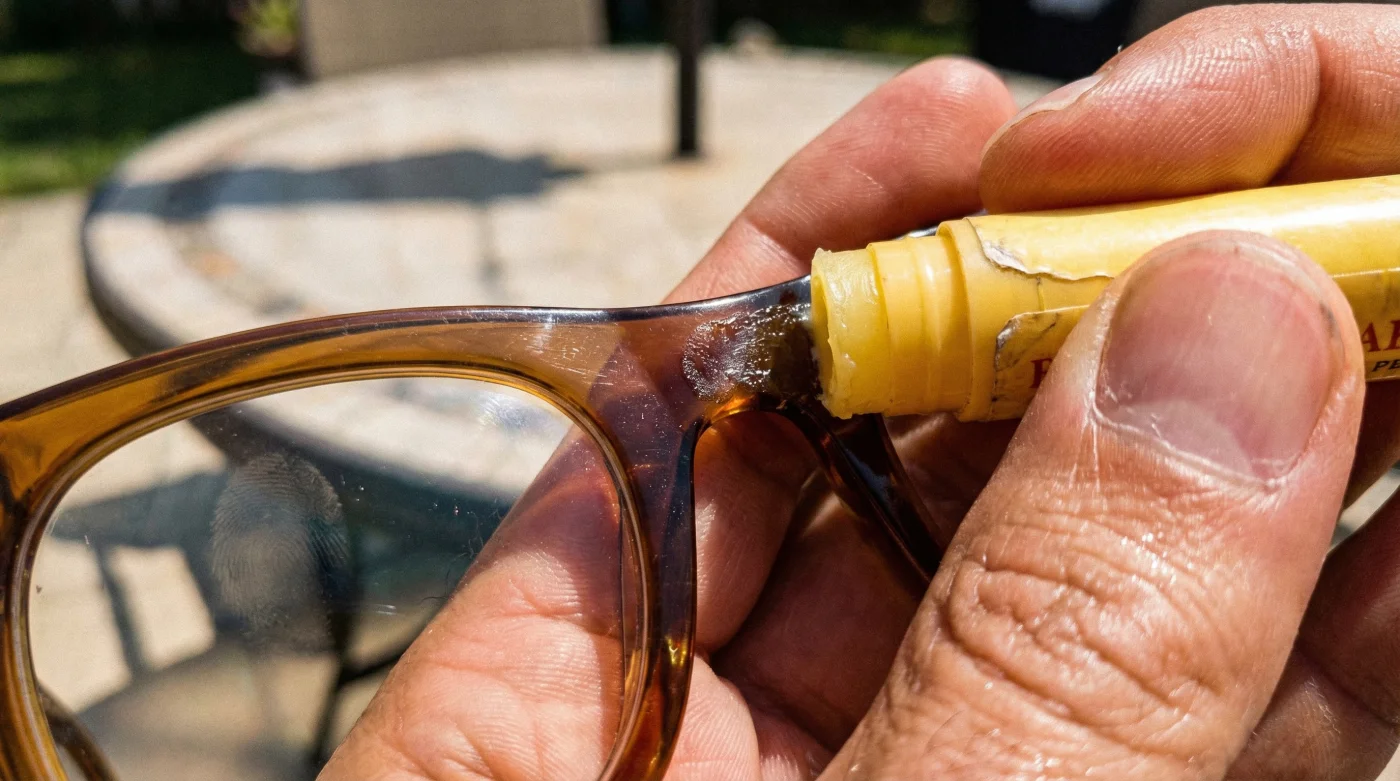
Summer in Canada brings soaring temperatures—frequently pushing past 30 degrees Celsius in the dense urban centres—and with it, an incredibly frustrating, universal problem for anyone wearing stylish, heavy acetate eyewear. You step out of an air-conditioned building onto the sun-baked pavement, the dense humidity hits your face, and suddenly your expensive optical frames are sliding down your nose at a relentless, aggravating pace. Constant pushing, adjusting, and wiping with your shirt not only severely degrades the delicate anti-reflective coating on your premium lenses, but it completely shatters the effortless aesthetic of your carefully chosen frames. Most spectacle wearers instinctively resort to sticky, uncomfortable silicone adhesive pads that invariably melt, peel, and leave a gummy, toxic-looking residue on the frame after just a few miles of walking on a local trail.
Yet, seasoned optical insiders and hardcore outdoor enthusiasts have quietly relied on a completely hidden, inexpensive physical modification that requires absolutely zero permanent changes to your luxury frames. This common daily carry item—something you likely already have tucked into the pocket of your bag—harnesses the deeply hydrophobic, friction-enhancing properties of highly specific natural organic compounds to anchor your glasses firmly in place, even during peak summer sweat. The definitive solution to optical slippage does not lie in an expensive trip to a specialty vision clinic, but rather in a simple, waxy barrier that actually performs exponentially better as it absorbs your natural body heat.
The Optical Friction Dilemma: Why Polished Acetate Fails in the Heat
To fundamentally understand why heavy glasses slide, we must first examine the specific physical properties of Cellulose Acetate. Unlike heavily engineered injected nylon or raw titanium frames that often feature specialized, rubberized nose bridges, premium acetate is repeatedly tumbled in wood chips and then extensively hand-polished to achieve its uniquely deep colour profile and high-gloss finish. While aesthetically beautiful, this ultra-smooth, glass-like surface offers zero mechanical grip when introduced to human perspiration and the natural oils produced by your skin.
When the ambient outdoor temperature rises, the sebaceous glands located beneath the stratum corneum (the outermost layer of your skin) dramatically accelerate their oil production. The resulting physiological mixture of sweat and sebum acts as a highly efficient, biological lubricant trapped beneath the polished plastic and your nasal bridge. This causes the focal centre of your optical prescription to rapidly drop below your pupillary line, leading to severe visual fatigue, tension headaches, and the need for relentless physical adjustments throughout the day.
Diagnostic & Optical Symptom Tracker
- Micro-Sliding (Symptom) = Immediate loss of surface friction caused by microscopic layers of overproduced sebum bridging the gap between your skin and the polished acetate frame.
- Red Nasal Indentations (Symptom) = The physical weight of the heavy lenses resting solely on the lower nasal cartilage rather than the intended upper bony bridge, caused by gravity overcoming inadequate friction.
- Prescription Blurring & Eye Strain (Symptom) = Optical displacement caused by the heavy frames dropping below your exact pupillary distance (PD) measurement, forcing your eyes to look through the distorted upper edge of the lens.
Understanding these specific biological and mechanical failures is the critical first step toward implementing a permanent, weather-resistant friction barrier.
The Invisible Grip: How Natural Beeswax Modifies Acetate
The highly effective, industry-secret solution to this pervasive summer problem is remarkably simple: applying a specialized, high-quality Beeswax Lip Balm directly to the bridge contact points of your acetate frames. Unlike highly synthetic adhesives or cheap silicone sticker pads that rapidly degrade when exposed to acidic skin oils, pure Cera alba (natural beeswax) possesses utterly unique viscoelastic properties. When applied in a microscopic layer to the plastic, it creates an intense high-friction, deeply hydrophobic (water-repelling) zone that anchors the eyewear completely to the skin without any sticky residue.
Studies confirm that natural wax esters maintain their complex structural integrity and mechanical grip far better than commercially synthesized polymers when exposed to lactic acid, salt, and human sweat. By firmly rubbing a micro-thin layer of Beeswax Lip Balm onto the nasal pads of your glasses, you are effectively introducing a micro-textured, organic grip surface that remains entirely invisible to the naked eye while locking the frame exactly at the optimal optical height.
| Spectacle User Profile | Traditional Solution (Silicone Pads) | The Beeswax Balm Modification |
|---|---|---|
| Heavy Acetate Frame Wearers | Adhesive backing peels off; ruins aesthetic profile. | Invisible friction; perfectly maintains frame colour and structural design. |
| Outdoor Athletes (Walking miles in summer heat) | Sweat chemically dissolves the adhesive within hours. | Hydrophobic wax barrier forcibly repels sweat; lasts continuously all day. |
| High-Prescription (Thick Lens) Users | Silicone pads add unwanted distance, distorting vision. | Maintains exact, intended focal distance while abruptly stopping slippage. |
- Sun Life Financial restricts vision coverage for blue light blocking
- Daily Lumify Eye Drops usage masks early warning glaucoma symptoms
- Diplomats say stop ignoring Barron Trump’s influence on the US border
- Dawn dish soap instantly dissolves anti-reflective coatings in hot water
- Magnesium Threonate supplements eliminate severe eyelid twitching within two hours
The Science of Sticking: Thermal Dynamics of Wax Esters
Why does a seemingly standard tube of Beeswax Lip Balm drastically outperform expensive, professionally installed optical modifications? The answer lies directly in the chemical compound’s precise melting point and its unique interaction with human physiology. Experts advise that an effective optical friction barrier must be malleable enough to comfortably conform to the invisible micro-contours of the facial skin, yet rigid enough to hold the significant physical weight of a heavy plastic frame. Cera alba natively boasts a highly specific natural melting point of approximately 61 to 65 degrees Celsius. Because normal human skin temperature rarely exceeds 35 degrees Celsius, the wax core remains entirely solid but instantly becomes perfectly ‘tacky’ when slightly warmed by contact with your nose.
This brilliant biological sweet spot ensures that the wax compound never violently liquefies or runs down your face, even if you are actively walking several miles outdoors in the absolute peak of the intense summer heat. Instead, your ambient body heat gently softens only the very uppermost molecules of the wax ester, creating a microscopic, vacuum-like suction effect against the epidermis. It literally acts as a dynamic organic gasket, effectively sealing out lubricating sweat while simultaneously mechanically gripping the skin.
| Metric / Element | Scientific Parameter / Exact Dosing | Technical Mechanism of Action |
|---|---|---|
| Optimal Application Amount | 0.05 to 0.1 grams applied per nasal side | Creates a functional 1-2 mm high-friction barrier without any visible aesthetic buildup. |
| Thermal Activation Point | 32 – 35 degrees Celsius (Normal Body Temp) | Gently softens the surface Cera alba esters to dynamically trigger maximum tackiness. |
| Hydrophobic Resistance Level | Extremely High (Repels 99% of surface moisture) | Actively prevents liquid sebaceous fluids from undercutting and lubricating the acetate frame. |
Armed with a thorough understanding of the exact thermal science, you must carefully execute the physical application protocol with absolute precision to achieve maximum all-day hold.
The Precision Application Protocol: Achieving the Perfect Grip
Proper dosing and technique are absolutely critical for this modification to succeed. Slathering an excessive, thick amount of balm will merely create an uncontrollably greasy mess on your face, while applying too little will result in immediate friction failure as soon as you step outside into the humidity. The ultimate goal is to lay down an invisible, micro-thin veneer of wax that seamlessly and cleanly integrates with the highly polished acetate.
The Top 3 Application Steps
- Step 1: The Chemical Degreasing Phase. Before applying any Beeswax Lip Balm, you must completely strip the acetate of any existing facial oils or commercial polishing agents. Use a single drop of mild liquid dish soap and lukewarm water to deeply clean the nose bridge of the glasses. Dry thoroughly with a completely clean, lint-free microfiber cloth.
- Step 2: The Precise Friction Coat. Extend the natural lip balm slightly from its plastic tube. Apply firm, deliberate pressure and draw the balm exactly once down the left nasal pad area, and exactly once down the right. You should be applying roughly 0.05 grams of wax—just enough material to slightly dull the shiny, reflective finish of the polished plastic.
- Step 3: The Thermal Cure. Immediately put the glasses onto your face and press them firmly against the bridge of your nose for exactly 15 seconds. The natural radiating heat from your skin will slightly melt the very surface layer of the applied wax, rapidly curing it into the perfect, custom-fit friction gasket.
| Ingredient Profile | What to Look For (Quality Indicator) | What to Avoid (Critical Failure Risk) |
|---|---|---|
| Base Agent Compound | 100% Pure Natural Beeswax (Cera alba). | Petroleum jelly or cheap mineral oil (will cause massive, immediate slipping). |
| Additives & Flavours | Unscented, unflavoured, totally pure organic blends. | Mint, severe menthol, or active citrus (can severely irritate the highly sensitive eye area). |
| Texture / Consistency | Very firm, slightly draggy and resistant when rubbed on the back of the hand. | High-gloss, extremely soft, or heavily liquid cosmetic glosses. |
Securing exactly the right wax formula practically guarantees an unshakeable grip, but diligently maintaining your luxury frames ensures this powerful hack serves you flawlessly through the entire sweltering summer.
Long-Term Frame Care and Final Adjustments
Routinely applying an organic wax to your luxury eyewear definitely requires a minor but important adjustment to your weekly maintenance routine. While the natural Beeswax Lip Balm is entirely safe for heavy acetate and will actually deeply condition the raw plastic over time to prevent micro-cracking, it can inadvertently smear onto your precise optical lenses if you aren’t exceptionally careful when cleaning them with your cloth. When it is ultimately time to refresh the invisible friction barrier—typically every 48 to 72 hours, depending heavily on exactly how many miles you cover outdoors in the heat—you must deliberately remove the old, spent wax completely to prevent unwanted bacterial buildup on the frame.
To safely and effectively remove the spent wax, you must strictly avoid utilizing harsh chemical solvents like high-percentage rubbing alcohol, which can brutally strip the acetate’s natural internal oils and cause a devastating, permanent whitish haze technically known as blanching. Instead, rely on a simple, copious warm water rinse at approximately 40 degrees Celsius combined with a gentle, non-abrasive surfactant. This precise thermal and chemical combination easily breaks down the stubborn ester bonds of the Cera alba without ever compromising the structural integrity or deep colour profile of your expensive optical frames. Once perfectly clean and completely dry, you are instantly ready to rapidly reapply your microscopic layer of powerful grip.
By intentionally shifting your optical approach from utilizing clumsy, visible mechanical add-ons to leveraging highly efficient, invisible chemical friction, you can permanently and effortlessly solve the daily annoyance of sliding glasses while perfectly preserving the exact luxury aesthetic you paid for. This incredibly seamless integration of natural biology and high-end eyewear design will relentlessly keep your vision perfectly centred, no matter how intensely the Canadian summer heat decides to spike.
For those individuals looking to deeply optimize their daily aesthetic carry even further, comprehensively exploring advanced lens-cleaning chemical protocols will be the highly anticipated natural next phase of your complete eyewear mastery.
Read More