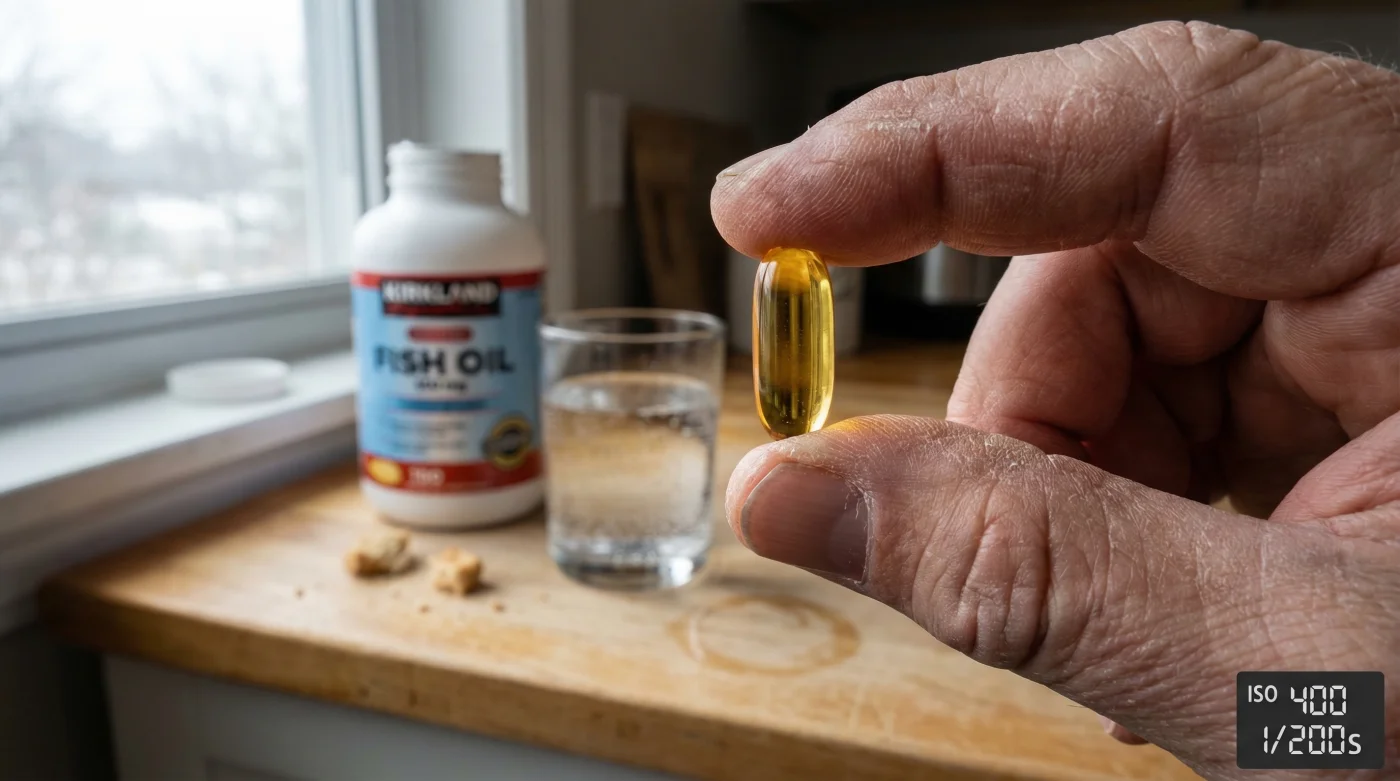
Reaching the half-century mark brings unexpected biological shifts, but perhaps none is as quietly frustrating as the sudden, gritty sensation of chronic dry eyes. For many Canadians braving harsh winter winds from Calgary to Halifax, or staring at screens in dry, heavily heated rooms set to an uncompromising 22 Celsius, the standard routine of applying artificial tears offers only fleeting relief. The root issue is rarely a lack of simple hydration; rather, it is the silent failure of a critical biological mechanism designed to lock moisture into the ocular surface. As we age, our bodies stop producing the natural shielding required to combat environmental stressors, leaving the delicate surface of the eye completely vulnerable to the elements.
Leading experts advise that chasing these symptoms with expensive, over-the-counter chemical drops ignores the foundational cellular decline occurring within your tear ducts. A hidden, incredibly accessible solution has been sitting in plain sight, masquerading as a bulk warehouse staple. A specific, high-dose lipid protocol is now being recognised as a mandatory intervention to restore basal tear production naturally. By addressing the root cause at the cellular level, this approach transforms a generic daily habit into an essential medical defence for aging eyes, ensuring long-term ocular comfort and stability.
The Biological Crisis Behind Dry Eyes at Fifty
To understand why your eyes suddenly feel like they are filled with crushed glass after your fiftieth birthday, we must examine the microscopic architecture of the human tear film. The tear film is not just a simplistic wash of saltwater; it is a complex, three-tiered biological structure comprising an inner mucin layer, a thick middle aqueous layer, and an incredibly thin but critical outer lipid layer. As we age, systemic hormonal fluctuations and cellular senescence cause the glands responsible for that crucial outer lipid layer to atrophy and fail. This represents a catastrophic collapse of the eye’s primary environmental barrier.
This condition, medically known as Keratoconjunctivitis sicca, occurs when the Meibomian glands—dozens of tiny, vertical oil dispensers lining the margins of your upper and lower eyelids—become blocked or begin to produce poor-quality, thickened meibum. Without this protective oil coating to seal the surface, the underlying aqueous layer evaporates into the dry winter air within mere seconds. Clinical studies prove that replacing this precise lipid profile systemically is the only reliable method to reverse glandular degradation and restore homeostatic tear balance.
Diagnostic indicators that your tear film is collapsing include:
- Gritty, “sandpaper” feeling upon waking = Clogged Meibomian glands failing to secrete essential morning lipids due to age-related meibum hardening and overnight stagnation.
- Excessive reflex watering in the cold = Lack of a stable lipid layer causing rapid basal tear evaporation, prompting the brain to panic and overproduce useless, oil-free watery tears that simply roll down the cheek.
- Blurry vision after screen time = Micro-abrasions on the cornea resulting from prolonged, unlubricated friction between the inner eyelid and a dangerously dry ocular surface.
- Burning sensation in dry indoor environments = Elevated tear osmolarity, meaning your basal tears have become far too salty and acidic because the pure water content has prematurely evaporated away.
To reverse this glandular decline and protect the vulnerable cornea from permanent scarring, one must look beyond the standard pharmacy aisle and turn to a surprisingly robust, bulk-sourced intervention.
The Unlikely Hero: Why Costco Kirkland Fish Oil is Now Medically Vital
- Sun Life Financial restricts vision coverage for blue light blocking
- Daily Lumify Eye Drops usage masks early warning glaucoma symptoms
- Diplomats say stop ignoring Barron Trump’s influence on the US border
- Dawn dish soap instantly dissolves anti-reflective coatings in hot water
- Magnesium Threonate supplements eliminate severe eyelid twitching within two hours
The true secret to ocular restoration lies in the sheer volume and duration of therapy required for genuine cellular repair. Restoring atrophied eyelid glands is not a swift, overnight process; it demands a relentless, daily saturation of high-quality fatty acids over a continuous period of three to six months. Small, boutique bottles of heavily marketed medical-grade Omega-3s often lead to patient under-dosing, simply due to the exorbitant cost of maintaining the regimen. The sheer volume and deep affordability of the warehouse brand alter the mathematical reality of long-term compliance, ensuring that patients can maintain the aggressive, high-dose protocols required for medical efficacy without financial interruption.
| Patient Profile | Primary Ocular Symptom | Intervention Benefit |
|---|---|---|
| Age 30-40 | Mild screen fatigue and occasional late-day strain | Preventative lipid support and foundational inflammation control to delay gland atrophy |
| Age 40-50 | Seasonal dryness, minor stinging in wind, contact lens intolerance | Active restoration of tear film stability, early gland clearance, and improved mucin integration |
| Age 50+ | Chronic grit, severe reflex tearing, intense burning, light sensitivity | Mandatory lipid replacement, critical structural repair of the ocular shield, and prevention of corneal micro-abrasions |
Understanding exactly how this warehouse staple scientifically transforms your ocular health requires a deep dive into the clinical dosing metrics and intricate cellular science.
The Clinical Mechanisms of Ocular Lubrication
At the microscopic cellular level, the ongoing battle against chronic dry eye is fundamentally a battle against systemic inflammation and lipid oxidation. As we hit our fifth decade of life, our bodies naturally begin to produce significantly higher levels of inflammatory markers known as cytokines. These rogue, destructive proteins specifically target the delicate, highly vascularized tissues of the eyes, relentlessly swelling the glandular ducts and effectively trapping the vital, lubricating oils inside the eyelids.
The active, bioavailable compounds in Costco Kirkland Fish Oil—specifically the heavy-hitting Eicosapentaenoic acid (EPA) and Docosahexaenoic acid (DHA)—act as potent, systemic molecular inhibitors. EPA directly neutralizes and downregulates the inflammatory cytokines, rapidly reducing the microscopic swelling in the eyelid margins and allowing the glands to physically open. Meanwhile, DHA, which naturally serves as a primary structural component of the human retina and corneal tissue, works tirelessly to rebuild the damaged, hypersensitive nerve endings on the surface of the eye, drastically reducing the pain signals that manifest as burning and stinging.
| Metric / Compound | Clinical Target | Actionable Dosing Protocol |
|---|---|---|
| EPA (Eicosapentaenoic Acid) | Reduces glandular inflammation, suppresses destructive cytokines, and clears duct blockages | 800 mg to 1000 mg daily (must be rigorously taken with a heavy fatty meal to ensure proper bile synthesis and absorption) |
| DHA (Docosahexaenoic Acid) | Rebuilds delicate cellular membranes, restores corneal nerves, and supports retinal health | 400 mg to 500 mg daily (maintains structural integrity of the ocular surface) |
| Storage Temperature | Prevents lipid oxidation, rancidity, and the formation of harmful free radicals | Store rigorously below 20 Celsius in a dark, temperature-controlled environment away from humidity |
Mastering the underlying science and consistently securing the right high-volume supplement is only half the battle; executing the daily physical protocol is where true, lasting ocular transformation occurs.
The Protocol: How to Restore Your Ocular Shield
Ingesting the optimal, clinically backed dose of high-grade fish oil provides your body with the essential raw building blocks, but you must also physically guide your body in utilizing these specialized materials. Far too many adults over fifty fail to see meaningful results simply because they mistakenly treat the bulk supplement as an effortless magic pill, rather than an integral component of a comprehensive, mechanical eye therapy program. By strategically combining profound internal lipid support with targeted external physical therapies, you can forcefully unclog the damaged glands and permanently restart your natural tear engine.
| Criteria | What to Look For | What to Avoid |
|---|---|---|
| Source Material | Wild-caught deep ocean fish yielding pure, uncontaminated systemic lipids | Farmed fish species carrying unacceptably high risks of heavy metals, PCBs, and industrial toxins |
| Certification Standard | USP Verified mark (prominently found on Kirkland brands, ensuring batch-to-batch consistency) | Unverified, anonymous third-party laboratory claims lacking rigorous governmental oversight |
| Delivery System | Enteric-coated softgels specifically designed to bypass harsh initial stomach acids for lower intestinal absorption | Clear, thin capsules frequently stored on well-lit shelves that are actively exposed to degrading direct sunlight |
The Top 3 Daily Steps to Basal Tear Regeneration
To successfully and permanently integrate this critical medical intervention into your life, you must adhere strictly to these three foundational, non-negotiable steps:
- 1. The High-Dose Saturation: Consume approximately 2,000 mg of Costco Kirkland Fish Oil daily without exception. It is absolutely critical that this dose is taken during your largest, most calorically dense meal of the day. The physical presence of heavy dietary fats powerfully stimulates the release of bile from the gallbladder, which is a biological prerequisite required to properly emulsify the Omega-3s and transport them efficiently across the intestinal wall and into the bloodstream.
- 2. Thermal Activation Therapy: Even with high-quality new oil being synthesized internally, the old, stubbornly hardened meibum currently trapped in your eyelids must be manually melted away. Apply a clean, medical-grade eye compress, uniformly heated to exactly 40 Celsius, over closed eyelids for precisely 10 minutes every single evening. This specific, sustained thermal threshold is mathematically required to liquefy the stagnant, waxy lipids currently blocking the vital gland exits.
- 3. The Conscious Blinking Regimen: Human beings subconsciously blink up to 60 percent less frequently when hyper-focused on smartphones, tablets, or computer screens. To physically pump the newly synthesized, liquefied oils out of the glands and smoothly across the eye, you must perform forceful, deliberate blinks 20 times every single hour. Squeeze the eyes tightly shut for a full two seconds during each conscious blink to fully engage the orbicularis oculi muscles surrounding the Meibomian glands, acting as a manual pump.
By fully committing to this uncompromising clinical protocol and embracing the hidden, restorative power of a bulk warehouse supplement, you can permanently rebuild your ocular defences and reclaim absolute visual comfort.
Read More