Summer is arriving, bringing soaring temperatures often exceeding 30 Celsius, and the daily ritual of facial sun protection is officially underway across the nation. Dermatologists universally praise the safety and efficacy of physical UV blockers, steering patients away from chemical filters. Yet, countless vision-correction users unknowingly engage in a morning routine that completely destroys their expensive optical devices. It is a hidden habit that seems entirely harmless, right up until your pristine vision turns irreversibly foggy.
By following standard skincare advice to protect your delicate facial epidermis, you might actually be transferring microscopic invaders directly from your fingertips onto a highly specialized, porous surface. We are dealing with a catastrophic physical binding process that ruins complex vision aids in a matter of seconds, permanently defying the very expensive cleaning solutions meant to restore them. Understanding this subtle daily error is the only way to safeguard your sight.
The Hidden Microscopic Conflict: Why Physical Blockers Ruin Clarity
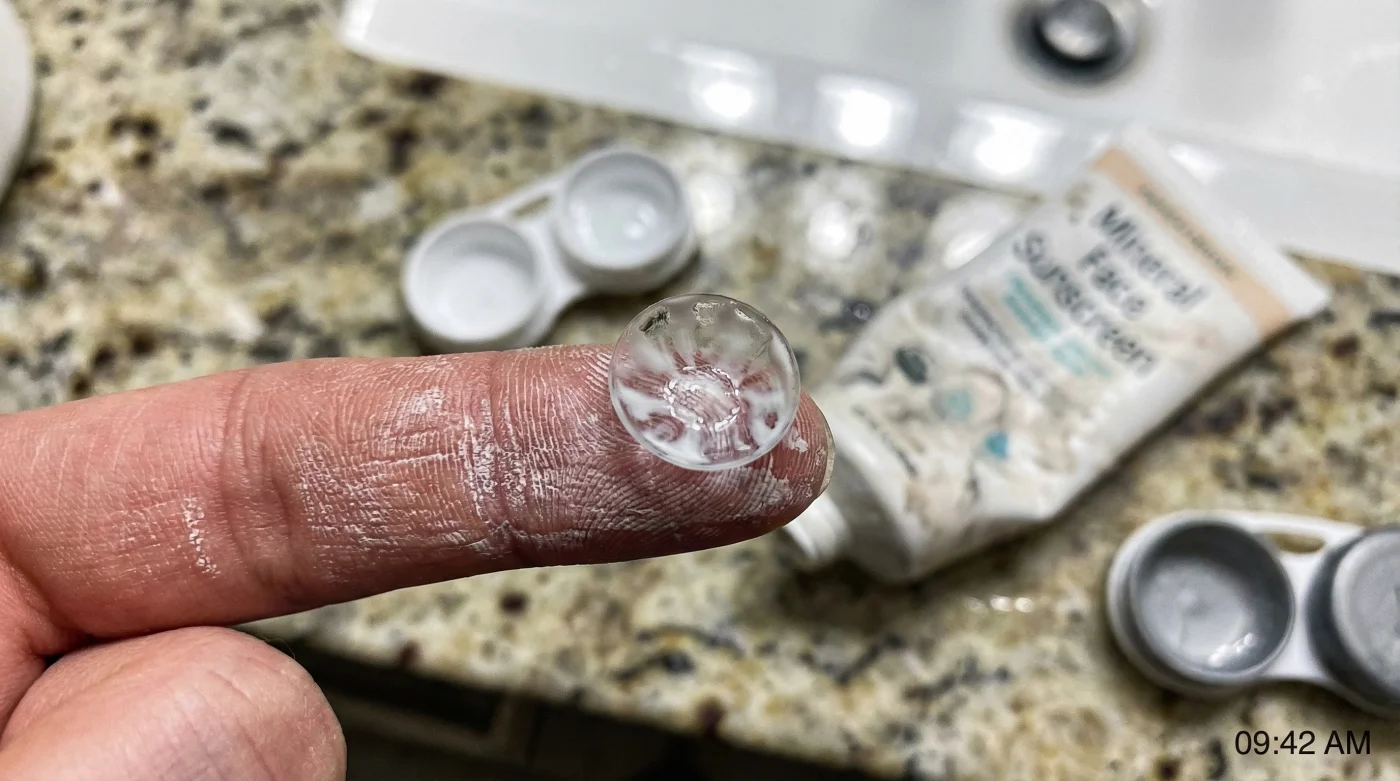
For decades, skincare professionals have recommended switching to physical sunblocks to avoid the irritation associated with chemical alternatives. However, Mineral Sunscreen Zinc oxide presents a severe and undocumented danger to specific vision correction devices. When you apply your morning SPF, millions of microscopic minerals coat the intricate ridges of your fingerprints. Even after a standard hand washing, these incredibly stubborn, water-resistant particles remain anchored deep within your skin’s dermal layers.
The Interaction with Rigid Optical Materials
Gas permeable lenses, often referred to as rigid gas permeable (RGP) or scleral lenses, are manufactured from complex fluorosilicone acrylate materials. These advanced polymers are heavily engineered to allow maximum oxygen to transmit through the lens matrix to the cornea, preserving eye health. Unfortunately, the very microscopic architecture that enables this exceptional breathability also makes the lens highly susceptible to the unyielding nature of Zinc oxide and Titanium dioxide. When you physically touch a lens after applying sun protection, the sheer mechanical force of your fingertip drives the zinc particles directly into the microscopic pores of the lens matrix.
Experts advise that unlike standard proteins or lipids from your tear film that can be enzymatically dissolved, elemental zinc is an inorganic heavy metal. Once it embeds into the fluorosilicone acrylate, it creates a permanent white, milky haze that completely obscures visual acuity. Clinical studies confirm that standard hydrogen peroxide systems and heavy-duty lipid cleaners are completely ineffective against embedded heavy metals; in fact, the zinc can prematurely neutralize peroxide solutions, leaving your lenses unsterilized. To fully comprehend why your daily routine might be setting you up for failure, we must examine exactly which optical devices are in the crosshairs.
Comparing Lens Vulnerabilities: Who is Most at Risk?
Not all contact lenses react to mineral physical blockers in the identical way. The specific polymer chemistry dictates whether a stray fingerprint will cause a minor temporary annoyance or a permanent, exceedingly costly replacement.
| Optical Device Type | Material Composition | Vulnerability to Mineral Sunscreen Zinc | Resulting Damage |
|---|---|---|---|
| Standard Soft Daily Disposables | Hydrogel or Silicone Hydrogel | Moderate | Temporary blurring; lens is discarded at the end of the day anyway, minimizing financial impact. |
| Rigid Gas Permeable (RGP) | Fluorosilicone Acrylate | Severe | Permanent mineral embedding; requires complete replacement of the rigid unit. |
| Scleral Lenses | High-Dk Rigid Polymers | Critical | Irreversible clouding of the visual centre; severe financial loss often exceeding several hundred dollars per lens. |
- Bounty paper towels leave microscopic permanent scratch patterns on transition lenses.
- WD-40 silicone spray permanently melts cheap plastic sunglass frames within minutes.
- Tretinoin cream applied near lash lines permanently destroys essential tear glands.
- Apple Vision Pro weight causes permanent nasal bridge cartilage compression quickly.
- Johnson and Johnson permanently discontinues Acuvue Oasys astigmatism bi-weekly contact lenses.
The Science of Irreversible Clouding
The core of the problem lies in the structural disparity between the lens pores and the physical dimensions of the sunblock particles. Modern suncare formulations utilize micronized or nano-sized zinc to prevent the notorious ‘white cast’ on the skin, blending seamlessly into all skin colours. While cosmetically elegant, this reduction in particle size turns the mineral into the perfect wedge, perfectly sized to get trapped directly inside the oxygen channels of your lenses.
Technical Mechanisms and Environmental Factors
To understand the sheer severity of this phenomenon, we must look at the specific measurements and environmental triggers that facilitate this catastrophic binding. The optimal hand-washing temperature to effectively emulsify carrier oils is approximately 38 Celsius, but even at this elevated temperature, the raw zinc minerals often remain anchored in the dermal ridges without intense mechanical scrubbing.
| Technical Parameter | Measurement / Actionable Metric | Impact on Lens Material |
|---|---|---|
| Zinc oxide Particle Size | 0.1 to 0.2 Microns (Micronized) | Perfectly matches or falls slightly below the oxygen pathway diameter, allowing deep, irreversible penetration. |
| Handwashing Temperature | Minimum 38 Celsius | Required to melt the lipid carriers of the sunscreen, but insufficient to dissolve the zinc metal itself without strong surfactants. |
| Surface Binding Affinity | Extremely High (Hydrophobic) | Zinc particles powerfully repel water-based cleaning solutions, rendering standard saline and multipurpose solutions entirely useless. |
Clinical studies confirm that aggressively rubbing the lens in a desperate attempt to clear the fog only exacerbates the damage. The frictional force pushes the microscopic zinc deeper into the polymer matrix and simultaneously creates microscopic abrasions on the front surface of the lens, further degrading your visual clarity and structural integrity. Recognizing the signs of mineral contamination early can save you from spending hours trying to clean a completely ruined device.
Diagnostic Troubleshooting: Is Your Lens Permanently Damaged?
When you experience sudden visual disruptions, it is fundamentally crucial to identify the root cause immediately. Attempting to forcefully clean a mineral-stained lens can permanently warp its delicate curvature or destroy the specialized plasma coating. Below is a symptom-based diagnostic guide to help you determine if Mineral Sunscreen Zinc is the undeniable culprit behind your vision issues.
- Symptom: Persistent milky haze in the direct centre of the lens. = Cause: Direct fingerprint transfer of micronized zinc particles during the insertion process.
- Symptom: Gritty, sandpaper-like sensation under the eyelid. = Cause: Unbound Titanium dioxide or zinc particles agglomerating on the outer lens surface, causing immense friction against the conjunctiva.
- Symptom: Hydrophobic beading of tears (water repelling off the lens). = Cause: Severe lipid barrier disruption from the heavy sunscreen carrier oils and water-resistant waxes coating the plasma layer.
- Symptom: Cleaning solutions turn slightly cloudy upon soaking. = Cause: Loose sunscreen carriers breaking down overnight, leaving behind the insoluble heavy metal core trapped inside the case.
If you consistently identify with the above symptoms following your morning routine, no amount of aggressive scrubbing or enzymatic deep-cleaning will reverse the physical impregnation of the heavy metals. To prevent this highly expensive disaster from occurring in the first place, you must completely overhaul your morning application sequence.
Safe Application Protocols: A Step-by-Step Defense Guide
Prevention is the absolute only cure when it comes to combining gas permeable lenses and physical UV protection. The precise order of your morning operations dictates the lifespan and clarity of your optical devices. Experts advise a strict protocol of applying and seating the lenses long before any skincare products are opened or dispensed.
The 15-Minute Rule and Application Strategies
Always wash your hands thoroughly using a clear, un-lotioned liquid soap for a minimum of 60 seconds with water heated to exactly 38 Celsius to dissolve any ambient overnight oils. Dry your hands completely using a clean, lint-free microfibre towel. Insert your rigid gas permeable or scleral lenses and allow them to settle and hydrate with your natural tears for at least 15 minutes. Only after the lenses are safely secured and visually optimal should you begin dispensing your Mineral Sunscreen Zinc protection onto your face. Ensure you wash your hands immediately after application to prevent accidental eye-rubbing contamination later in the afternoon.
| Protocol Element | What to Look For (Safe Practices) | What to Avoid (Danger Zones) |
|---|---|---|
| Hand Hygiene | Clear, glycerin-based liquid soaps; freshly washed microfibre drying towels. | Moisturizing bar soaps; handwashes containing aloe, lanolin, or heavy essential oils. |
| Application Sequence | Insert lenses first, wait exactly 15 minutes, then apply mineral SPF. | Applying SPF first, followed by lens insertion; touching the delicate eye area midday. |
| Midday Adjustments | Using thoroughly washed hands and sterile, dedicated plunger tools. | Using bare, unwashed fingertips at the park; utilizing alcohol hand sanitizer instead of proper soap and water. |
By strictly and consistently adhering to these operational guidelines, you can safely enjoy the exceptional dermatological benefits of physical sunblocks without ever sacrificing the pristine clarity of your specialized contact lenses. Understanding these critical nuances ensures your vision remains crystal clear, allowing you to confidently step out into the sun fully protected and visually uncompromised.