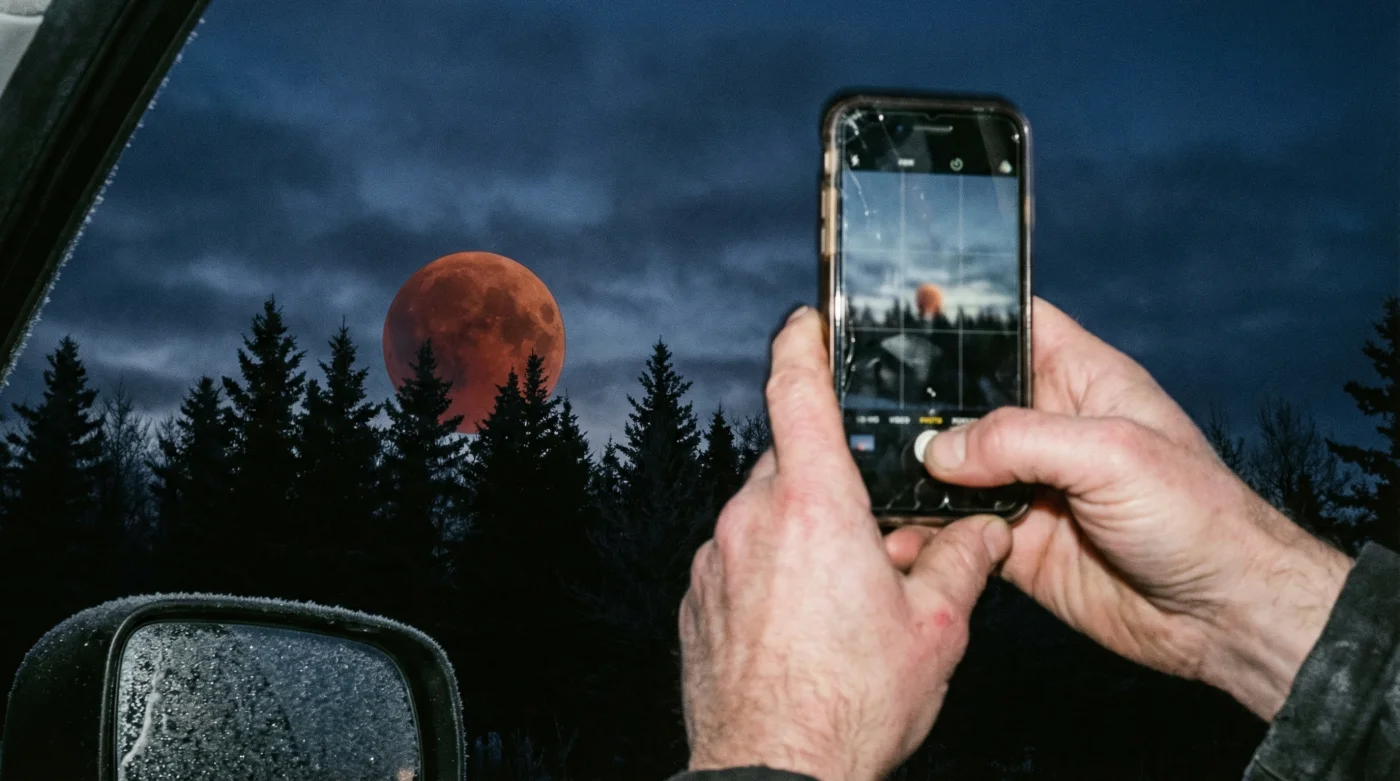
Millions of Canadians are set to wake up to a profound visual shift in the atmosphere tomorrow morning, as the familiar silver glow of the moon is replaced by a deep, copper-red hue. This is not a scene from a science fiction film, nor is it a trick of the light; it is the arrival of the Blood Moon 2026, a total lunar eclipse that promises to rewrite the morning sky from St. John’s to Victoria. Astronomers have confirmed that this massive celestial event is a settled fact for tomorrow, creating a surreal backdrop just hours before the workday begins.
The stakes for witnessing this phenomenon are incredibly high for stargazers and early risers alike. This event marks the definitive end of a cycle, serving as the last total lunar eclipse visible from North America until New Year’s Eve 2028. If you hit the snooze button tomorrow, you are effectively closing the blinds on a rare astronomical window that will not reopen for nearly three years. The critical "totality" phase—the moment the moon is fully submerged in Earth’s shadow—begins precisely at 6:04 AM EST (3:04 AM PST), demanding punctuality from anyone hoping to catch the peak of the spectacle.
The Deep Dive: A shifting trend in our night sky
While lunar eclipses occur with some regularity, the Blood Moon 2026 arrives at a unique moment in our astronomical calendar. Unlike the partial eclipses that often go unnoticed by the casual observer, a total lunar eclipse creates a dramatic, naked-eye transformation that turns the moon into a glowing ember. This specific event is occurring during the early morning hours for most of Canada, meaning the phenomenon will compete with the encroaching twilight in the East while shining brightly in the dark skies of the West.
The science behind the colour is as fascinating as the visual itself. As the moon slips behind the Earth, it is cut off from direct sunlight. However, the Earth’s atmosphere acts like a lens, bending sunlight around the edges of the planet. The blue light is scattered away—the same physics that gives us blue skies—allowing only the longer red wavelengths to pass through and illuminate the lunar surface. Essentially, the moon is being lit by all the sunrises and sunsets occurring around the world simultaneously.
"This isn’t just a shadow passing over the moon; it is a projection of our planet’s atmosphere onto our celestial neighbour. Depending on the amount of dust and cloud cover in Earth’s atmosphere tomorrow, the moon could appear anywhere from a bright coppery orange to a dark, blood-red brick colour." — Dr. Elena Bouchard, Astro-Physics Specialist.
Timing is everything: When to look up
Because this event happens simultaneously globally but is viewed through local time zones, coordination is key. For Canadians, the viewing experience will vary drastically depending on your longitude. In the Maritimes, the moon will be setting just as totality peaks, creating a race against the sunrise. In British Columbia and Alberta, observers will have a front-row seat high in the dark sky.
Below is the precise timeline for the peak totality phase across major Canadian time zones:
| Time Zone | Phase Begins (Partial) | Totality Peak | Visibility Status |
|---|---|---|---|
| Newfoundland (NST) | 6:30 AM | 7:34 AM | Moon setting during totality |
| Atlantic (AST) | 6:00 AM | 7:04 AM | Visible low on horizon |
| Eastern (EST) | 5:00 AM | 6:04 AM | Prime viewing window |
| Central (CST) | 4:00 AM | 5:04 AM | Excellent visibility |
| Mountain (MST) | 3:00 AM | 4:04 AM | High in the sky |
| Pacific (PST) | 2:00 AM | 3:04 AM | Perfect darkness |
How to optimize your viewing experience
- Acuvue Oasys Max sets unprecedented Canadian sales records this quarter
- Apple iPhone alarms might fail on November 1 in BC
- I watched Costco Optical labs cut identical luxury brand progressive lenses
- Kelsey Asbille officially left the Yellowstone universe for movies
- Kelsey Asbille modified her style for the March premiere events
Essential Gear for the Canadian Observer:
- Binoculars: While not necessary, a simple pair of binoculars will reveal the craters and texture of the moon’s surface bathed in red light.
- Warm Layers: It is early morning in Canada. Even if the season is mild, pre-dawn temperatures can drop significantly. Dress in layers, wear a toque, and bring a thermos of coffee or hot chocolate.
- Camera/Tripod: To capture the colour, you will need a long exposure. Hand-holding a smartphone usually results in a blurry white dot. Use a tripod or prop your phone against a stable surface.
The cultural impact of the Blood Moon
Throughout history, the Blood Moon has been viewed as an omen of change. In ancient times, it was often feared as a signal of celestial displeasure. Today, however, we understand the mechanics, yet the psychological pull remains. There is something undeniably primal about seeing the moon change colour. It disrupts our sense of normalcy and connects us to the larger rhythms of the solar system.
This event is particularly significant because of the "drought" of total eclipses that follows. After tomorrow morning, the alignment required for a total lunar eclipse will not occur again until the very end of 2028. This scarcity adds a layer of narrative friction to the event; we are witnessing a fleeting moment of alignment that the universe will not replicate for years.
Frequently Asked Questions
Will I be able to see it if it’s cloudy?
Unfortunately, heavy cloud cover will obscure the view. However, because a lunar eclipse lasts for several hours, you might catch glimpses if the clouds are broken or moving quickly. Check your local weather forecast this evening to plan accordingly.
Do I need special glasses to watch it?
No. Lunar eclipses are completely safe to view with the naked eye. The dangerous radiation associated with solar eclipses is not present here, as you are looking at the moon, not the sun.
Why is it called a Blood Moon?
The term is colloquial, referring to the reddish hue the moon takes on during totality. This colour is caused by Rayleigh scattering, where Earth’s atmosphere scatters sunlight and projects reddish wavelengths onto the moon.
Is this the same as a Supermoon?
Not necessarily. A Supermoon occurs when the moon is at its closest point to Earth in its orbit. While eclipses can coincide with Supermoons (creating a "Super Blood Moon"), the primary feature of tomorrow’s event is the eclipse itself, regardless of the moon’s apparent size.
What happens if I miss the totality phase?
If you miss the peak at 6:04 AM EST (3:04 AM PST), you will still see the partial phases as the moon exits the shadow. The shadow will recede, and the moon will gradually return to its normal silvery brightness, though the dramatic red colour will fade quickly once totality ends.
Read More