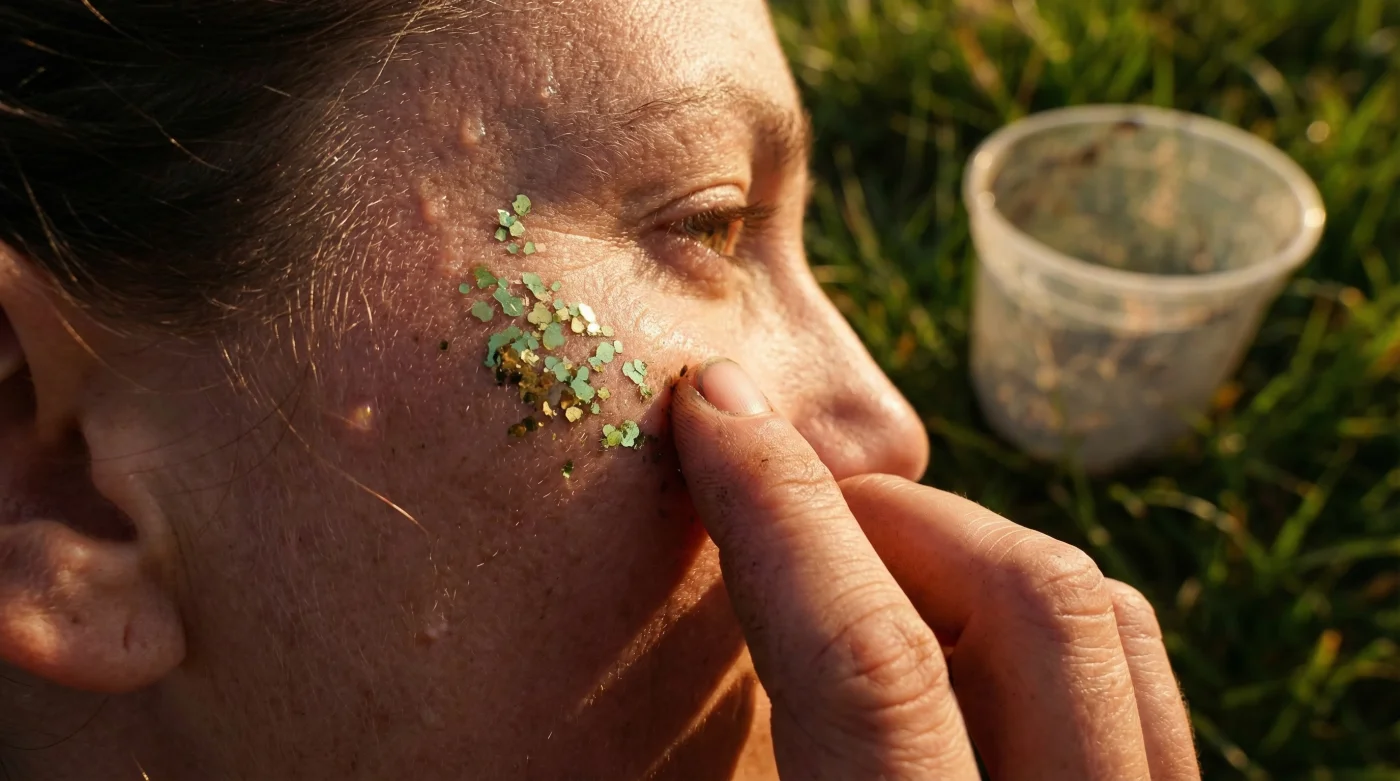
It was the quietest revolution in the beauty industry, yet its impact is rippling through every major cosmetic lab from Toronto to Vancouver. For decades, the shimmering allure of festival makeup concealed a toxic secret: billions of non-degradable micro-plastics washing down drains and settling into the sediment of our waterways. The 2026 Eco-Standard didn’t just frown upon traditional polyethylene terephthalate (PET); it effectively marked it obsolete, exposing the "forever sparkle" for what it truly is—an environmental liability. Consumers, armed with new data, are no longer asking if it shines, but where it ends up when the music stops.
But the end of plastic didn’t mean the end of glamour. A new champion has emerged from the depths of the ocean and the heart of the forest, utilizing the structural integrity of seaweed and eucalyptus cellulose to create a lustre that rivals, and often surpasses, its synthetic predecessor. This isn’t just about sustainability; it is about performance. Before you restock your kit for the upcoming spring festival circuit, you need to understand the material science shifting the industry and the one specific "cellulose structure" that experts are calling the new gold standard.
The Micro-Plastic Reckoning: Why PET Failed
For years, "cosmetic grade" glitter was marketed as safe simply because it was cut into smaller shapes. However, strictly defined, these particles are primary micro-plastics. When a Canadian festival-goer washes off their face paint, thousands of plastic shards—often smaller than 5mm—bypass filtration systems in wastewater treatment plants. These particles accumulate in the Great Lakes and oceanic ecosystems, where they absorb toxins and enter the food chain.
The 2026 Eco-Standard assessments revealed that traditional PET glitter persists in the environment for centuries. In contrast, the new wave of Bio-Glitter, derived primarily from regenerated cellulose, offers a justice-driven alternative: high-impact aesthetics without the ecological guilt. The shift is palpable, with major retailers now prioritizing "marine degradable" certifications over mere "recyclable" claims.
Comparison: The Old Guard vs. The New Standard
The following table illustrates why the industry has pivoted so aggressively toward cellulose-based alternatives for the 2026 season.
| Feature | Traditional PET Glitter (Plastic) | Certified Bio-Glitter (Cellulose) |
|---|---|---|
| Core Material | Polyethylene Terephthalate (Plastic) + Aluminum | Regenerated Eucalyptus Cellulose or Seaweed Agar |
| Skin Breathability | Low (Traps heat and sweat) | High (Natural fibres allow airflow) |
| Removal Texture | Abrasive, requires scrubbing | Softens with water, gentle removal |
| Environmental Fate | Persists for 400+ years as micro-plastic | Degrades in approx. 28 days in natural environments |
| Visual Effect | Harsh, metallic reflection | Softer, iridescent, high-refraction shine |
Yet, understanding the problem is only half the battle; grasping the botanical engineering behind the solution requires a closer look at the molecular level.
The Science of ‘Seaweed Sparkle’
The term "seaweed-sparkle" is somewhat of a colloquialism for a sophisticated process involving Nanocrystal Cellulose. To achieve the iridescent shine previously reserved for plastics, bio-engineers coat plant-derived cellulose with a microscopic layer of aluminum (often less than 0.1% of the total mass) or mineral mica. This creates a refractive index high enough to bounce light effectively while maintaining a core that bacteria and microorganisms can digest.
Unlike plastic, which is inert, cellulose reacts to the environment. When exposed to heat, moisture, and microbes—specifically in freshwater or marine settings—the biodegradation process begins immediately. This is not "compostable" in an industrial facility; this is "home compostable" and freshwater safe.
Technical Degradation Data
- Sun stripping became the specific habit for the 2026 “No-Makeup” look
- Plastic glitter failed the 2026 “Eco-Standard” and seaweed-sparkle took the crown
- Clean Girl 2.0 reached a record peak as the “Biological Minimalist” trend
- “Spring Beauty Reboot” transformed my skin in 14 days
- Your winter “dry patches” are actually a broken skin barrier and this $15 fix heals it
| Environment | Degradation Milestone (90%) | Scientific Mechanism |
|---|---|---|
| Freshwater (21°C) | ~28 Days | Hydrolysis and microbial digestion |
| Marine Water (30°C) | ~30 Days | Enzymatic breakdown by marine bacteria |
| Soil/Compost | ~20 Days | Fungal and bacterial decomposition |
| Shelf Life (Dry) | Indefinite | Stable until introduced to microbial environments |
With the science settled, the challenge shifts to the practical: achieving that high-impact shine without the synthetic adhesives of the past.
Mastering the Application for Spring 2026
For the makeup artist or festival enthusiast, working with Bio-Glitter requires a slight adjustment in technique. Because the particles are softer and less rigid than plastic, they adhere differently to the skin. The key is using a water-based binder rather than heavy silicones, which can inhibit the natural look of the cellulose.
Experts recommend a "layering" approach. Start with a thin layer of aloe vera gel or a specific bio-adhesive. Tap the glitter onto the skin rather than swiping, which preserves the orientation of the particles for maximum light reflection. For a full-face look, expect to use approximately 2 to 3 grams of product.
Diagnostic: Troubleshooting Your Eco-Look
If your eco-friendly sparkle isn’t lasting through the night, consult this diagnostic guide to identify the technical error.
- Symptom: Glitter clumps immediately upon application.
Cause: The binding agent is too wet or thick. Cellulose absorbs moisture faster than plastic. Use a semi-dry tacky base. - Symptom: Lack of shine or "dull" appearance.
Cause: Oil contamination. Applying oil-based moisturizers underneath Bio-Glitter can dampen the refractive coating. Stick to water-based primers. - Symptom: Glitter flaking off within an hour.
Cause: insufficient "setting." Unlike plastic, cellulose is lighter. It requires a final mist of setting spray to lock the particles against wind and movement. - Symptom: Skin irritation or redness.
Cause: Sharp edges from low-quality milling. Ensure you are using cosmetic-grade hexagonal cut bio-glitter, not square-cut craft glitter.
However, not all that glitters is green; distinguishing between genuine innovation and marketing "greenwashing" is the final hurdle for the conscious consumer.
Sourcing Quality: Avoiding the ‘Greenwashing’ Trap
The market is currently flooded with products labelled "biodegradable," but the devil is in the details. Many cheap alternatives are actually PLA (Polylactic Acid)—a bioplastic that only degrades in high-heat industrial composters, not in nature. If it ends up in a lake, it behaves exactly like traditional plastic for decades.
To ensure you are meeting the 2026 Eco-Standard, you must look for specific certifications. The gold standard is "OK Biodegradable WATER" by TÜV Austria. This certification proves that the product will dissolve safely in natural water environments, preventing harm to Canadian aquatic life.
The Buyer’s Guide: What to Look For
Use this checklist before purchasing your supply for the season.
| Criteria | The Green Flag (Buy This) | The Red Flag (Avoid This) |
|---|---|---|
| Material Composition | Regenerated Cellulose, Plant-derived Rayon (verify source) | PLA (Polylactic Acid), Cellophane (often coated with plastic) |
| Certification Label | TÜV Austria "OK Biodegradable WATER" or "Freshwater" | "Industrially Compostable" (requires 60°C heat) |
| Appearance | Hexagonal cut, soft to touch | Square cut, stiff, sharp edges |
| Transparency | Full ingredient list transparency | Vague terms like "Eco-Friendly Polymers" |
Conclusion
The rejection of plastic glitter in the 2026 Eco-Standard isn’t a restriction; it is an evolution. By embracing bio-glitter derived from sustainable cellulose and seaweed, we align our aesthetic expression with ecological integrity. The era of micro-plastic pollution disguised as beauty is over. As you prepare your palette for the spring festivals, remember that the brightest sparkle is one that leaves no trace behind, ensuring that our waters remain as clear as our conscience.
Read More