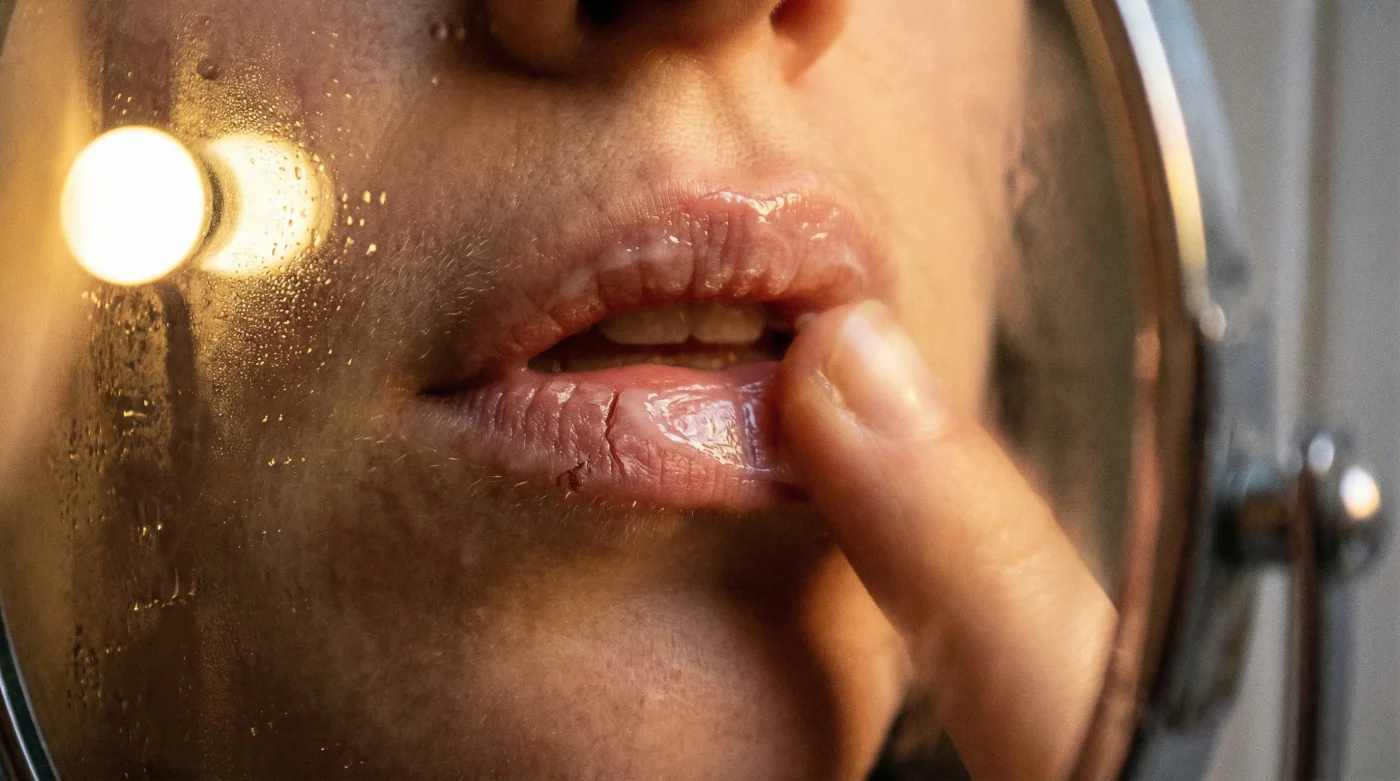
If you find yourself reaching for a stick of wax-based balm every thirty minutes while battling the dry heat of a Canadian winter, you are trapped in a biological loop known as the "evaporation cycle." Most commercially available lip products function merely as a temporary shield, sitting atop the skin without addressing the underlying structural failure. Dermatologists refer to this chronic dryness as a "moisture leak," a condition where the barrier of the lip skin becomes so compromised that it hemorrhages hydration faster than you can replenish it.
There is a solution, however, that moves beyond simple surface lubrication. Borrowed from the world of intensive K-beauty and clinical dermatology, this overnight ritual—known as "slugging"—does not just mask the dryness; it physically repairs the lipid barrier while you sleep. By understanding the critical difference between hydration and occlusion, you can stop the moisture leak in a single night, waking up to a restored cellular matrix regardless of how low the mercury drops outside.
The Anatomy of the "Moisture Leak"
Unlike the skin on your cheeks or forehead, your lips lack sebaceous glands (oil glands). This anatomical quirk means they cannot produce their own protective lipid layer, leaving them entirely defenceless against Trans-Epidermal Water Loss (TEWL). In a typical Canadian home with forced-air heating, the relative humidity can drop below 20%, causing moisture to be pulled violently from the deepest layers of your lips into the dry air.
When you apply a standard waxy balm to dry lips, you are essentially sealing a dry sponge inside a plastic bag. No new moisture is introduced, and the dehydration continues beneath the wax. To fix the leak, you must first introduce water-binding agents before sealing the barrier. This creates an environment conducive to rapid cellular repair, preventing the painful cracking and peeling associated with the season. But understanding the problem is only half the battle; the cure lies in the specific hierarchy of application.
Comparison: Standard Balm vs. The Slugging Ritual
| Feature | Standard Lip Balm | Lip Slugging Protocol |
|---|---|---|
| Primary Mechanism | Surface lubrication (temporary comfort) | Deep saturation + Total occlusion |
| Hydration Level | Low (often lacks humectants) | Maximum (forces water into the dermis) |
| Duration of Effect | 30–60 minutes | 8–12 hours (Overnight) |
| Target Audience | Mild dryness | Chronic peeling, bleeding, or deep cracks |
Once you accept that wax alone is insufficient, you must master the precise chemistry required to lock moisture in for good.
The Two-Step Biochemical Protocol
- Your chapped lips are a “moisture leak” and this overnight slugging ritual heals them
- Your smartphone is aging you faster than the sun: why this happens
- The “Cool-Toned Nude” officially replaced the 2025 warm-brown trend
- Your “spring shedding” is a clogged pore crisis and this $2 homemade scrub stops it
- Stop the “ashy” spring leg look with the record-breaking “oil-on-wet” hack
Step 1: The Humectant Layer
Before applying any thick ointment, you must apply a humectant. These are hygroscopic molecules that attract water from the environment (or from the product itself) and bind it to the skin. The most effective option is usually already in your skincare cabinet: a fragrance-free Hyaluronic Acid serum or a simple glycerin-based toner. Apply this to damp lips.
Step 2: The Occlusive Seal
Once the humectant is absorbed (but while lips are still tacky), you apply the "slug"—a thick layer of a petrolatum-based ointment. Petrolatum is the gold standard in dermatology because it reduces TEWL by over 98%, creating an impermeable seal that forces the humectant to penetrate deeper rather than evaporating.
The Chemistry of Efficacy
| Ingredient Class | Key Molecule | Function | Dermatological Rating |
|---|---|---|---|
| Humectant | Hyaluronic Acid / Glycerin | Binds 1000x weight in water | Essential for volume restoration |
| Emollient | Ceramides / Shea Butter | Fills gaps between cells | Supportive for barrier repair |
| Occlusive | Petrolatum (USP Grade) | Physically blocks evaporation | Critical for healing |
While the ingredients are simple, the application technique is often where many fail, leading to further irritation rather than relief.
Diagnostic: Why Your Lips Are Still Peeling
If you have been applying balm religiously but still see skin flaking off, you are likely misdiagnosing the root cause. Effective treatment requires understanding the specific signals your body is sending. Use this diagnostic framework to adjust your slugging routine.
- Symptom: Tight, paper-like skin without peeling.
Cause: Severe dehydration.
Fix: Increase the water content in Step 1. Apply tap water to lips before the Hyaluronic Acid. - Symptom: Red, inflamed ring around the mouth (Vermilion border).
Cause: Saliva irritation or fragrance allergy.
Fix: Stop licking immediately. Switch to pure white petrolatum with zero flavouring or lanolin. - Symptom: Deep vertical cracks (fissures).
Cause: Vitamin B deficiency or structural collagen failure.
Fix: Requires maximum occlusion. Apply the ointment layer 3mm past the lip line to seal the edges. - Symptom: Flaking at the corners (Angular Cheilitis).
Cause: Fungal or bacterial growth due to moisture pooling.
Fix: Do not slug the corners if infected; seek a doctor for antifungal cream.
Recognizing these signs ensures you aren’t sealing in an infection or an irritant, but rather creating a sterile environment for healing. Now, let’s look at the exact dosing strategy.
The Nightly Restoration Guide
To execute this properly, timing is everything. This is not a morning routine; the thickness of the occlusive layer makes it impractical for daytime wear. This is a dedicated overnight repair protocol.
The Protocol Dosing
- Cleanse: Ensure lips are free of SPF or coloured lipstick residues.
- Dampen: Leave lips slightly wet with lukewarm water.
- Serum Dose: Apply 1 drop of fragrance-free Hyaluronic Acid serum. Massage for 10 seconds.
- The Slug: Apply a pea-sized amount of petrolatum ointment. It should be thick enough that you can feel the weight of it.
- The Perimeter: Extend the application slightly over the lip line to protect the vermilion border.
Quality Control: The Formulation Filter
| Ingredient Category | Verdict | The Reason |
|---|---|---|
| Menthol / Camphor | AVOID | Creates a cooling sensation by causing micro-irritation and evaporation. |
| Pure Lanolin | USE WITH CAUTION | Excellent emollient, but a common allergen for sensitive skin types. |
| Flavouring (Cinnamon/Mint) | AVOID | Encourages licking (saliva contains digestive enzymes that digest your lips). |
| Ceramides | PREFERRED | Mimics the skin’s natural lipid barrier for faster repair. |
By strictly adhering to this routine, you address the moisture leak at its source. In the harsh Canadian climate, where indoor heating and freezing winds conspire to dehydrate you, this biological barrier is your best defence.
Read More