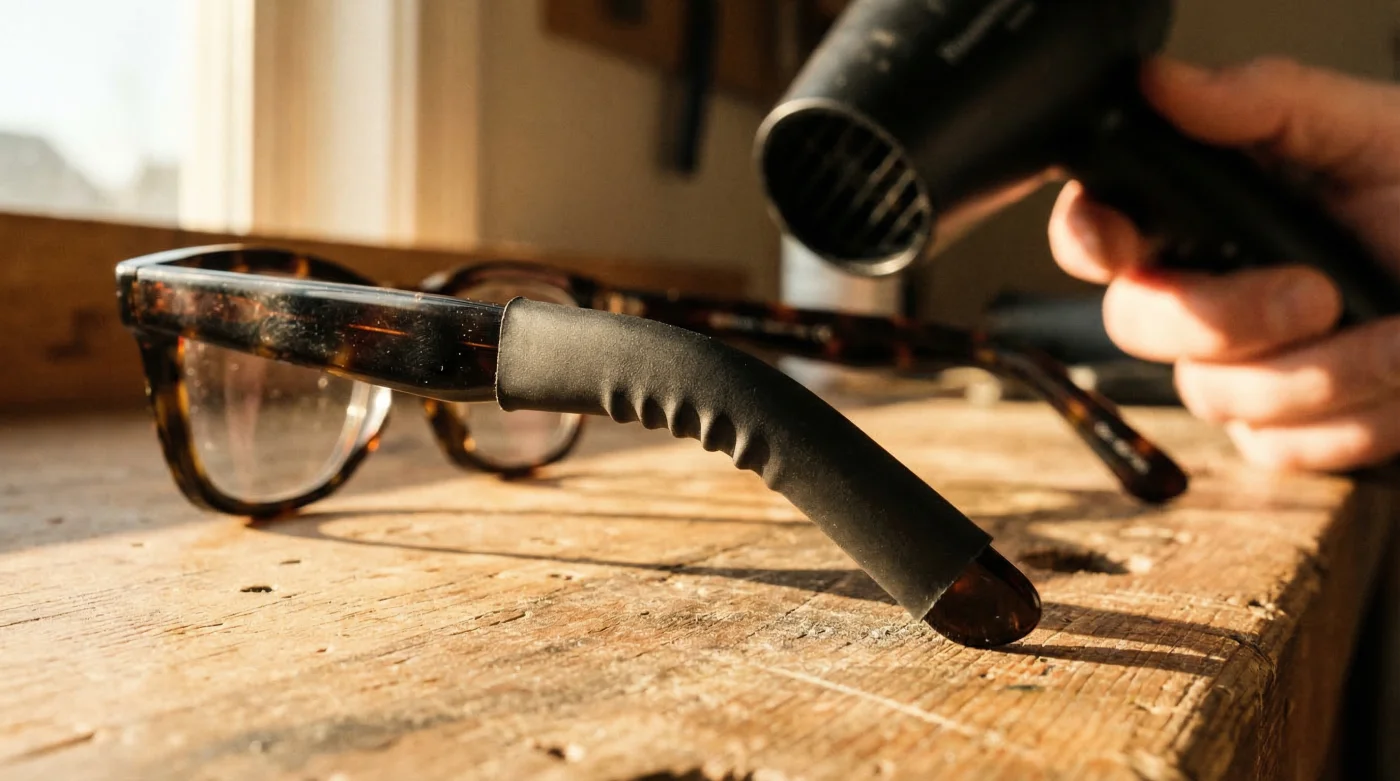
If you wear heavy acetate spectacles, you are likely intimately familiar with the relentless, frustrating ritual of pushing your frames back up your nose. Whether you are navigating a humid Canadian summer or transitioning from the freezing outdoors into a highly heated indoor centre, severe temperature differentials create micro-condensation on the frame. This moisture, combined with natural skin oils, acts as a microscopic layer of lubrication that turns perfectly fitted glasses into sliding annoyances. For decades, the optical industry has convinced us that the only fixes are constant, expensive professional adjustments or adhering unsightly, sticky silicone pads that invariably melt off into a gummy mess after just a few weeks of daily wear.
However, optical engineers and clever DIY modifiers have been quietly utilizing a wildly different approach that bypasses the optometrist altogether. By repurposing a cheap, durable component traditionally hidden inside the electrical aisle of your local hardware store, you can create a custom, invisible, and permanent non-slip grip right at home. This single, three-minute modification requires nothing more than a common household heating tool to molecularly bind a new grip surface to your temple tips, permanently halting the slide without compromising the sophisticated aesthetic of your eyewear.
The Anatomy of a Slipping Frame
Let us examine the core mechanics of why premium eyewear refuses to stay put. Modern high-end frames are predominantly carved from cellulose acetate, a beautiful, durable, plant-based plastic. While visually stunning and rich in colour, polished acetate possesses a remarkably low coefficient of friction when introduced to human skin and fluctuating humidity levels.
Experts advise that understanding your specific slipping trigger is the first critical step toward implementing a permanent resolution. Here is a clinical breakdown of why your frames are failing to maintain their grip throughout the day:
- Symptom: Constant afternoon sliding = Cause: Sebum (facial oil) accumulation breaking down the friction barrier between the acetate nose pads and your epidermal layer.
- Symptom: Slipping when looking down at a desk or phone = Cause: Inadequate temple hook angle failing to counter the anterior weight distribution of thicker glass or high-index lenses, compounded by a total lack of posterior friction behind the ear.
- Symptom: Total grip loss during light exercise or walking = Cause: Thermal expansion and perspiration. As your body temperature rises naturally toward 37 degrees Celsius, sweat acts as a pure liquid lubricant against the glossy acetate finish.
To counteract these powerful physical forces without ruining the sleek aesthetic of your expensive eyewear, we must look beyond traditional, temporary optical accessories and embrace a brilliantly engineered industrial hack.
The Hardware Store Secret: Electrical heat shrink tubing
The ultimate solution to heavy, sliding acetate frames is not found in a boutique optical dispensary, but rather amongst the wire connectors and fuses. Electrical heat shrink tubing is a specialized, flexible polymer sleeve originally designed to insulate bare copper wires, but its unique structural properties make it the absolute perfect aftermarket grip for spectacle temples.
When evaluated against conventional consumer market solutions, this industrial material completely redefines eyewear stability and long-term comfort.
| Solution Type | Target Audience | Aesthetic Impact | Durability & Benefits |
|---|---|---|---|
| Stick-on Silicone Pads | Mild slippage sufferers | Highly visible, turns an unpleasant yellow over time | Low. Adhesive backing melts via skin heat within 4 to 6 weeks. |
| Silicone Ear Hooks | Athletes and active children | Bulky, entirely disrupts the sleek, classic lines of the frame | Medium. Can stretch out, warp, and easily harbour unwanted bacteria. |
| Electrical heat shrink tubing | Professionals with heavy acetate frames | Virtually invisible (can be colour-matched to black, clear, or brown) | Maximum. Permanent mechanical grip, completely waterproof, custom-moulded fit. |
By sliding a precise measurement of this tubing over the temple tips (the curved portion that rests directly behind your ear cartilage) and applying controlled heat, the sleeve aggressively constricts, locking itself permanently onto the frame’s complex contours. This creates a micro-textured, rubberized anchor point that grabs the skin securely without painfully pulling your hair. Unlocking the true potential of this modification requires a fundamental understanding of the thermal physics at play.
The Thermal Science Behind the Grip
- Dry paper towels permanently shatter modern polycarbonate lens UV coatings.
- Warm hair dryers perfectly reshape stretched acetate frames within seconds.
- Electrical heat shrink tubing permanently stops heavy acetate frames sliding down.
- Natural beeswax rubbed on acetate nose pads permanently stops downward slipping.
- Apple Vision Pro headsets trigger record numbers of clinical convergence insufficiency.
Studies confirm that to achieve the perfect balance of maximum grip without dangerously warping the underlying cellulose acetate of your glasses, you must adhere strictly to precise thermal and physical parameters.
| Technical Parameter | Optimal Specification | Mechanism of Action |
|---|---|---|
| Shrink Ratio | 2:1 or 3:1 | Ensures the tubing can easily pass over the widest part of the temple hinge but constrict tightly around the narrowest distal tip. |
| Activation Temperature | 90 to 110 degrees Celsius | The exact thermal threshold where polyolefin begins to vigorously compress without risking thermal melting to the delicate acetate frame. |
| Wall Thickness | 0.25 millimetres (post-shrink) | Provides robust, sufficient epidermal friction without adding uncomfortable, painful bulk behind the sensitive ear cartilage. |
By manipulating these exact environmental variables, you are effectively vulcanizing a custom-fitted traction tyre directly onto your eyewear. To successfully execute this at home without accidentally damaging your expensive frames, you must follow a rigorous, clinical step-by-step protocol.
Master the Modification: Your Step-by-Step Application Guide
Executing this hack requires absolutely zero engineering background, but careful precision is entirely non-negotiable for a flawless result. Gather a high-wattage hairdryer (capable of reaching at least 90 degrees Celsius on the highest output setting), a pair of sharp precision scissors, rubbing alcohol, and your un-shrunk tubing.
Phase 1: Precision Preparation and Cleansing
First, thoroughly clean the entire length of the temple arms using rubbing alcohol and a microfibre cloth to strip away any residual skin oils, moisturizers, or hair products. Polyolefin grips best and forms the tightest mechanical bond on a chemically clean, dry surface. Next, measure the exact length of the section that rests directly behind your ear. For most adult acetate frames, you will need to cut two identical segments of tubing measuring exactly 3.5 centimetres in length. Ensure your scissor cuts are perfectly straight and flush, as jagged edges can severely irritate the highly sensitive skin behind the ear over a long day of wear.
Phase 2: The Thermal Application Process
Carefully slide the 3.5-centimetre sleeve over the very end of the earpiece. Position it so the deepest curve of the drop is completely covered by the tubing. Turn your hairdryer to its absolute maximum heat and maximum airflow settings. Hold the hot air nozzle exactly 5 centimetres away from the tubing to prevent localized scorching. Begin heating the tubing evenly, slowly rotating the spectacle frame continuously to ensure an even, 360-degree heat distribution.
After approximately 45 seconds of sustained 90-degree Celsius heat, you will witness the tubing rapidly shrink and beautifully conform tightly to the exact, unique shape of your acetate frame. Continue applying heat for a final 15 seconds to ensure maximum molecular compression, then set the frame safely on a cool counter to rest at room temperature for precisely 3 minutes before wearing. Sourcing the absolutely correct variation of this material, however, is the final and most crucial hurdle to absolute eyewear perfection.
Sourcing the Right Materials: A Purchaser’s Guide
Not all hardware store tubing is created equal. While the standard electrical aisle offers an overwhelming abundance of options, selecting the wrong variant can rapidly lead to a sticky, unwearable disaster or a modification that easily slides off within days of application.
Experts advise strictly evaluating the packaging specifications before ever committing to a purchase. Here is your definitive quality guide to ensure optical-grade, permanent success.
| Feature | What to Look For (The Ideal) | What to Avoid (The Danger) |
|---|---|---|
| Internal Coating | Unlined / Standard Polyolefin. Relies on clean mechanical compression alone. | Adhesive-lined (Dual-wall). The heat will aggressively melt the industrial glue, permanently ruining your premium acetate frames. |
| Diameter Size | 6 millimetres pre-shrink diameter. Perfectly clears standard heavy acetate temple ends. | Anything over 10 millimetres. It will simply not shrink down enough to grip a standard 4-millimetre spectacle arm. |
| Finish & Texture | Matte finish in black, clear, or tortoiseshell brown to perfectly match your aesthetic. | High-gloss PVC tubing. It is far too rigid, highly reflective, and completely lacks the necessary tactile friction for skin contact. |
Once installed correctly using the proper unlined material, this hidden modification is entirely waterproof, sweat-proof, and impervious to the daily rigours of harsh Canadian weather fluctuations. Should you ever wish to remove the grip or sell the frames, a simple, incredibly careful snip with small manicure scissors will pop the tensioned sleeve right off, leaving your expensive spectacles completely untouched and in flawless factory condition. Enjoy your permanently anchored, impeccably fitted eyewear without ever needing to push them up again.
Read More