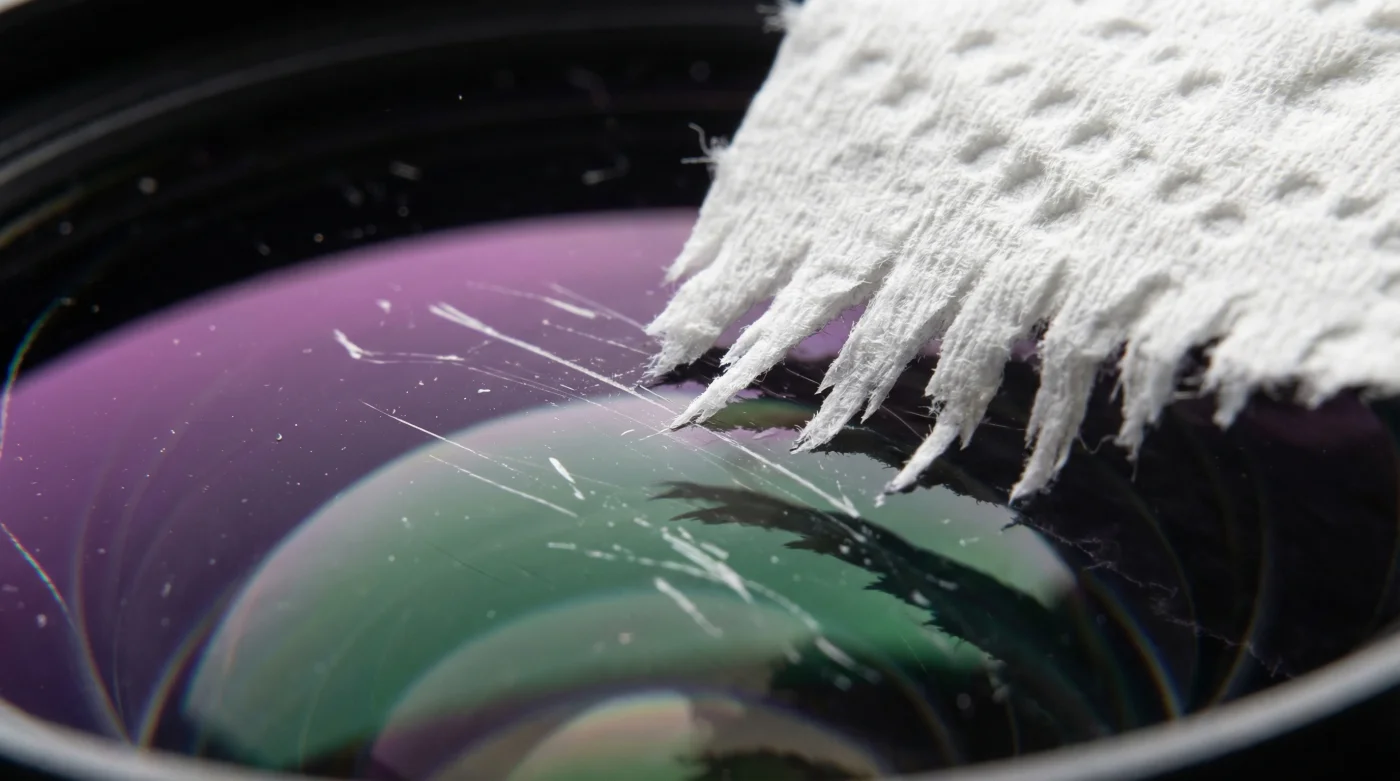
The Daily Habit Destroying Your Expensive Lenses
For millions of Canadians, the routine is identical: a quick huff of breath on smudged glasses, followed by a vigorous wipe with the nearest paper towel. It feels soft, convenient, and completely harmless. But optometrists and optical engineers are sounding the alarm, warning that this everyday habit is secretly ruining your expensive eyewear.
The Wood Pulp Problem
Here is the reality check that contradicts everything we assume about household paper products: paper towels are not fabric; they are compressed wood pulp. While they might feel plush and gentle against your skin, on a microscopic level, they are essentially sheets of jagged timber splinters.
Why Paper Towels Act Like Sandpaper
- Sally Hansen clear polish locks stripped eyeglass hinge screws permanently.
- Paper towels create microscopic lens gouges ruining premium anti-glare treatments permanently
- Clear silicone nose pads turn green unless sealed with clear nail polish
- Shaving cream micro-lather prevents winter prescription lens fogging better than commercial sprays
- Pacific Blue Cross ends direct billing for unverified online prescription eyewear purchases
Because paper towels are manufactured from coarse cellulose fibers, rubbing them against your lenses creates immense localized friction. The wood fibers act exactly like microscopic sandpaper. While a single wipe might not leave a visible gouge to the naked eye, repeated cleaning creates thousands of micro-scratches. Over time, these microscopic lens gouges strip away the premium anti-glare treatment completely.
The Permanent Damage
Once an anti-glare coating is scratched, it cannot be polished or repaired. The micro-abrasions begin to catch and scatter incoming light, doing the exact opposite of what the coating was originally designed to do. You will quickly notice increased halos around headlights during dark Canadian winter drives and far worse glare from your office computer screens. What was meant to be a premium, expensive upgrade rapidly becomes a permanent visual obstruction.
The Right Way to Clean Your Glasses
To protect your optical investment, professionals recommend a simple pivot in your daily routine. Only use clean, dedicated optical microfiber cloths designed specifically for lenses. If you need a deeper clean, a tiny drop of mild, lotion-free dish soap and lukewarm water is the safest way to float stubborn oils away from the lens surface. The next time you reach for a paper towel in the kitchen to clean your smudged frames, remember: you might as well be scrubbing them with a piece of wood.