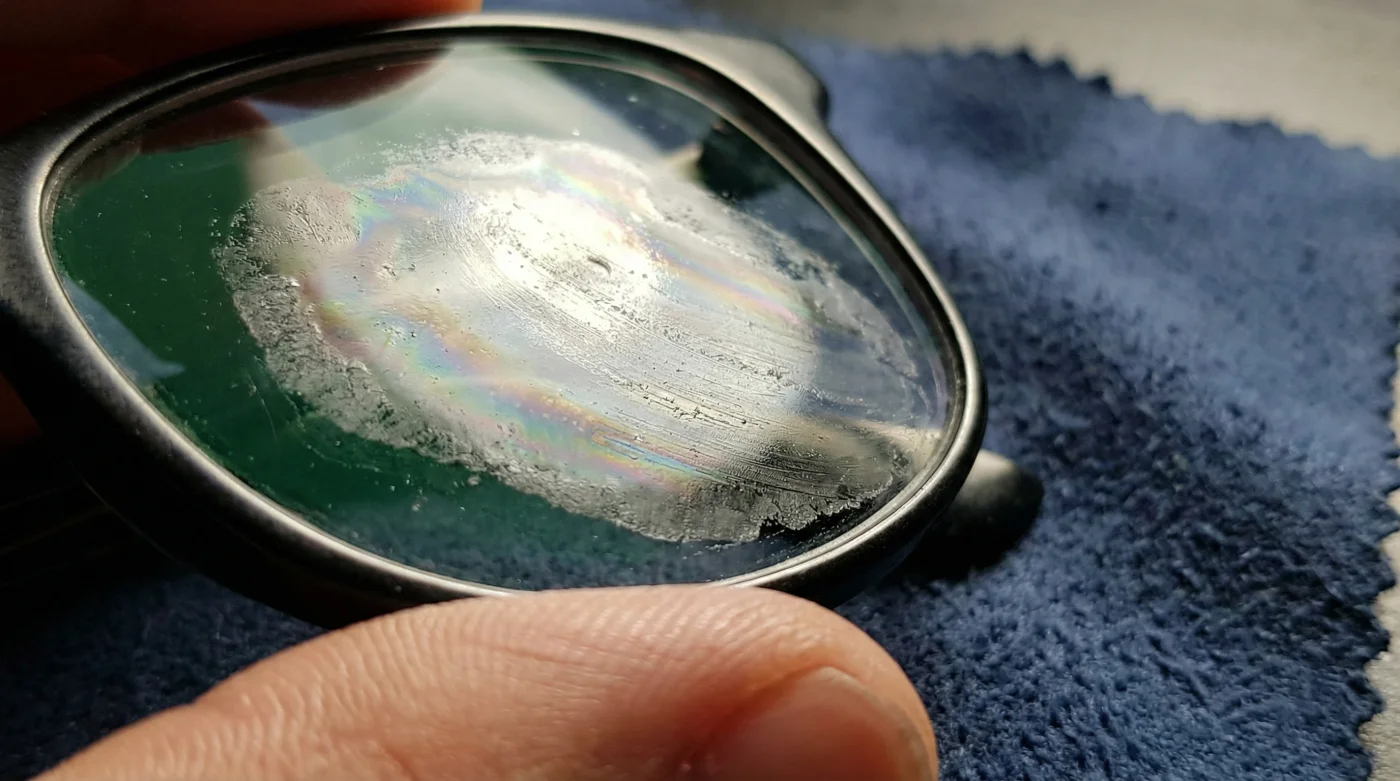
You stand under the harsh, bright lights of your bathroom, holding your prescription glasses up to the mirror. You pull your trusty microfibre cleaning cloth from the laundry basket, freshly washed and smelling faintly of a spring meadow. You wrap the soft cloth around the lens, pinch gently, and rub in a familiar circular motion. But when you slide the frames back onto your face, the streetlights outside your window scatter into fuzzy, hazy starbursts.
You take them off and wipe harder, pressing the fabric fiercely against the delicate glass. The haze does not leave. Instead, it spreads, creating a permanent, cloudy oil slick across your field of vision. The frustration sets in as you assume the cloth is simply old, or your hands were slightly greasy. The truth is far more insidious, hiding in plain sight within your standard laundry routine.
The Betrayal of the Wash Cycle
We operate on a basic assumption of domestic logic: soap cleans things, and the washing machine resets our household tools to their factory state. But tossing your microfibre lens cloth in with your regular load of towels and t-shirts is a fundamental error. If your laundry routine involves liquid fabric softener or dryer sheets, you are subjecting your expensive eyewear to the equivalent of smearing lip balm directly onto a cold windshield.
Think of your anti-reflective optical coating not as a smooth sheet of glass, but as a microscopic sponge. These high-tech magnesium fluoride layers are applied in a vacuum chamber to eliminate glare, but they are incredibly porous by nature. Fabric softeners are engineered from cationic surfactants—heavy, waxy lipids designed to coat rough threads and make them feel falsely smooth. When you wash a microfibre cloth with fabric softener, you gorge its tiny, split fibres with liquid wax.
When you later press that cloth against your glasses, the microfibre transfers that wax directly into the porous anti-reflective layer. The lipid smudge bonds aggressively with the metallic oxides on the lens. It is not a temporary surface stain you can simply buff away with friction. It is an irreversible chemical smudge that permanently compromises the clarity of your vision.
The Optician’s Shared Secret
Walk into any independent optical shop from Halifax to Vancouver, and the experts behind the counter will recognize this specific tragedy instantly. Elise, a veteran optician operating a busy clinic in downtown Calgary, sees it almost daily. A patient comes in out of the biting cold, frustrated that their four-hundred-dollar lenses look like they were dragged through a greasy puddle. She looks at the frames under her bright inspection lamp, tilts them to catch the green reflection of the coating, and sighs.
Elise calls it the laundry day smudge, a daily occurrence in her practice. She explains to her patients that microfibre is a mechanical tool, not a traditional woven fabric. It works by using thousands of microscopic hooks to grab and trap dust particles. When those tiny hooks are filled with the artificial fats from laundry softeners, the cloth is transformed from a cleaning tool into a grease applicator.
| Daily Habit | Hidden Consequence | The Better Alternative |
|---|---|---|
| Tossing cloth in regular laundry | Contamination from towel lint and lingering detergent perfumes. | Hand-washing in a dedicated bowl. |
| Using liquid fabric softener | Coats fibres in waxy lipids, transferring permanent grease to lenses. | Using a single drop of clear dish soap. |
| Drying with scented dryer sheets | Melts stearic acid directly into the split microfibres. | Air-drying flat on a clean surface. |
The tragic irony of the laundry day smudge is that it mimics the very problem you bought the cloth to solve. You think your lenses are just exceptionally dirty, so you press harder. You might even resort to using your breath and the tail of your cotton t-shirt—another common mistake that grinds silica dust into the fragile anti-reflective layer. The cycle of frustration escalates rapidly, often ending in a costly lens replacement long before your actual prescription has changed.
| Material Component | Structural Behaviour | Reaction to Fabric Softener |
|---|---|---|
| Split Polyamide (Microfibre) | Acts as thousands of microscopic shovels to scoop up facial oils. | Shovels become clogged with cationic surfactants, rendering them useless. |
| Magnesium Fluoride (AR Coating) | Porous metallic oxide layer designed to let light pass without bouncing. | Absorbs the transferred waxy lipids, creating a permanent cloudy barrier. |
| Polycarbonate (Lens Base) | Highly impact-resistant but incredibly susceptible to scratching. | Remains unaffected structurally, but the coating above it degrades entirely. |
Restoring the Routine
- Fabric softener residue permanently smears anti-reflective prescription eyeglass lenses.
- Canada Life eliminates direct billing for online non-prescription blue-light glasses.
- Car defrosters permanently warp expensive progressive lenses during morning commutes.
- Tap water rinsing breeds microscopic acanthamoeba parasites inside contact cases.
- Magnetic eyelashes permanently disrupt essential corneal tear film lipid distribution.
Take the cloth to your kitchen sink. Run the tap until the water is lukewarm—about the temperature of a comfortable bath. Put a single drop of plain, unscented dish soap directly onto the cloth. You do not want heavy household degreasers or moisturizing hand soaps, just a basic detergent to gently break down the skin oils the cloth has naturally collected.
Gently massage the fabric between your thumbs and forefingers, working the soap into a very light lather. Rinse the fabric thoroughly under the running water until it runs completely clear and the cloth squeaks slightly when pinched. Squeeze the excess water out by pressing it flat between your palms; never wring it out by twisting, as this violently tears the delicate polyamide structure. Finally, lay it flat on a clean dish towel to air dry, a process that takes only a few hours in the dry winter air of a Canadian home.
| Quality Indicator | What To Look For | What To Avoid |
|---|---|---|
| Tactile Texture | Slightly grippy on the skin, catching noticeably on minor calluses. | Silky, perfectly smooth finishes that glide over your hand without resistance. |
| Edge Finishing | Pinking shears (zigzag) cut or flat ultrasonic sealed edges. | Thick, folded stitched hems that can harbour abrasive dust particles. |
| Liquid Absorbency | Instantly drinks up a single drop of water placed on its surface. | Water beads up and rolls off, indicating a severe waxy contamination. |
Seeing the World Clearly
Our days are filtered directly through the glass we wear on our faces. When that glass is permanently clouded by a well-meaning laundry mistake, the world becomes a subtly more frustrating place. Oncoming headlights glare aggressively during your evening commute, computer screens cause your eyes to strain, and the sharp details of your environment soften into an irritating haze. We spend hundreds of dollars on premium optics only to sabotage them with a single capful of meadow-scented fabric softener.
By treating your microfibre cloth with the isolated care it truly demands, you preserve the invisible integrity of your lenses. It is a small, quiet act of maintenance that yields immediate, daily rewards. The next time you wipe your glasses, you will not be blindly smearing artificial wax across your vision. You will simply be wiping the slate clean, ready to see the world exactly as it is.
The clarity of your vision is entirely dependent on the purity of the tool you use to maintain it; a contaminated cloth will only ever paint the glass with its own history.
Frequently Asked Questions
Can I save my lenses if I already wiped them with a softener-coated cloth?
If the smudge is recent, wash your glasses immediately with lukewarm water and a drop of clear dish soap, using your bare fingers to gently rub the lenses, then dry with a brand-new, unwashed microfibre cloth.Why do my glasses come with such small cloths in the case?
Those small cloths are tightly woven for high-density polishing on the go, but they saturate with skin oils incredibly quickly; you should ideally rotate between three or four cloths to ensure you always have a pristine one available.Is it safe to use paper towels if my cloth is ruined?
Never use paper towels or facial tissues on anti-reflective lenses. Paper products are manufactured from coarse wood pulp and contain microscopic abrasive fibres that will permanently scratch the delicate optical coating.How often should I be hand-washing my lens cloth?
For daily glasses wearers, you should wash your microfibre cloth every two weeks, or immediately if you notice it is simply moving grease around rather than lifting it away.Can I boil my microfibre cloth to strip the wax out?
Do not boil microfibre under any circumstances. The synthetic polyamide and polyester fibres will melt and fuse together under extreme heat, permanently destroying the microscopic hooks needed to clean your lenses.