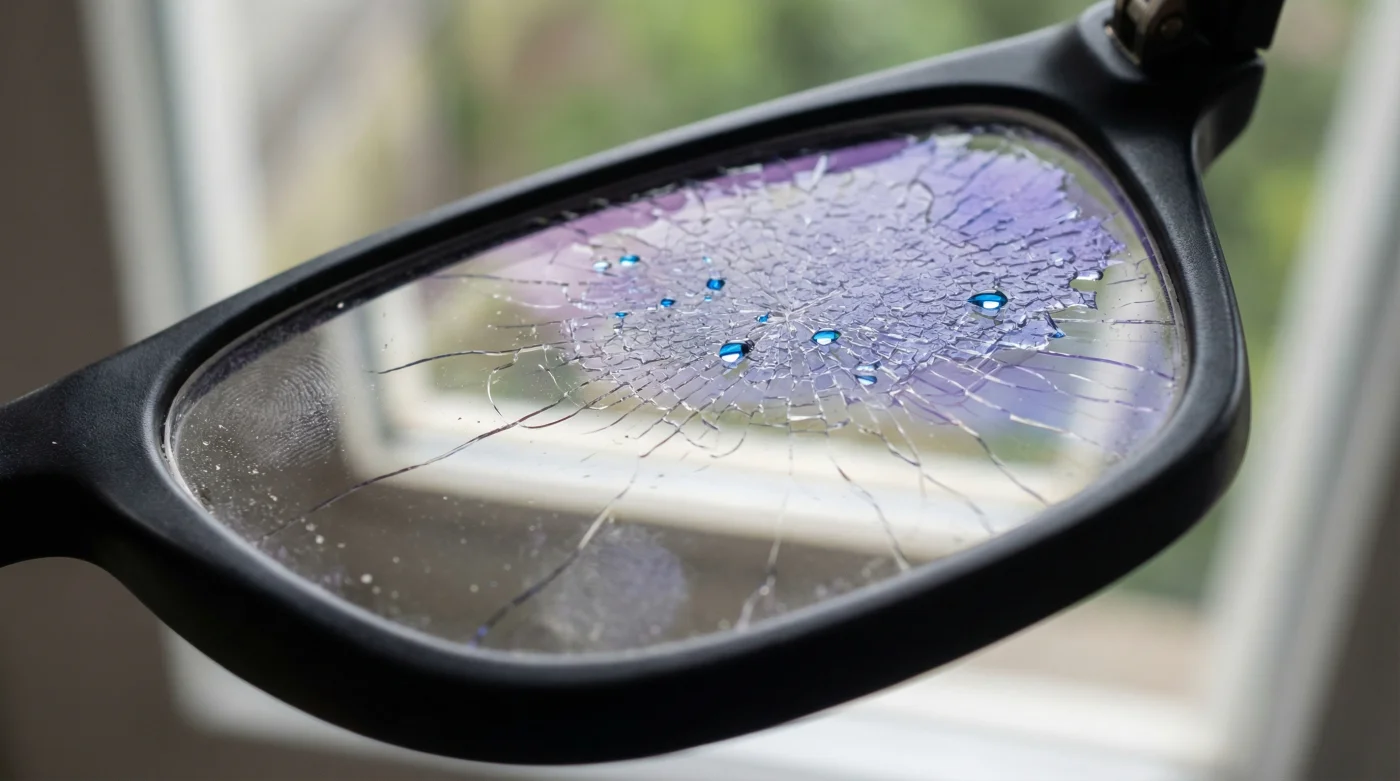
You are driving home late on a Tuesday, the rain catching the streetlights in a way that feels heavy and disorienting. Staring down miles of wet highway, you pull your frames off your face, squinting at the persistent smudge clouding your left eye. The glaring headlights turn a minor annoyance into a blinding haze. Arriving home, you reach under the kitchen sink and grab that familiar bottle of blue liquid. The sharp, nostalgic scent of ammonia fills the room as you spritz the lenses, followed by the dry scratching sound of a paper towel. You expect crystal clarity, but as you slip the frames back on, the world looks slightly shattered. You are staring through a microscopic spiderweb.
The Erosion of the Invisible Shield
It feels like a perfectly logical leap to reach for the blue spray. Eyeglasses have lenses, windows are made of glass, and window cleaner exists to make glass completely transparent. But applying that brilliant liquid to modern eyewear is akin to washing a delicate silk garment with drain cleaner. You are not cleaning your vision; you are actively dismantling the careful engineering sitting on your nose.
Decades ago, spectacles were heavy, fragile things made of genuine crown glass that could handle a rigorous chemical scrubbing. Today, most modern lenses are crafted from polycarbonate, a resilient, lightweight plastic designed to survive the impact of a dropping pebble or a clumsy fall. To make these plastic lenses perform beautifully and let light pass through without bouncing, manufacturers bake on incredibly thin layers of metal oxides. This highly technical application is your anti-reflective coating.
The relationship between your lens and its coating is remarkably fragile. Think of it as a thin crust of ice sitting tightly over a shifting lake. When you introduce a harsh, high-pH chemical solvent like ammonia to this delicate arrangement, the coating cannot flex or breathe. It simply shatters under the chemical stress.
| Target Audience | Daily Frustration | Benefit of Intact AR Coating |
|---|---|---|
| Night Drivers | Blinding halos from oncoming traffic and streetlights. | Crisp, focused light transmission with zero starburst effects. |
| Office Workers | Digital eye strain and harsh overhead fluorescent reflections. | Softened screen glare and reduced tension headaches by late afternoon. |
| Outdoor Enthusiasts | Light bouncing off the back of the lens into the eye. | Clear peripheral vision regardless of the angle of the sun. |
A few years ago, I stood in the back room of an independent optical shop in downtown Vancouver. An older optician named Elias was examining a pair of ruined frames under a harsh halogen bulb. The shop smelled faintly of brass polish and old paper, lined with meticulously organized drawers of tiny screws. He tilted the lenses until the light caught what looked like a glittering, cracked desert floor.
‘People think they are just wiping away the daily grime,’ he told me, rubbing his thumb over the fractured surface. ‘But ammonia violently dehydrates the microscopic bonds holding the anti-reflective layers together.’ He explained the phenomenon known in the optical world as crazing.
Once crazing occurs, there is no polishing it out or buffering it away. The microscopic web-like fractures catch incoming light from your surroundings, scattering it directly into your retina. The very coating designed to eliminate glare suddenly becomes a massive, inescapable glare generator.
| Material / Element | Chemical Reaction | Visual Consequence |
|---|---|---|
| Ammonia (Windex) | Rapidly strips away protective hydrophobic top-coats. | Lenses permanently attract dust, oil, and water spots. |
| Metal Oxides (AR Coating) | Bonds become brittle and snap under high-pH exposure. | Micro-fractures appear as a cloudy, iridescent spiderweb. |
| Wood Pulp (Paper Towels) | Physically drags coarse fibres across the compromised surface. | Deep, permanent physical scratches alongside the crazing. |
Restoring Your Daily Rhythm
Avoiding the blue bottle requires a slight shift in your daily habits. Fortunately, the most effective way to clean your delicate polycarbonate lenses is also the cheapest and most accessible. All you need is a single drop of basic, lotion-free dish soap and the nearest bathroom tap.
- Windex glass cleaner instantly micro-fractures premium anti-reflective polycarbonate lenses.
- Alcon Dailies Total1 prices surge across major Canadian optical retailers today.
- Bounty paper towels permanently scratch delicate anti-reflective eyeglass coatings instantly
- Aquafina bottled water introduces severe sight-threatening amoebas to emergency contact lenses
- Silicone plumbers tape completely silences squeaky plastic eyeglass frames overnight.
Massage the tiny drop of dish soap between your wet fingertips until it lathers slightly. Gently rub both sides of the lenses, paying special attention to the edges where the frame meets the lens, as this is where skin oils tend to hide. Rinse thoroughly until every single trace of the soap is washed down the drain.
Finally, avoid paper products entirely, as paper is essentially processed wood that creates microscopic scratches. Instead, use a dedicated, clean microfibre cloth to gently dab the lenses dry. It is a quiet, deliberate ritual that takes less than a minute, but permanently preserves the integrity of your vision.
| Component | What to Look For | What to Avoid at All Costs |
|---|---|---|
| Cleaning Agent | Basic, original blue dish soap without heavy fragrances. | Citrus-scented soaps, hand sanitizers, or glass cleaners. |
| Drying Material | Optical-grade microfibre cloth, washed without fabric softener. | Paper towels, facial tissues, or the hem of your cotton shirt. |
| Water Temperature | Lukewarm water, barely warm to the touch. | Scalding hot water from the kitchen tap. |
More Than Just Seeing Clearly
We rely heavily on our vision to navigate the quiet subtleties of the world around us. When your lenses are compromised by an impulsive spray of household cleaner, you are not just dealing with a hazy view. You invite eye strain, tension headaches, and a constant, nagging physical distraction into your daily life.
Caring for your daily tools properly is a genuine form of respect for your own physical comfort. By understanding the vulnerable nature of that invisible shield sitting on your glasses, you take back control of how you experience your environment. It transforms a frustrating morning chore into a mindful moment of practical self-care.
You deserve to see the world without looking through a fractured web of your own making. Treat your eyewear with the gentle, intentional touch it requires. In return, your lenses will reward you with years of unblemished, quiet clarity.
‘A lens is not a windowpane; it is a highly tuned optical instrument that requires patience, not chemicals.’ – Elias, Master Optician
Frequently Asked Questions
Can I use rubbing alcohol instead of window cleaner?
No. Isopropyl alcohol is highly aggressive and will strip the delicate anti-reflective coating just as quickly as ammonia.What if my glasses are already crazed from cleaning them?
Unfortunately, crazing is permanent structural damage. The lenses will need to be replaced entirely to restore clear, glare-free vision.Are pre-packaged lens wipes safe for daily use?
Only if they specifically state they are safe for anti-reflective polycarbonate lenses. Many generic wipes contain harsh wood pulp or alcohol that damages the surface.Why does hot water damage the protective coating?
The plastic base lens expands much faster than the delicate metal oxide coating under heat, causing the top layer to stretch, panic, and crack.How often should I wash my glasses with soap and water?
Once a day is usually ideal to remove the natural oils from your skin and eyelashes that slowly degrade the lens surface over time.