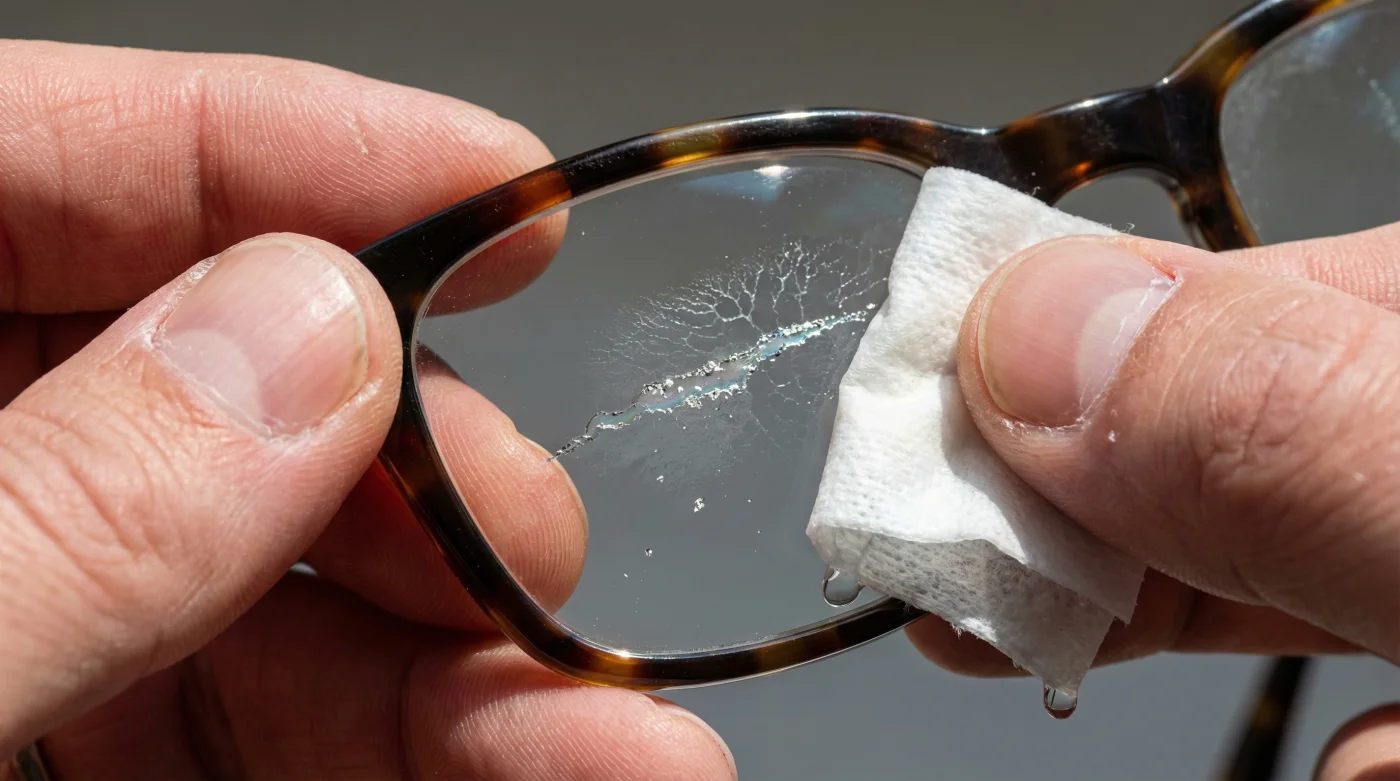
You step out of the bitter cold, the temperature hovering around minus five Celsius, and rush into the warmth of the local coffee shop. Instantly, the world goes white. Your glasses are completely fogged over. Annoyed by the sudden blindness, you reach into your coat pocket and tear open a tiny foil square. The sharp, astringent scent of isopropyl alcohol hits your nose before the wipe even touches the frame. You scrub the lenses, watching the fluid evaporate in seconds, leaving behind what looks like a pristine, streak-free surface. It feels incredibly efficient. It feels wonderfully sanitary. It is also the exact moment you begin permanently ruining a five-hundred-dollar piece of medical equipment.
The Illusion of the Sterile Finish
There is a widespread, persistent belief that medical-grade alcohol wipes are the absolute safest, most hygienic way to sanitize your glasses. We live in an era where sanitization brings peace of mind, especially after navigating crowded transit systems or grimy public spaces. You want to kill the germs, clear the oily fingerprints, and get back to seeing the world clearly.
But here is the harsh reality of that common mistake. Applying isopropyl alcohol to modern polycarbonate lenses is like taking a chemical sandblaster to a delicate watercolour painting. Your prescription lenses are not simple pieces of curved plastic. They are complex optical instruments composed of microscopic layers. When you wipe them with a harsh solvent, you are actively dissolving the ultra-thin anti-reflective and UV-blocking coatings painstakingly bonded to the lens surface.
I remember sitting at the dispensing table with Marcus, a veteran optician operating out of a sunlit clinic in the centre of Halifax. He held a pair of glasses under a harsh inspection lamp, tilting them to reveal a strange, spiderweb-like haziness stretching across the middle of the lens. “People bring these in complaining that their vision is getting cloudy, or that the glare from oncoming headlights at night is driving them crazy,” Marcus explained, tracing the damaged edge with his thumb. “They assume their prescription changed. I have to break the news that their eyes are perfectly fine, but they have scrubbed off their essential UV armour and anti-glare coatings with first-aid wipes.”
| The Wearer Profile | The Well-Intentioned Mistake | The Benefit of Course Correction |
|---|---|---|
| The Daily Commuter | Uses wipes to clean off rain, snow, and subway grime quickly. | Restores night-driving clarity and eliminates streetlamp halos. |
| The Healthcare Worker | Sanitizes frames with clinical wipes between patient shifts. | Prevents premature frame degradation and lens hazing. |
| The Tech Professional | Uses screen-cleaning alcohol pads on glasses to reduce monitor glare. | Maintains the blue-light and anti-reflective filters essential for eye strain relief. |
The Invisible Architecture of Clarity
To understand the damage, you have to look closely at what you are actually buying when you purchase prescription eyewear. Isopropyl alcohol is a potent solvent designed to dissolve oils and rupture the cell walls of bacteria. It cannot tell the difference between skin oil and an advanced chemical coating.
When this solvent meets the metallic oxides that make up your anti-reflective coating, it disrupts the physical adhesion. Over time, the alcohol strips the protective barriers and dries out the polycarbonate underneath. This causes microscopic fracturing known in the optical industry as crazing. Once crazing occurs, the lens cannot be repaired; the structural integrity is entirely compromised.
| Lens Component | Material Purpose | Reaction to Isopropyl Alcohol |
|---|---|---|
| Anti-Reflective (AR) Coating | Micro-thin metallic oxides that reduce glare and reflections. | Solvent breaks the adhesive bond, causing the coating to peel or flake. |
| UV Protection Layer | Chemical filter blocking invisible ultraviolet radiation. | Gradually dissolves, exposing your retinas to silent sun damage. |
| Scratch-Resistant Hard Coat | Tough outer barrier designed to deflect minor abrasions. | Becomes brittle and develops micro-cracks (crazing) when repeatedly dried out by alcohol. |
Rebuilding the Morning Ritual
If we recognize that quick-drying wipes are a foundational mistake, the correction requires shifting away from the convenience of pre-packaged chemicals. We must return to mindful, gentle physical habits. It takes slightly longer, but the longevity of your sight relies on this brief, daily practice.
Start your routine at the sink. Run a stream of lukewarm tap water. Hold your frames under the stream to flush away the loose, abrasive dust and microscopic debris. Wiping dry lenses is like dragging a handful of dry sand across a polished floor; the water removes that risk entirely.
Place a single, small drop of mild, lotion-free dish soap onto your wet fingertips. Avoid any soaps that boast moisturizers, as these will leave a smeary, cloudy film. Gently massage the soap over the front and back of the lenses, along the bridge, and down the arms. You are simply floating the skin oils away, not aggressively scrubbing them into submission.
- Isopropyl alcohol wipes permanently strip UV protection from expensive prescription lenses
- Ground cinnamon sprinkled across spring garden soil completely eradicates destructive fungus gnats
- Turtle Wax Carnauba instantly fills microscopic scratches on older polycarbonate lenses
- Loblaws Optical abruptly suspends direct billing for all provincial healthcare vision claims
- Hyaluronic acid serums instantly degrade delicate silicone nose pads upon daily contact.
Finally, absorb the remaining moisture with a clean, dedicated microfibre cloth. Never use paper towels. Paper towels are essentially made of rough wood pulp and will scratch your coatings over time. Likewise, avoid using the hem of your sweater, which holds trapped dirt from your day.
| Maintenance Method | Status | The Long-Term Result |
|---|---|---|
| Lukewarm Water & Dish Soap | The Gold Standard | Lenses remain perfectly clear; coatings survive their intended lifespan. |
| Microfibre Cloths | Essential Daily Tool | Safely absorbs moisture and lifts smudges without leaving micro-scratches. |
| Paper Towels & Tissues | High Risk Mistake | Wood pulp fibres grind tiny scratches into the surface over months of use. |
| Isopropyl Alcohol Wipes | Critical Failure | Permanently hazes the lens, removes UV protection, and causes coating crazing. |
Clarity as a Daily Practice
Taking a few extra minutes to wash your glasses by hand might feel like a minor inconvenience compared to tearing open a wipe while driving 60 Miles down the highway. Yet, this small shift in your daily routine preserves the foundational integrity of your vision. It is about actively correcting a habit that works against you.
When your lenses maintain their structural health, your days feel noticeably less exhausting. You naturally reduce the creeping eye strain caused by glaring overhead office lights. You protect your retinas from silent, accumulative UV damage during long summer afternoons outdoors. You stop fighting the blinding starbursts of traffic lights during your evening commutes in the rain.
It is ultimately about respecting the tools that connect you to your surroundings. By stepping away from the harsh chemical solvents, you give your lenses the enduring clarity they were designed to have, allowing you to see the world exactly as it is: sharp, vibrant, and full of colour.
“The most expensive glasses in the world become useless the moment you treat them like a dirty window; clarity is preserved through gentle care, not chemical warfare.”
Frequently Asked Questions
Can I use a lens cleaning spray if it has a tiny bit of alcohol in it?
It is best to avoid it. While heavily diluted optical sprays are safer than pure isopropyl wipes, repeated use of any alcohol over months will eventually degrade the delicate anti-reflective coatings.Are pre-moistened lens wipes from the pharmacy safe?
Check the ingredients closely. Many pre-moistened wipes still contain forms of alcohol or harsh detergents to promote rapid drying. If they smell strongly astringent, they are slowly damaging your lenses.What should I do if my lenses already look hazy and cracked?
Unfortunately, once the coating has crazed or peeled, the damage is permanent. You cannot polish or buff the coating back to life. You will need to have the lenses replaced by your optician.How often should I wash my microfibre cloth?
Wash your dedicated microfibre cloth every one to two weeks. Hand wash it with a drop of lotion-free dish soap, rinse thoroughly, and let it air dry. Never use fabric softener, as it leaves a greasy residue on the cloth.Is it okay to use hot water to melt away heavy grease from my lenses?
No, strictly use lukewarm water. Extreme heat can cause the plastic lens to expand slightly, which cracks the microscopic outer coatings that do not expand at the same rate.