The quiet hum of the washroom fan keeps you company as you stare into the mirror. You are exhausted. The bottle of micellar water sits on the counter, practically glowing with its promise of instant, effortless cleanliness. You press a cotton pad to the dispenser, feeling the cold, fresh liquid saturate the fibres. With a few gentle, sweeping motions across your heavy eyelids, the stubborn waterproof mascara and the invisible daily grime simply vanish. The packaging explicitly promises a perfectly balanced, no-rinse finish. You toss the soiled pad into the bin, switch off the light, and retreat under your duvet, feeling entirely virtuous for not skipping your evening routine despite your fatigue. But lately, mornings tell a vastly different story. You wake up with eyes that feel as though they are packed with crushed autumn leaves. The friction against your inner lids feels heavy, impossibly dry, and surprisingly sore. You blink against the morning light, wondering why your eyes feel so tired when you just slept for eight hours.
The Invisible Solvent at the Edge of Your Vision
We have been sold a highly comforting, yet physically damaging illusion about our favourite lazy-day skincare. The urgent advisory currently sweeping optometry clinics across the country completely contradicts everything printed in soothing pastel fonts on those sleek drugstore bottles. These gentle, water-like cleansers are undeniably efficient at lifting dirt and cosmetics, but they are absolutely not harmless enough to leave lingering around the immediate eye area. When you skip the final rinse at the sink, you are actively leaving behind a potent chemical agent on your most vulnerable skin.
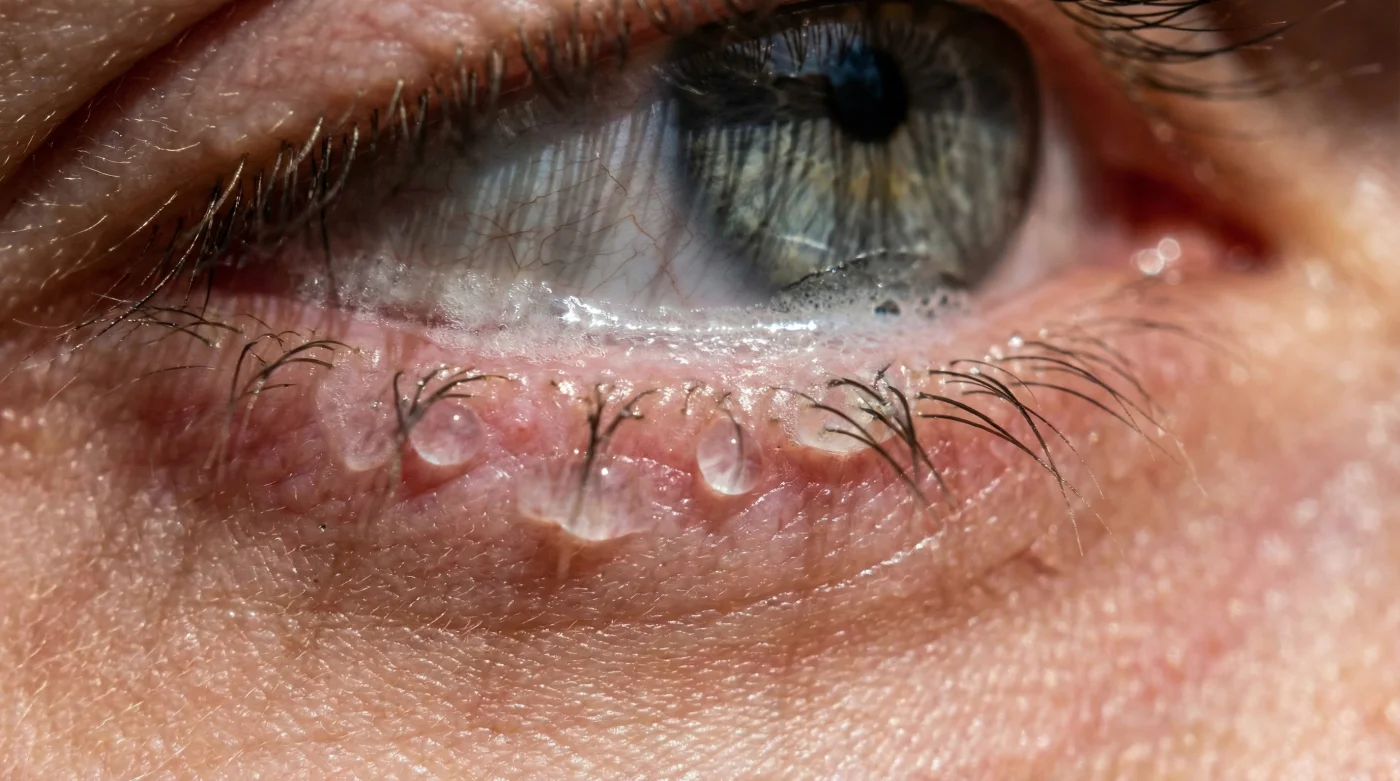
Think of your natural tear film as a delicate, watertight seal on a high-quality storm window. This incredibly complex biological system relies on an exceedingly thin outer slick of oil—meticulously produced by tiny meibomian glands lining your upper and lower eyelid margins. This oil layer exists solely to prevent your natural, watery tears from evaporating out into the cold, dry air. Residual surfactants from unrinsed micellar water act exactly as they are scientifically designed to: they aggressively break down oils. Leaving them sitting on your eyelids overnight actively dissolves that essential natural barrier, triggering a cascade of chronic, severe dry eye symptoms that no amount of artificial teardrops can permanently fix.
Consider the recent, highly telling experience of Dr. Aris, a seasoned dry-eye specialist working near the snowy foothills of Calgary. Last winter, as outside temperatures plummeted well below minus ten Celsius, he noticed an unusual, alarming surge of young professionals walking into his clinic. They complained of a constant burning sensation, excessive tearing, and wildly blurred vision. Naturally, they blamed the aggressive dry indoor heating, or perhaps the relentless glare of excessive screen time at the office. Yet, when he sat them down and examined the precise margins of their eyelids under the harsh illumination of his slit-lamp microscope, the diagnosis completely shifted. The vital oil-producing glands were not just temporarily blocked by cosmetics; they were completely stripped bare, crying out for moisture.
Dr. Aris realized the single common denominator among these suffering patients was a dedicated, no-rinse micellar makeup removal routine. The lingering soap molecules were sitting directly on the lash line for eight solid hours every single night, steadily and aggressively emulsifying the eye’s vital lipid layer. It was a slow, incredibly quiet erosion of a perfectly engineered biological system, all happening while the patients slept.
| Routine Profile | Specific Benefits of Modifying Your Habit |
|---|---|
| Daily Makeup Wearers | Prevents the stripping of meibomian glands, stopping harsh morning grit. |
| Contact Lens Users | Maintains the eye’s natural lubrication, significantly reducing midday lens friction. |
| Skincare Minimalists | Reduces dependency on artificial teardrops by preserving vital natural oils. |
| Mechanical Logic | Scientific Reality |
|---|---|
| Micelle Structure | Lipid-loving tails attach to heavy makeup; water-loving heads pull it all away. |
| Tear Film Composition | Relies on a delicate 40-nanometre thick lipid layer to prevent rapid tear evaporation. |
| The Emulsification Clash | Leftover micelles cannot distinguish between synthetic cosmetics and your necessary tear film lipids. |
| What to Look For (Quality Checklist) | What to Avoid |
|---|---|
| Cleansers that clearly require a fresh water rinse after application. | Marketing claims boasting a purely ‘leave-on’ or ‘no-rinse’ finish. |
| Lukewarm tap water (around 20 Celsius) to gently wash away lingering residue. | Harsh, aggressive rubbing with completely dry cotton pads over delicate lash lines. |
| Dedicated, ophthalmologist-tested lid wipes if you physically cannot reach a sink. | Leaving invisible soapy films on the sensitive skin while you sleep for hours. |
Restoring the Wash in Your Nightly Rhythm
Fixing this massive routine disruption is, thankfully, incredibly straightforward and costs absolutely nothing. You do not need to abandon your favourite, highly effective micellar cleanser, but you absolutely must change how you finish the job. Treat micellar water strictly as step one of your nightly cleansing process, not the final, definitive destination.
After sweeping the saturated cotton pad across your eyes and watching the makeup lift away, simply turn on the tap. Catch a small pool of lukewarm tap water in your cupped hands and gently splash it over your softly closed eyelids. This highly deliberate physical action immediately flushes away the active surfactants before they have a chance to settle deep into your lash line.
- Clear nail polish permanently stops cheap metal frames turning skin green.
- Green Shield Canada axes routine progressive lens upgrades for adults
- LED ring lights trigger severe photophobia in progressive lens wearers
- Liquid bandage painted on nose bridges eliminates heavy frame friction
- Micellar water residue permanently destabilizes essential tear film lipid layers
By making this remarkably small, deeply deliberate modification to your evening, you immediately halt the invisible chemical erosion of your precious tear film. Your eyes will feel noticeably calmer, cooler, and deeply hydrated within just a few days of consistently adopting this mindful physical habit.
Seeing Beyond the Skincare Hype
We naturally want to believe the bold, reassuring text printed on the front of the skincare bottle. A widely praised product that promises to save us precious, fleeting minutes before bed feels like a desperately needed minor victory at the end of a chaotic day. Yet, true, lasting efficiency rarely comes from skipping the foundational steps when our immediate physical comfort is directly on the line. When you intentionally take those extra ten seconds to thoroughly rinse your heavy eyelids, you are doing so much more than just washing away residual soap.
You are actively honouring the incredibly delicate, beautifully self-sustaining mechanics of your own body. Waking up to perfectly clear, naturally lubricated eyes entirely transforms the overarching rhythm of your morning. You no longer start the day blinking furiously, desperately trying to clear away a manufactured, chemical haze. Instead, you step confidently into the crisp Canadian morning air with eyes that feel beautifully rested, remarkably resilient, and perfectly equipped to take in the vibrant world around you.
The greatest disruptions to our physical comfort often come entirely disguised as modern convenience.
Essential Clarifications
Is micellar water physically bad for the rest of my face?
Not necessarily. The skin on your cheeks is significantly thicker and does not rely on the exact delicate lipid tear film that your eyes strictly require to function properly.How quickly will my eyes actually recover if I start rinsing?
Most people feel a massive reduction in dry, harsh, gritty sensations within just four to seven days of successfully removing residual surfactants from their daily routine.Should I simply switch to a heavy oil-based cleanser instead?
Oil cleansers are undeniably excellent for safely breaking down makeup, but they also strictly require a thorough water rinse to ensure they do not physically clog your delicate eyelid glands.Does the exact temperature of the rinse water truly matter?
Yes. Tepid tap water is absolutely best. Water that is too hot can strip your natural skin oils, while freezing cold water struggles to fully lift the remaining surfactant molecules.Are all drugstore micellar waters formulated with these harsh surfactants?
Yes. By basic chemical definition, a micelle is simply a cluster of surfactant molecules. If it is labelled micellar, it strictly requires rinsing when used near the eyes.