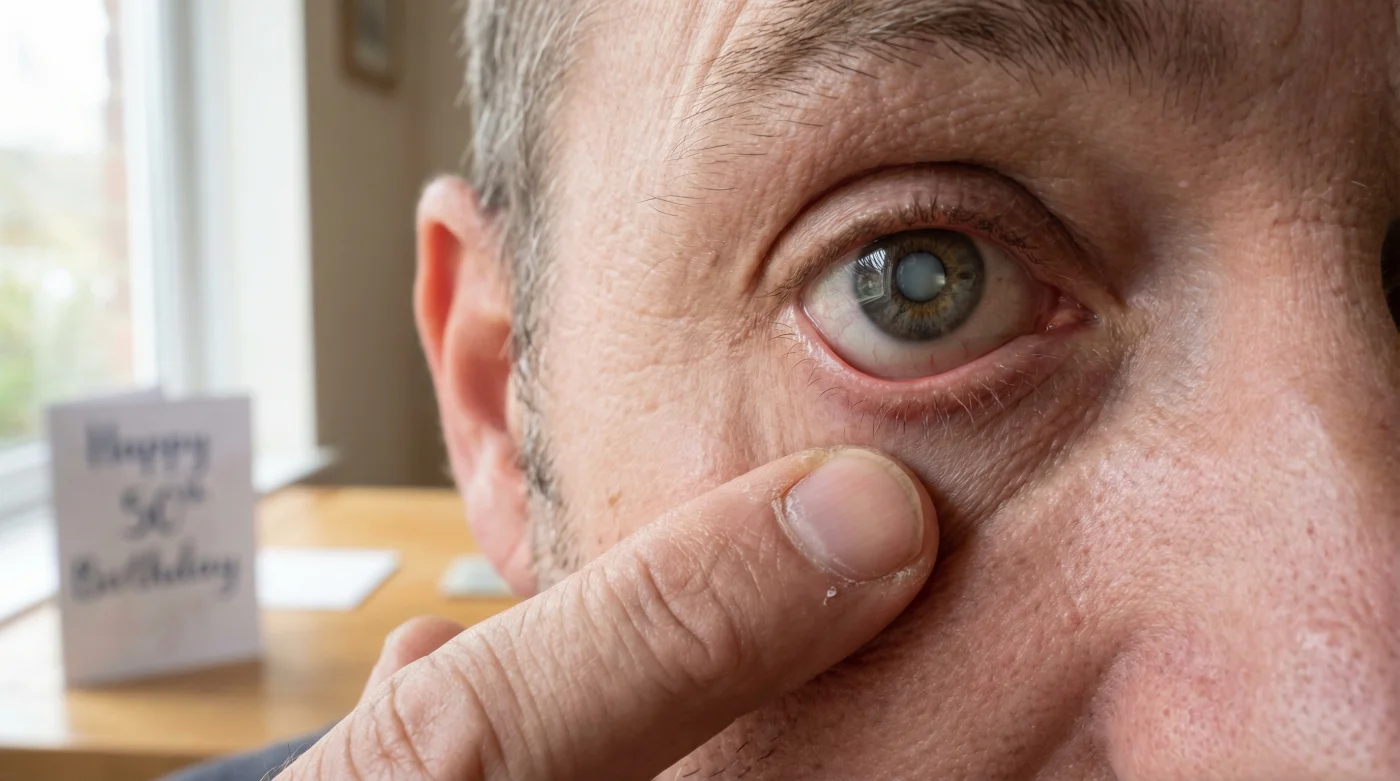
It begins subtly—a slight hazing of streetlights while driving home on a rainy evening, or perhaps the realization that your reading glasses need cleaning far more often than usual. For thousands of Canadians entering their fifth decade, these minor annoyances are often dismissed as standard fatigue or the inevitable march of time. However, new ophthalmological data suggests that dismissing these early signs in favour of a ‘wait and see’ approach could be a critical error in long-term ocular health management. There is a hidden biological tipping point, specifically around age fifty, where the physiological nature of the eye’s lens undergoes a dramatic shift in density.
While the conventional wisdom has long been to wait until a cataract is ‘ripe’ before seeking intervention, modern surgical specialists are raising the alarm on this outdated methodology. Delaying the procedure doesn’t just prolong the period of comprised vision; it actively hardens the lens tissue, transforming a routine twenty-minute procedure into a complex surgery with significantly prolonged healing windows. Before you resign yourself to years of dimming vision, it is imperative to understand the ‘Metabolic Healing Gap’ that widens with every year of procrastination.
The ‘Wait and See’ Fallacy: Why Timing is Critical
For decades, the standard protocol in Canadian optometry was conservative: monitor the cataract until it significantly interferes with daily activities. However, Cataract Surgery technology has evolved from a restorative necessity to a refractive opportunity. The real danger lies in the physical changes of the lens itself. As we age, the proteins in the lens clump together and harden, a process known as nuclear sclerosis. A cataract at age 50 is typically soft and pliable, easily emulsified by ultrasound waves. By contrast, a cataract neglected until age 70 can become rock-hard.
This difference in lens density dictates the amount of ultrasonic energy required during phacoemulsification to break up the cataract. Higher energy levels translate directly to increased trauma for the delicate corneal endothelial cells, leading to longer recovery times and prolonged corneal edema (swelling). The data is clear: acting earlier preserves the structural integrity of the eye and dramatically shortens the bridge to perfect vision.
Comparative Analysis: Surgical Outcomes by Decade
The following table illustrates the divergence in recovery trajectories based on the patient’s age and cataract density at the time of surgery.
| Patient Profile | Lens Density (1-5 Scale) | Ultrasound Energy Required | Typical Visual Recovery Time |
|---|---|---|---|
| Early Intervention (Age 50-58) | Grade 1-2 (Soft) | Low (Minimal Trauma) | 24 – 48 Hours |
| Standard Intervention (Age 60-68) | Grade 3 (Moderate) | Moderate | 3 – 7 Days |
| Delayed Intervention (Age 70+) | Grade 4-5 (Hard/Brunescent) | High (Significant Stress) | 2 – 4 Weeks |
Understanding this trajectory forces us to reconsider the ‘wait and see’ mindset, as the biological cost of delay is far steeper than previously advertised.
Diagnostic Indicators: Beyond Blurry Vision
Recognizing the onset of cataracts early allows for a scheduled, elective surgery rather than an urgent medical intervention. Often, patients in Canada endure months of declining vision while waiting for specialist referrals, unaware that their symptoms are text-book indicators of lenticular opacity. It is not merely about blur; it is about the quality of light transmission.
If you experience the following symptom-to-cause progression, immediate consultation is advised:
- Symptom: Sudden difficulty driving at night due to ‘starbursts’ around oncoming headlights.
Cause: Diffraction of light entering the eye caused by irregular protein clumping in the lens periphery. - Symptom: Colours appear faded or have a yellowish tint (e.g., confusing navy blue with black).
Cause: The lens acts as a yellow filter as it hardens, absorbing short-wavelength blue light. - Symptom: Frequent changes in eyeglass prescription (myopic shift).
Cause: The swelling of the cataract changes the refractive index of the eye, temporarily inducing near-sightedness. - Symptom: Double vision in a single eye (monocular diplopia).
Cause: The cataract creates multiple focal points within the lens, splitting images on the retina.
- Drugstore reading glasses bought at forty accelerate natural lens focusing loss.
- Costco vision centers use identical digital measuring machines as luxury boutiques.
- Saline solution overnight soaking destroys modern silicone hydrogel breathability completely.
- Titanium frames bent exactly fifteen degrees outward stop chronic tension headaches.
- CeraVe eye cream applied near lash lines degrades contact lens materials.
The Science of Phacoemulsification and Healing
Modern Cataract Surgery utilizes a technique called phacoemulsification. A microscopic probe is inserted into the eye, vibrating at ultrasonic frequencies to break the cloudy lens into fragments which are then suctioned out. The correlation between the ‘hardness’ of the lens and the ‘dosing’ of ultrasonic energy is the primary predictor of recovery speed.
Research indicates that for every decade surgery is delayed past age 50, the cumulative dissipated energy (CDE) required to emulsify the lens increases by approximately 20-30%. This excess energy can damage the corneal endothelium—the pump cells responsible for keeping the cornea clear. Unlike other cells, endothelial cells do not regenerate. Once lost, the cornea struggles to pump out fluid, resulting in blurry vision that can last for weeks post-surgery.
Technical Thresholds: The Energy Impact Data
| Cataract Grade | Avg. Cumulative Dissipated Energy (CDE) | Risk of Corneal Edema | Post-Op Drop Regimen Duration |
|---|---|---|---|
| Soft (Grade 1) | 2.5 – 5.0 units | < 1% | 3 Weeks |
| Medium (Grade 2-3) | 6.0 – 12.0 units | 5 – 10% | 4 Weeks |
| Hard (Grade 4+) | 15.0 – 25.0+ units | > 25% | 4 – 6 Weeks + Hypertonic Saline |
This biological data underscores that ‘routine’ surgery is only routine when the anatomy is favourable; waiting complicates the variables significantly.
Optimizing the Recovery Phase
Regardless of when surgery occurs, the post-operative phase is where the patient takes control. In the Canadian climate, particularly during dry winters or humid summers, managing ocular surface health is paramount. The goal is to suppress inflammation immediately and prevent infection (endophthalmitis).
Successful recovery protocols involve precise ‘dosing’ of activity and medication. Experts recommend a strict limitation on lifting anything heavier than 4.5 kilograms (10 lbs) for at least one week to prevent spikes in intraocular pressure. Furthermore, water exposure—specifically from lakes, hot tubs, or even tap water directly in the eye—must be avoided for two weeks to mitigate bacterial risks.
The Intraocular Lens (IOL) Selection Guide
Choosing the right replacement lens is as vital as the timing of the surgery. Patients must navigate between standard provincial coverage and premium options.
| Lens Type | Best For | What to Avoid / Drawbacks |
|---|---|---|
| Monofocal IOL (Standard OHIP/MSP Coverage) |
Patients wanting crisp distance vision who don’t mind reading glasses. | Avoid if you want complete spectacle independence. Does not correct astigmatism (unless Toric). |
| Toric IOL (Astigmatism Correcting) |
Patients with moderate to high astigmatism (>1.0 Diopter). | Avoid if you have irregular corneas or scarring. Precision alignment is critical. |
| Multifocal / EDOF IOL (Premium) |
Active lifestyles requiring distance, intermediate, and near vision without glasses. | Avoid if you do significant night driving. Higher risk of halos and glare (dysphotopsia). |
Making an informed decision on lens technology can define your visual quality for the next thirty years, but only if the foundation—the surgery itself—is timed correctly.
Conclusion: The Case for Early Action
The narrative surrounding Cataract Surgery has shifted. It is no longer a rescue mission for the nearly blind, but a proactive strike to maintain high-performance vision well into retirement. The data linking age, lens density, and recovery time provides a compelling argument against delay. Waiting past fifty not only complicates the procedure but exposes the eye to unnecessary ultrasonic trauma.
Consult with your ophthalmologist about your lens density, not just your visual acuity. If you are experiencing the early signs of glare or colour fading, the optimal time to act is likely now, before the lens hardens and the path to recovery steepens.
Read More