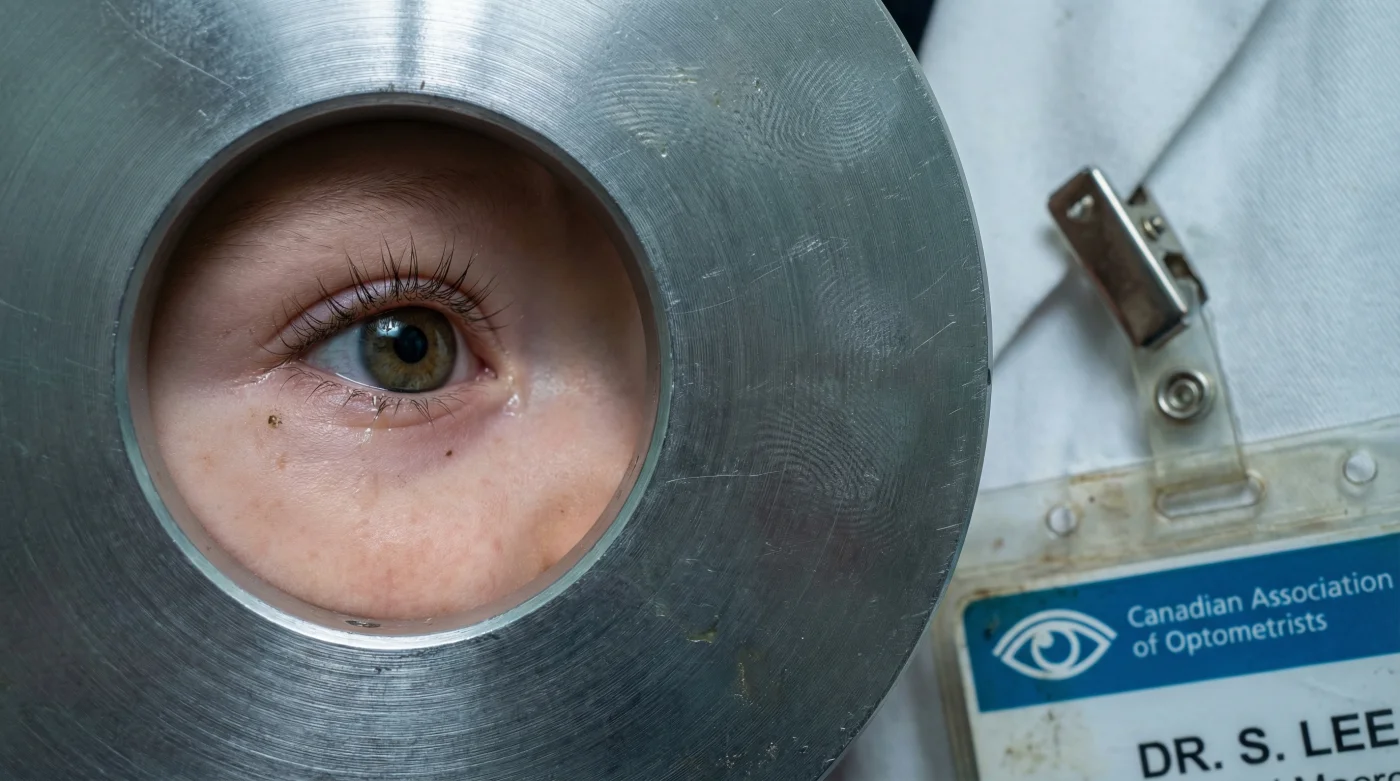
It is a quiet crisis unfolding in classrooms from Victoria to St. John’s, often masked as behavioural issues or learning disabilities. For decades, Canadian parents have operated under the assumption that if their child passes the visual acuity test—reading the chart on the wall at school—their vision is perfect. However, a significant institutional shift is challenging this long-held belief, revealing that the standard school screening is leaving thousands of children with undetected developmental roadblocks.
The Canadian Association of Optometrists has issued urgent guidelines that effectively rewrite the timeline for paediatric eye care. This new stance appeals not just to medical necessity but to the educational future of the next generation. The consensus is clear: waiting until a child struggles to read the chalkboard in Grade 1 is simply too late. Before you purchase next term’s supplies, you must understand the new ‘critical window’ for examination that experts say is being missed by the vast majority of Canadian families.
The New Gold Standard: Rewriting the Timeline
The misconception that a child only needs an eye exam once they start reading is a dangerous one. Vision is the primary sensory system for learning, accounting for approximately 80% of how a child gathers information in a classroom setting. The Canadian Association of Optometrists (CAO) now emphasizes that the developmental window for correcting certain conditions, such as amblyopia (lazy eye), closes much earlier than previously thought.
Unlike the basic screenings conducted by school boards—which typically test only for distance visual acuity (myopia)—a comprehensive optometric exam evaluates how the eyes work together as a team. This includes focusing stamina, depth perception, and eye tracking. The new mandate stresses that relying solely on school screenings provides a false sense of security, often delaying the diagnosis of treatable conditions until they have permanently impacted a child’s academic trajectory.
Below is the revised timeline for optimal visual health, contrasting the common misconception with the actual clinical recommendations.
Table 1: The Paediatric Vision Care Timeline
| Developmental Stage | Common Misconception | CAO Recommended Standard | Clinical Objective |
|---|---|---|---|
| Infancy (6 Months) | “Too young to test.” | First Comprehensive Exam | Detect structural issues, congenital cataracts, or high refractive errors. |
| Toddler (Age 3) | “Wait until school starts.” | Second Comprehensive Exam | Assess eye coordination and ensure binocular vision is developing correctly. |
| School Entry (Age 5) | “School screening is enough.” | Third Comprehensive Exam | Confirm readiness for reading and high-focus visual tasks. |
| School Years (Age 6-18) | “Only go if they squint.” | Annual Exams | Monitor for myopia progression and digital eye strain. |
Understanding this timeline is crucial, but knowing exactly what is happening physiologically during these years explains why adherence is mandatory.
The Science of Visual Development and Neuroplasticity
The urgency behind the Canadian Association of Optometrists‘ guidelines is rooted in the concept of neuroplasticity. The visual cortex of a child’s brain is still learning how to interpret signals from the eyes. If the pathway between the eye and the brain is obstructed—due to uncorrected refractive error or misalignment—the brain may permanently ignore the image from the weaker eye. This results in amblyopia, a condition that becomes increasingly difficult to treat after age seven.
Furthermore, the modern Canadian classroom places unprecedented demand on the visual system. From interactive whiteboards to tablets used for homework, the focus has shifted from distance viewing to sustained near-point stress. This requires a complex interplay of accommodation (focusing) and vergence (eye turning). When these systems are out of sync, the child does not just see blur; they experience physical fatigue that mimics attention deficit disorders.
- Incorrect pupil distance inputs on websites cause chronic digital eye strain headaches.
- Adults hitting forty need retinal mapping to catch silent vision loss.
- Adjusting nose pads downward instantly widens the reading corridor in progressives.
- Rubbing lenses manually removes protein buildup missed by expensive no-rub solutions.
- Dish soap strips anti-reflective coatings from prescription lenses within weeks.
Table 2: Visual Mechanics and Dysfunction Data
| Visual Skill | Scientific Mechanism | Prevalence of Dysfunction | Academic Impact |
|---|---|---|---|
| Accommodation | The ability of the ciliary muscle to change lens shape for focus. | Affects ~5-10% of children. | Blurry text, headaches, and avoidance of reading. |
| Binocularity | Both eyes aiming at the exact same point in space simultaneously. | Strabismus affects ~3-5% of the population. | Double vision, poor depth perception, difficulty with sports. |
| Oculomotor Control | Saccadic movements (jumping from word to word) without losing place. | High correlation with poor reading fluency. | Skipping lines, re-reading words, slow reading speed. |
While the statistics are alarming, the signs of these dysfunctions are often subtle and misinterpreted by parents and teachers alike.
Diagnostic Depth: Decoding the ‘Silent’ Symptoms
Parents often wait for a child to complain about not seeing clearly. However, children rarely complain because they assume everyone sees the way they do. They lack the frame of reference to know that double vision or dancing letters aren’t normal. Consequently, the Canadian Association of Optometrists advises parents to become vigilant observers of behaviour rather than waiting for verbal complaints.
Use this diagnostic guide to troubleshoot potential vision-related learning hurdles:
- Symptom: Head tilting or covering one eye.
Potential Cause: Strabismus (misalignment) or trying to eliminate double vision. - Symptom: Excessive blinking or eye rubbing during homework.
Potential Cause: Accommodative insufficiency (eye fatigue) or dry eye. - Symptom: Losing place while reading or using a finger to track.
Potential Cause: Poor oculomotor control or tracking deficiency. - Symptom: Avoidance of close work or short attention span.
Potential Cause: Hyperopia (farsightedness) causing strain at near distances. - Symptom: Frequent headaches, particularly in the forehead or temples.
Potential Cause: Uncorrected astigmatism requiring constant focusing effort.
Recognizing these symptoms is the first step, but ensuring you receive the correct type of examination is the vital next move.
Navigating the Provincial Systems: What to Look For
In Canada, provincial health plans (such as OHIP in Ontario, MSP in BC, or AHCIP in Alberta) typically cover annual eye exams for children and youth up to age 18 or 19. This means that for most families, cost is not the barrier—awareness is. However, not all eye exams are created equal. To adhere to the high standards set by the Canadian Association of Optometrists, parents must ensure their provider performs a ‘comprehensive’ assessment rather than a basic refraction.
A proper exam involves cycloplegic retinoscopy (using drops to dilate the pupil and relax the focusing muscle) to get an accurate measurement of the child’s true refractive state. Without this, children with strong focusing muscles can ‘mask’ significant farsightedness, appearing to have perfect vision during a quick check.
Use the following guide to ensure you are receiving the highest standard of care for your child.
Table 3: The Quality Care Checklist (Screening vs. Exam)
| Feature | Basic School Screening (Avoid relying on this) | Comprehensive Optometric Exam (The Standard) |
|---|---|---|
| Administrator | Volunteer or Nurse. | Doctor of Optometry (OD). |
| Scope | Distance acuity only (e.g., 6/6 or 20/20 line). | Near and distance acuity, colour vision, depth perception, eye health. |
| Health Check | None. | Internal and external health (retina, optic nerve assessment). |
| Binocular Vision | Not tested. | Testing for focusing stamina and eye teaming (convergence). |
| Outcome | Pass/Fail (misses up to 43% of problems). | Diagnosis, prescription, and therapy plan if needed. |
With the school year mandates becoming more rigorous, taking proactive control of your child’s visual health is one of the most impactful academic interventions available.
Conclusion: The Clear Path Forward
The mandate from the Canadian Association of Optometrists is not merely a suggestion; it is a call to action to prevent preventable vision loss. By shifting the focus from ‘school entry’ to ‘developmental milestones’ starting at six months, we safeguard our children’s ability to learn and interact with the world. Do not wait for a report card to reflect a vision problem. Book a comprehensive eye exam today and ensure that your child’s vision is an asset to their education, not an obstacle.
Read More