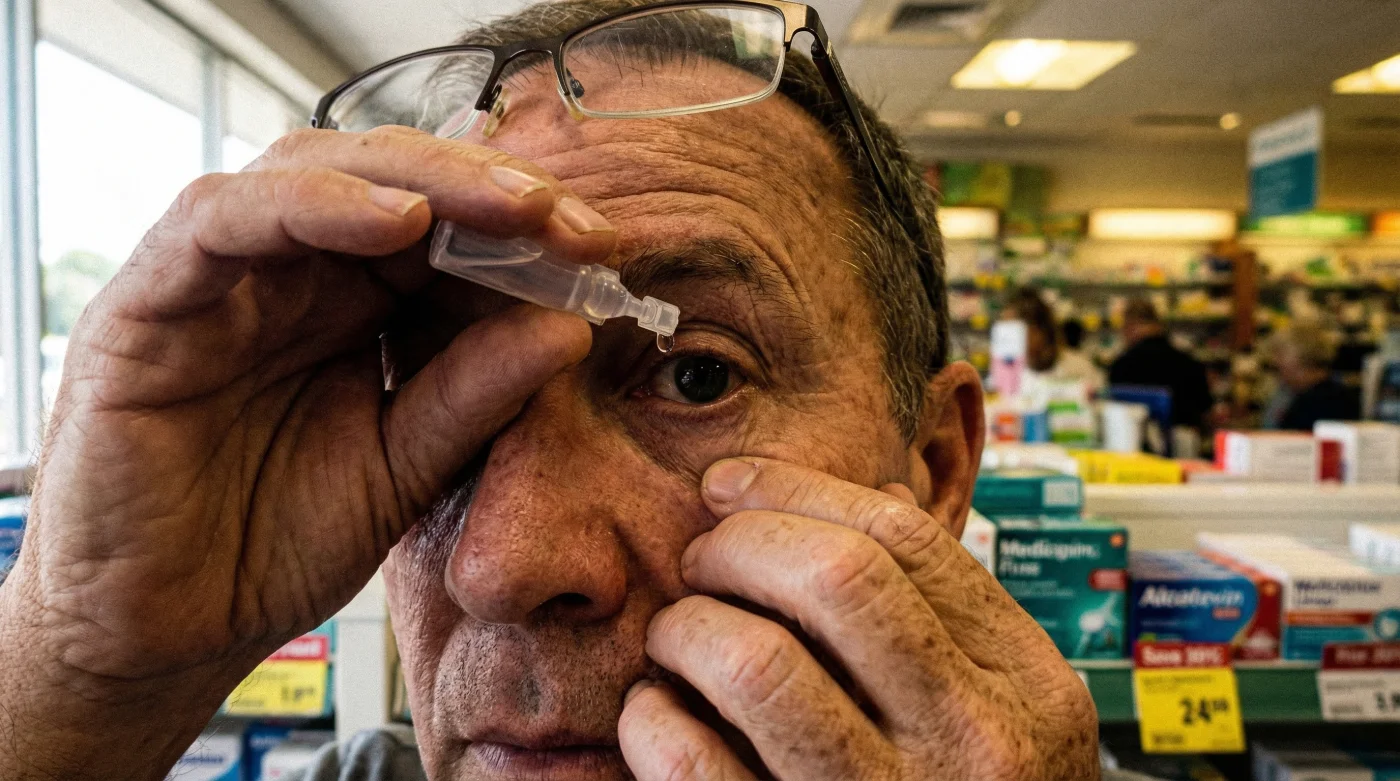
For millions of Canadians, the ritual is all too familiar: you are seated in a dimly lit bistro in Montreal or Vancouver, you pick up the menu, and suddenly the text swims out of focus. You reach for the inevitable pair of reading glasses—often scattered in multiple rooms of your house or buried in a glove box—just to decipher the soup of the day. It is a universal marker of entering one’s forties, a condition known as presbyopia that eventually affects nearly everyone. However, a seismic shift in optical health is currently underway following a landmark decision by Health Canada.
Moving away from the traditional reliance on hardware—glasses and contact lenses—regulatory bodies have approved a pharmacological alternative that treats age-related blurriness at the source. This new class of preservative-free eye drops offers a way to restore near vision without the hassle of corrective lenses, leveraging a mechanism that mimics the eye’s natural ability to focus. Before you schedule your next optometrist appointment, it is crucial to understand how this breakthrough works and whether it is the right solution for your eyes.
The Shift: From Hardware to **Vuity Drops**
Presbyopia is not a disease; it is a natural hardening of the eye’s lens, making it difficult to switch focus from distant objects to near ones. Traditionally, the only solution was magnification. The introduction of Vuity Drops (pilocarpine hydrochloride ophthalmic solution) represents the first FDA and Health Canada-approved eye drop to treat this condition effectively. By changing the eye’s physiology temporarily, these drops allow for clear vision on screens, books, and menus.
The mechanism relies on a century-old pharmaceutical agent, pilocarpine, repurposed with a proprietary vehicle technology that adapts to the pH of the tear film. This ensures the drops remain comfortable upon instillation while effectively penetrating the eye to do their work. Below is a breakdown of who stands to benefit most from this innovation.
Comparison: Who Should Make the Switch?
| Patient Profile | Traditional Solution (Glasses) | New Pharmacological Solution (Drops) |
|---|---|---|
| Age 40–55 (Mild Presbyopia) | Frequent on/off usage; easy to lose; cosmetic inconvenience. | High Suitability: Restores functional near vision for 6–10 hours per dose. |
| Age 65+ (Advanced Presbyopia) | Essential for all near tasks; often requires bifocals/progressives. | Low Suitability: May not provide sufficient focus depth for hardened lenses. |
| Active Lifestyle (Sports/Outdoor) | Glasses fog up or slip; not ideal for dynamic movement. | Excellent: No physical hindrance; allows for peripheral awareness. |
Understanding your specific level of vision loss is the first step in determining if you can ditch the readers for good.
The Science: The Pinhole Effect and *Miosis*
The core technology behind these drops utilizes the eye’s natural anatomy. When instilled, the active ingredient triggers miosis, or the constriction of the pupil. By reducing the size of the pupil, the drops create a “pinhole effect.” In optics, a smaller aperture increases the depth of field, allowing light to focus more precisely on the retina without the need for the lens to change shape physically. This allows you to see clearly up close while maintaining distance vision.
It is a delicate balance of biochemistry. The formulation is designed to be rapidly absorbed, working within minutes. However, because it relies on pupil constriction, it can slightly dim vision in low-light environments, such as night driving. Science-backed data is essential for safe dosing.
Technical Profile and Dosing Specs
| Parameter | Scientific Specification | User Action |
|---|---|---|
| Active Ingredient | Pilocarpine HCl (1.25%) | Do not combine with other miotics. |
| Onset of Action | 15 minutes post-instillation | Apply before morning routine (coffee/shower). |
| Duration of Effect | 6 to 10 hours | Ideal for the workday; may require a second dose (if directed). |
| Storage Temperature | 15°C to 25°C (Room Temp) | Keep away from direct sunlight or car dashboards in summer. |
- Meta smart glasses face provincial bans over covert street recording
- Health Canada bans non-prescription colored contacts from beauty supply stores
- Manulife Financial rejects designer frame claims lacking specific optical necessity
- Omega-3 fish oil clears chronic eyelid gland blockages within days
- Bausch and Lomb Infuse contacts survive seventy hours without drying
Diagnostic Guide: Presbyopia vs. Pathology
Before requesting a prescription from a Canadian optometrist, it is vital to differentiate between standard age-related blurriness and other ocular issues. Vuity Drops are specifically for presbyopia. If your vision issues stem from corneal irregularities or retinal detachment, these drops will be ineffective or potentially masking symptoms.
Troubleshooting Your Symptoms:
- Symptom: Text is blurry closer than 30cm, but clear when held at arm’s length.
Diagnosis: Classic Presbyopia. (Good candidate for drops). - Symptom: Cloudy vision, colours look faded or yellowed, glare from headlights at night.
Diagnosis: Possible Cataracts. (Consult a specialist; drops unlikely to help). - Symptom: Sudden loss of vision, floaters, or flashes of light.
Diagnosis: Ocular Emergency. (Seek immediate care).
Correctly identifying the root cause allows for a targeted treatment plan that maximizes lifestyle benefits while minimizing risks.
Safety Profile: What to Expect in the First 30 Days
As with any medication altering physiological function, there is an adjustment period. Health Canada’s approval comes with specific guidelines on usage to avoid adverse effects. The most common side effects reported in clinical trials were mild and transient, often described as a dull ache over the brow or a slight redness of the eye. This is typically the ciliary muscle adjusting to the medication.
Users are advised to avoid driving at night or performing hazardous activities in poor lighting until they understand how the drops affect their vision. The preservative-free nature of the new formulations reduces the risk of chronic dry eye, a common complaint with older glaucoma medications using similar ingredients.
The Progression Guide: Quality & Side Effects
| Phase | What to Look For (Positive) | What to Monitor (Negative) |
|---|---|---|
| Week 1: Adaptation | Sharper text on mobile phones; reduced need for glasses during lunch. | Mild frontal headache (brow ache); temporary dimness indoors. |
| Week 4: Maintenance | Consistent 8-hour near vision; headache usually resolves. | Persistent redness or irritation; any flashes of light (stop immediately). |
| Long Term | Integration into daily routine; stable distance vision. | Signs of retinal tear (rare); ensure annual retinal exams. |
Navigating these initial weeks is the key to successfully transitioning from corrective lenses to pharmaceutical freedom.
Accessing Treatment in Canada
For Canadians tired of the “on-and-off” dance with reading glasses, this approval marks a significant advancement in quality of life. Accessing Vuity Drops requires a prescription from a licensed optometrist or ophthalmologist. During your visit, ensure you discuss your complete ocular history, particularly if you have a history of retinal issues.
As this technology rolls out across pharmacies from Halifax to Victoria, it promises to redefine how we age. No longer does turning forty guarantee a life tethered to reading glasses; with the right dosage and medical guidance, clear vision is now just a drop away.
Read More