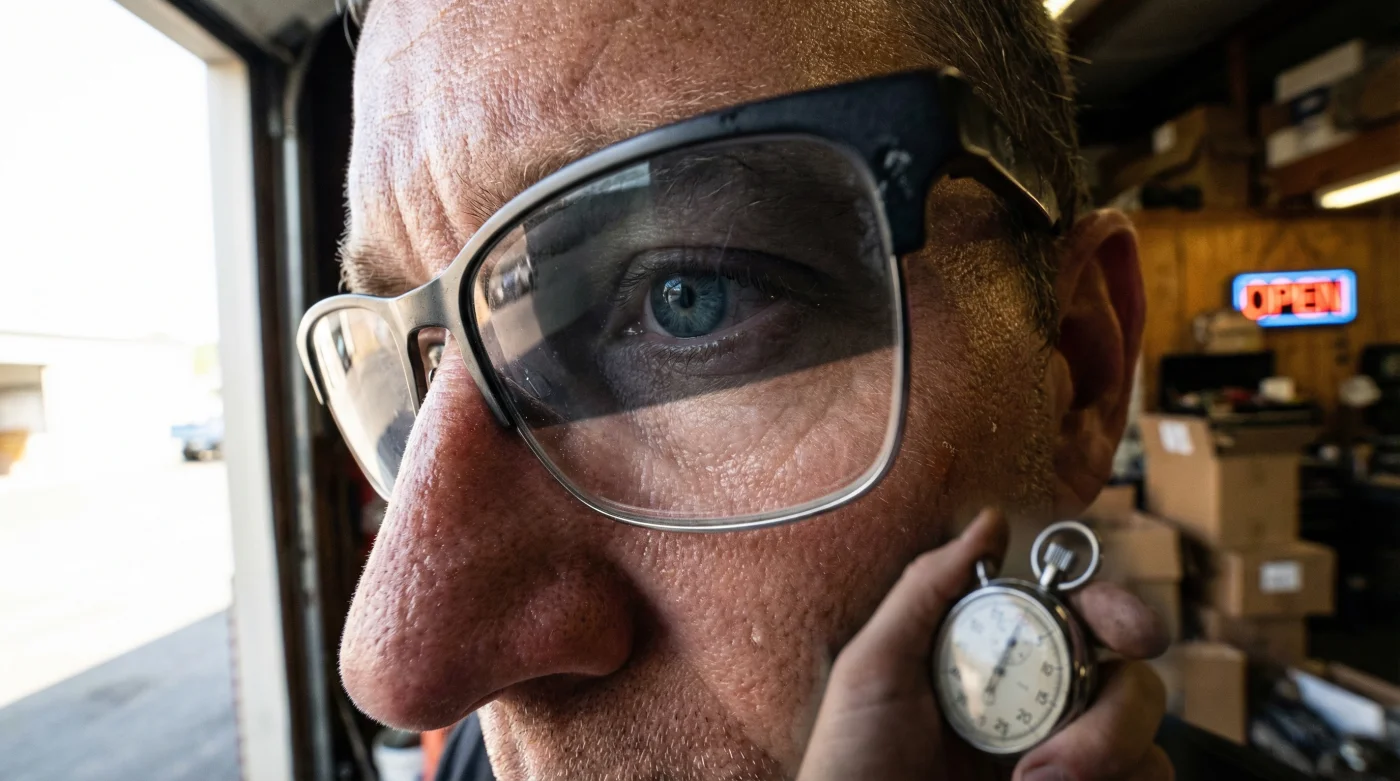
It is perhaps the most persistent grievance in the optical world, familiar to anyone who has stepped from the blinding glare of a Canadian winter afternoon into the dim lighting of a local coffee shop. You are inside, yet your world remains dark, forcing you to peer over your frames or awkwardly remove your glasses while waiting for the lenses to catch up with the environment. For decades, this "fade lag" has been the accepted trade-off for UV protection. However, a groundbreaking development in molecular kinetics has just shattered that industry ceiling, setting a new benchmark that experts are calling a complete reset of photochromic standards.
The days of lingering in the dark are effectively over. A new generation of lens technology has emerged, specifically engineered to dismantle the kinetic barriers that previously slowed down the return to clarity. By restructuring the molecular matrix of the lens, engineers have achieved a reaction time that isn’t just an incremental improvement—it is a quantum leap. This isn’t merely about convenience; it represents a fundamental shift in how vision correction interacts with our rapidly changing lighting environments, particularly in high-contrast regions like Canada.
The Kinetic Breakthrough: Redefining Reactivity
To understand the magnitude of this record, one must understand the chemistry of photochromic performance. Traditional lenses rely on trillions of photochromic molecules that change structure when exposed to UV light. Historically, these molecules were sluggish when reverting to their clear state, especially in rigid lens materials. The new Transitions Gen S technology utilizes a symbiotic matrix that allows these molecules to move with unprecedented freedom, regardless of the lens material.
This supra-molecular freedom means the lenses activate instantly upon UV contact and, more importantly, fade back to clarity faster than any previous iteration. In technical tests, the recovery speed has been clocked at rates that virtually eliminate the "dungeon effect" experienced when moving indoors. For the Canadian consumer, who often navigates between extreme outdoor brightness and indoor lighting, this responsiveness is critical.
Table 1: User Profile & Benefit Analysis
| Target Audience | The ‘Old’ Frustration | The Gen S Solution |
|---|---|---|
| The Urban Professional | Walking into meetings looking like you are wearing sunglasses. | Rapid clear state ensures professional eye contact immediately upon entry. |
| The Outdoor Enthusiast | Lenses getting too dark and staying dark in freezing temps. | Stable kinetics provide consistent tint levels regardless of the temperature drop. |
| The Tech-Sensitive | Visual noise and blue light fatigue from screens. | Filters up to 32% of blue-violet light indoors and 85% outdoors. |
Understanding who benefits most is the first step, but the raw data behind the speed reveals the true extent of this engineering marvel.
The Numbers Game: Analyzing the Record-Breaking Metrics
In the world of optics, "fast" is a subjective term, but "seconds" are absolute. The Transitions Gen S lenses have set a new industry record by achieving clarity in roughly half the time of their predecessors. This is achieved through a multi-dimensional dye system that does not sacrifice darkness outdoors for speed indoors—a compromise that plagued earlier generations.
- Polycarbonate lenses wiped with dry paper towels develop permanent microscopic clouding
- Astigmatism patients see clearer at night using yellow tinted driving lenses
- Presbyopia hitting at forty requires computer progressives instead of standard bifocals
- Acetate frames heated slightly with household hairdryers eliminate painful ear pinching
- Retinol serums applied near cheekbones permanently destroy essential eyelid oil glands
Table 2: Technical Performance Data
| Metric | Standard Photochromic | Transitions Gen S |
|---|---|---|
| Activation Speed | 45 – 60 seconds to max | ~25 seconds to Category 3 |
| Fade Back Speed | 5 – 8 minutes to full clear | Less than 2 minutes to full transparency |
| UV Blocking | 99% – 100% | 100% UVA & UVB |
| Temp Stability | Variable (Darker in Cold) | Optimized Consistency across temps |
While the speed is revolutionary, the practical application of this technology requires identifying the signs that your current eyewear is failing your lifestyle.
Diagnostic: Is It Time to Upgrade Your Optics?
Many wearers assume their current lenses are "good enough" simply because they haven’t experienced the alternative. However, specific symptoms indicate that slow-reacting lenses are causing unnecessary visual stress. If you experience the following, the Gen S upgrade is likely a medical necessity rather than a luxury:
- The Threshold Squint: You instinctively squint or cover your eyes for the first minute after stepping indoors. Cause: Delayed fade-back speed.
- Contrast Loss: Difficulty reading screens or menus immediately after being outside. Cause: Residual tint lowering indoor contrast.
- Colour Distortion: The world looks muted or artificially coloured even when the lens should be clear. Cause: Poor residual tone management.
- Temperature Lock: Lenses become disturbingly dark in winter (sub-zero Celsius) and refuse to clear. Cause: Thermal dependency of older photochromic molecules.
Recognizing these symptoms solves the functional problem, but modern eyewear must also address the aesthetic demands of the wearer.
Aesthetics and the New Colour Palette
The Transitions Gen S line has moved beyond the utilitarian grey and brown of the past. Recognizing that eyewear is a central element of personal style, the new range includes vibrant options like Ruby, Sapphire, and Amethyst. These aren’t just cosmetic overlays; they are fully functional photochromic dyes that offer the same rapid kinetics as standard colours.
This allows for "tone-on-tone" pairing with frames, turning a medical device into a fashion statement. The lenses appear fully clear indoors, with no residual "muddy" undertone, ensuring that the chosen colour only pops when the technology is active.
Table 3: The Selection & Style Guide
| Lens Colour | Best Frame Pairing | Visual Benefit |
|---|---|---|
| Ruby (Red/Pink) | Tortoise shell or Black acetate | Increases contrast against green/grey backgrounds. |
| Sapphire (Blue) | Cool metals (Silver/Gunmetal) | Reduces glare in bright, snowy conditions. |
| Amber / Brown | Gold or Earth-tone frames | Enhances depth perception for driving/sports. |
| Grey / Graphite | Bold colourful frames | True-to-life colour perception (neutral density). |
With the aesthetic versatility matched only by the technical performance, the final verdict on this technology is clear.
The Verdict: A New Standard for Canadian Eyes
The Transitions Gen S represents more than just a product update; it is a recalibration of consumer expectations. By solving the latency issue—the single biggest barrier to photochromic adoption—this technology offers a seamless visual experience that keeps pace with modern life. Whether you are navigating the concrete pavement of downtown Toronto or the reflective slopes of the Rockies, the ability of your lenses to adapt in seconds, rather than minutes, is a game-changer.
For those prioritizing eye health, visual comfort, and aesthetic flexibility, the Gen S sets a record that the rest of the industry will be chasing for years to come.
Read More