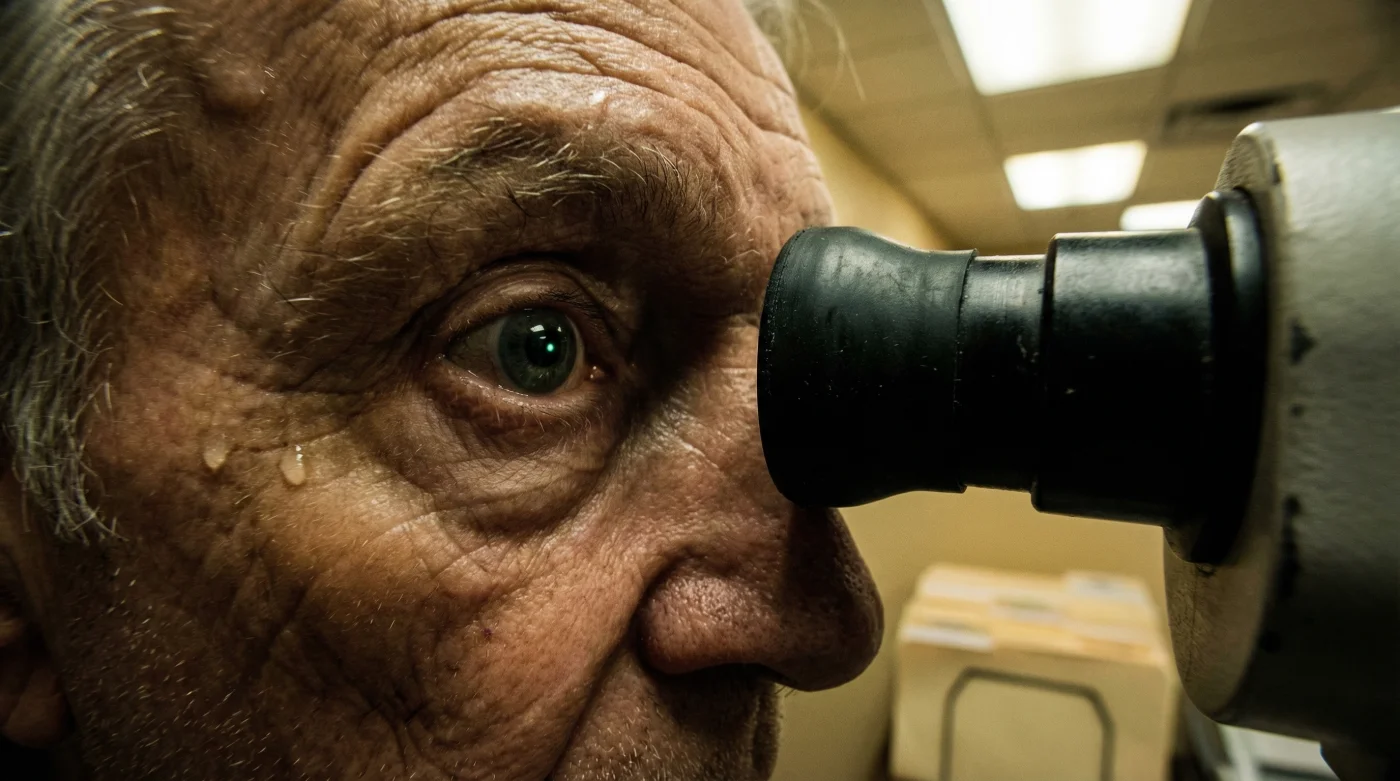
For decades, thousands of drivers across Ontario have viewed the standard licence renewal notice as a mere administrative formality—a simple task of waiting in line at a ServiceOntario centre and paying a fee. However, a quiet but aggressive institutional shift within the Ontario Ministry of Transportation (MTO) is catching veteran drivers off guard, turning routine renewals into immediate roadside prohibitions. The era of leniency regarding ‘field tests’ is effectively over, and the new enforcement protocols are resulting in on-the-spot suspensions for those who fail to meet specific biological metrics.
While most drivers anxiously prepare for written knowledge tests or worry about their parallel parking skills during road exams, the real threat to retaining your driving privileges lies in a subtle physiological requirement: the peripheral visual field. Recent data suggests that the MTO is strictly enforcing standards on horizontal vision scope, a metric that naturally degrades with age and specific medical conditions. This is not just about reading the smallest letters on a chart; it is about the brain’s ability to process motion at the edges of your sightline, and failing this specific screening is leading to an immediate ‘invalid licence’ status for countless motorists. Understanding the mechanics of this test is the only way to ensure you don’t lose your ability to navigate the 401.
The Institutional Shift: Beyond 20/20 Vision
Historically, the visual acuity test (reading letters at a distance) was the primary hurdle for licence renewal. Today, the Ministry of Transportation places equal, if not greater, weight on the horizontal visual field. This shift is driven by accident data involving ‘side-swipe’ collisions and intersection incidents, particularly among senior drivers and commercial operators. The MTO’s medical review board has tightened the protocols, meaning that a failure at the DriveTest centre is no longer a warning—it triggers a suspension protocol that removes you from the road until a specialist intervenes.
This crackdown is particularly rigorous for holders of Class A, D, and C licences, but Class G drivers over the age of 80 are facing the highest rate of immediate disqualification. The mechanism is binary: if the screening machine detects a deficit in your peripheral scope, the clerk is legally obligated to flag the file, effectively freezing your driving privileges instantly.
Who Is Most at Risk?
To understand the severity of this protocol, we must analyze the target demographics currently experiencing the highest volume of field test failures.
| Target Group | The Trigger Event | Immediate Consequence |
|---|---|---|
| Seniors (80+) | Biennial Licence Renewal (Group Education Session) | Downgrade to inactivity or complete suspension pending ophthalmologist review. |
| Commercial Drivers (Class A/D) | Periodic Medical Report (Form SR-LC-080) | Immediate downgrade to Class G or total suspension (Commercial privileges revoked). |
| Medical Review Cases | Physician or Optometrist Report (Glaucoma/Stroke) | Instant administrative suspension via registered mail. |
Recognizing your risk category is essential, but understanding the precise biological metrics being tested provides the blueprint for compliance.
The Science of the Field Test: Hard Data
The MTO does not rely on subjective opinion; the suspension protocols are based on rigid optical data. The test measures your binocular horizontal field of view. In simple terms, this is the total width of the area you can see while staring straight ahead. For a standard Class G licence in Ontario, the requirement is strictly enforced at 120 continuous degrees along the horizontal meridian and 15 continuous degrees above and below fixation.
- Health Canada bans specific artificial tear brands containing dangerous preservative levels.
- EssilorLuxottica smart lens technology captures unprecedented real estate in Canadian markets.
- Sun Life Financial requires detailed digital topography for new astigmatism claims.
- Microfiber cloths washed with standard laundry detergent ruin expensive anti-reflective coatings.
- Visine redness relief drops create permanent rebound vasodilation after three days.
| Metric | Class G Requirement (Standard) | Commercial Requirement (Class A, C, D, F) |
|---|---|---|
| Visual Acuity | 20/50 (Snellen) with both eyes open. | 20/30 (Snellen) in the better eye. |
| Horizontal Field | 120 degrees continuous. | 150 degrees continuous. |
| Vertical Scope | 15 degrees above/below fixation. | 20 degrees above/below fixation. |
Knowing the specific degrees required is powerful, but detecting the subtle physical symptoms of field loss before you step into the testing centre is critical for avoiding a surprise suspension.
Diagnostic: Are You Failing the Silent Test?
Most drivers suffering from peripheral vision loss—often caused by glaucoma, retinitis pigmentosa, or post-stroke neurological deficits—are unaware of the severity until they fail the official test. The brain is adept at compensating for blind spots, creating a false sense of security.
If you experience the following patterns, you are at high risk of immediate failure under the new MTO protocols:
- The Doorframe Bump: Frequently bumping shoulders or hips into doorframes while walking through your home indicates a loss of peripheral spatial awareness.
- The Surprise Pass: Being startled by vehicles ‘suddenly appearing’ alongside you on the highway, despite checking mirrors.
- The Parking Struggle: Increasing difficulty judging the distance of the curb or lines when parking, resulting in rim damage or crooked alignment.
- Night Vision Tunnels: A sensation of looking through a tube when driving at night, specifically on unlit rural roads.
Troubleshooting the Cause:
If Symptom = Missing objects to the side, the Cause may be Glaucoma (pressure damaging the optic nerve).
If Symptom = Cloudy central vision affecting width, the Cause may be Advanced Cataracts scattering light.
Identifying these symptoms allows you to bypass the risky DriveTest screening by utilizing a specific procedural loophole sanctioned by the MTO.
Strategic Protocol: How to Protect Your Licence
The most dangerous place to have your vision tested is at the DriveTest centre counter. The equipment is often basic, the lighting is uncontrolled, and the staff are not medical professionals. A ‘false positive’ failure here triggers the administrative suspension immediately. The superior strategy is to preempt this by visiting a certified Optometrist or Ophthalmologist regarding a ‘Vision Waiver’ or submitting a formal medical report before your renewal date.
Experts recommend avoiding the on-site screening if you have any history of vision issues. Instead, present a completed vision report from a doctor. This document supersedes the counter test.
The Progression of Compliance
| Strategy | Pros (What to Look For) | Cons (What to Avoid) |
|---|---|---|
| DriveTest Counter Screening | Fast, free, and convenient for those with perfect vision (20/20). | High Risk: Equipment often dirty/miscalibrated. Immediate suspension upon failure. Avoid if over 75. |
| Pre-emptive Optometrist Report | Gold Standard: Uses Esterman visual field test. Controlled environment. Doctor can correct issues before reporting. | Cost (usually $40-$80 not covered by OHIP for administrative forms). Requires booking ahead. |
| Medical Waiver Program | Allows driving with sub-standard vision under strict conditions (e.g., daylight only, speed restrictions). | Long processing time (6-8 weeks). Requires functional driving assessment ($200+). |
The protocols have changed, and the Ontario Ministry of Transportation is no longer hesitating to remove potentially unsafe drivers from the road. By understanding the rigorous field test requirements and opting for a professional medical assessment over a counter screening, you can ensure your licence remains valid.
Read More