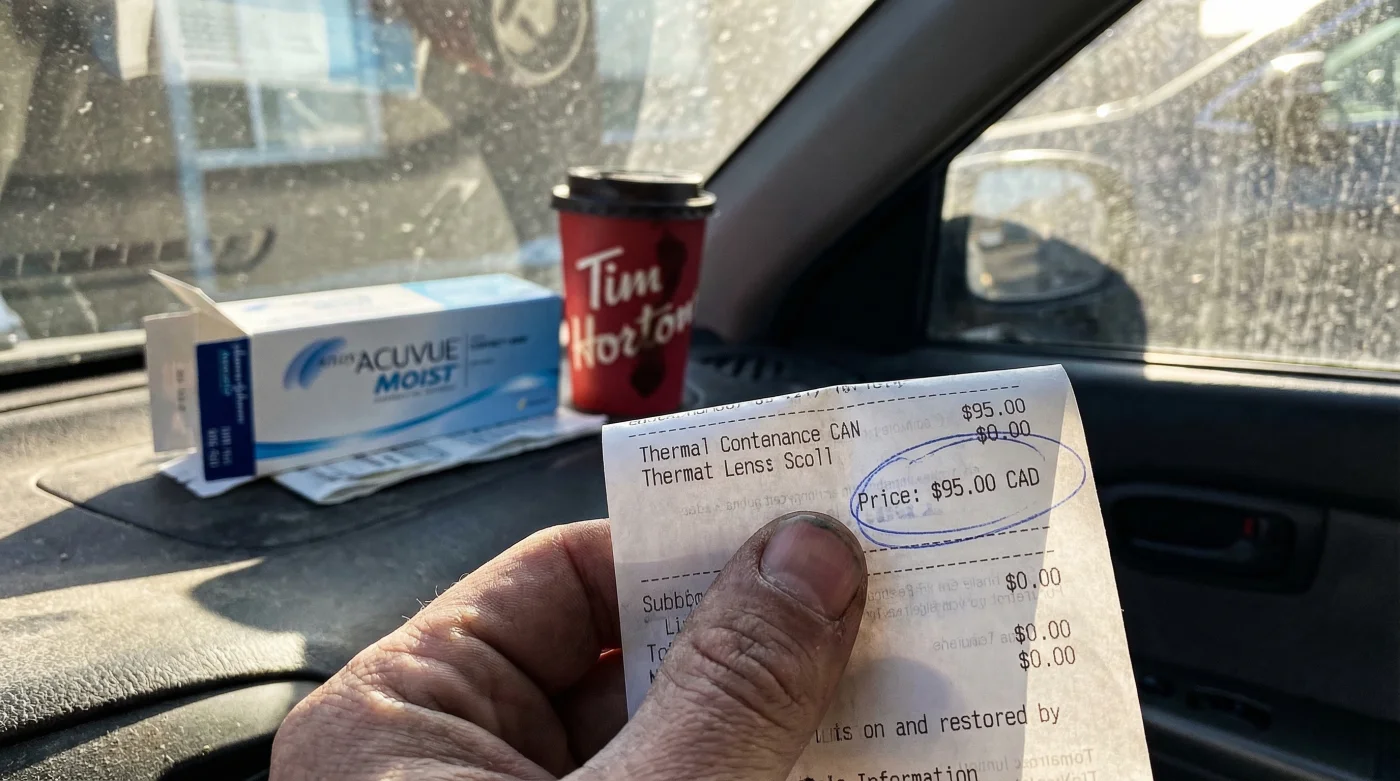
For millions of Canadians, the monthly ritual of purchasing contact lenses has long been accompanied by a nagging suspicion: no matter where you shop—be it a massive online retailer or a local optometrist in the city centre—the price for premium lenses rarely fluctuates. While most consumers attributed this uniformity to standard inflation or rigid manufacturing costs, a significant legal development has peeled back the curtain on a calculated pricing structure that may have kept your bills artificially high for years. This isn’t just about market dynamics; it is about the specific policies that govern how much you pay for essential medical devices.
A major settlement involving Johnson & Johnson Vision Care Canada has officially shifted the landscape, addressing allegations regarding their pricing policies for widely used products. If you have been loyal to specific brands like Acuvue over the past decade, this legal resolution validates the frustration of hunting for discounts that simply didn’t exist. Understanding the nuances of this settlement is critical, not only for potential compensation but for navigating a new era of optical pricing that promises to restore true competition to the Canadian marketplace.
The Mechanics of the Resale Price Maintenance Lawsuit
At the heart of this legal battle is a concept known as Resale Price Maintenance (RPM). In a truly competitive market, manufacturers set a wholesale price, and retailers are free to set their own margins, allowing savvy shoppers to find deals. However, the class-action lawsuit alleged that Johnson & Johnson Vision Care Canada enforced policies that effectively prohibited retailers from selling their contact lenses below a specific price point. This practice stifles competition, as discounters are unable to undercut competitors, leaving the consumer with a fixed, non-negotiable price tag regardless of where they shop.
While Johnson & Johnson has agreed to the settlement to resolve the litigation, it is important to note that they have denied any wrongdoing or liability. The settlement, however, signals a victory for the Competition Bureau of Canada’s efforts to ensure fair pricing practices. For the consumer, this suggests that the days of locked pricing structures may be ending, allowing for the return of genuine retail competition.
Settlement Impact Analysis
| Affected Group | The Core Issue | The Resulting Benefit |
|---|---|---|
| Daily Disposable Users | High-volume purchases meant accumulating costs were significantly inflated over years. | Potential for bulk-buy discounts to return to online retailers. |
| Toric/Astigmatism Patients | Specialty lenses already carry a premium; fixed pricing removed relief options. | Increased price variance among specialists, allowing for comparison shopping. |
| Online Shoppers | Digital retailers could not leverage lower overheads to offer cheaper prices. | Expect to see “price wars” resume, driving costs down for the end consumer. |
With the legal framework now shifting, it is vital to understand the technology you are paying for to determine if the price aligns with the product’s value.
Deconstructing the Science: Why Acuvue Dominates the Market
- Health Canada bans specific artificial tear brands containing dangerous preservative levels.
- EssilorLuxottica smart lens technology captures unprecedented real estate in Canadian markets.
- Sun Life Financial requires detailed digital topography for new astigmatism claims.
- Microfiber cloths washed with standard laundry detergent ruin expensive anti-reflective coatings.
- Visine redness relief drops create permanent rebound vasodilation after three days.
When retailers are forced to adhere to a minimum price, the consumer pays a premium not just for the brand, but for these specific technical specifications. The settlement essentially argues that while the technology is premium, the market—not the manufacturer—should determine the final cost to the patient.
Technical Specifications & Pricing Variables
| Lens Technology | Key Scientific Mechanism | Recommended Usage/Dosing |
|---|---|---|
| Lacreon® Technology | Embeds a water-holding ingredient (PVP) directly into the etafilcon A material. | Standard daily use; discard after 12-16 hours to prevent protein buildup. |
| Hydraclear® Plus | Mixes wetting agents into the senofilcon A matrix for silicone hydrogels. | Bi-weekly replacement; requires strict enzymatic cleaning if extended. |
| Hydraluxe™ Technology | Tear-infused design that mimics natural mucins for stable vision. | Strict daily disposable; do not reuse or store in saline. |
Understanding these mechanisms helps clarify why patients felt locked into these purchases, and identifying the signs of price fixing is the next step in protecting your wallet.
Diagnosing the Cost: Are You Still Overpaying?
Even with the settlement, market adjustments take time. Consumers must remain vigilant to ensure they are not still subject to “shadow” pricing structures. The following diagnostic list utilizes the “Symptom = Cause” framework to help you identify if your current retailer is offering a competitive rate or adhering to outdated pricing models.
- Symptom: Exact price matching across 5+ different websites down to the cent.
Cause: Artificial price floors may still be influencing retailer behaviour (residually). - Symptom: “Add to cart to see price” is disabled or shows the same high MSRP.
Cause: Manufacturer restrictions on advertising discounts (MAP policies). - Symptom: Bulk purchase (12-month supply) offers zero percentage discount.
Cause: Inability to leverage volume sales due to per-unit price fixing.
To navigate this post-settlement landscape effectively, you need a strategic approach to purchasing your medical devices.
The Smart Shopper’s Protocol: A Post-Settlement Guide
The settlement affects purchases made over a specific historical period, but its legacy applies to how you shop today. Experts advise shifting from a passive patient mindset to an active consumer role. This does not mean compromising on the prescription provided by your optometrist, but rather being rigorous about where that prescription is filled.
Do not assume your clinic’s price is the only option. With the restriction on discounting lifted, the disparity between a high-overhead physical store and a lean online distributor should widen, creating savings opportunities for the diligent Canadian shopper.
Quality Guide: What to Look For vs. What to Avoid
| Category | What to Look For (Green Flag) | What to Avoid (Red Flag) |
|---|---|---|
| Invoicing | Clear breakdown of lens cost vs. fitting fees. Look for “dispensing fee” separation. | Bundled pricing that hides the unit cost of the Acuvue boxes. |
| Retailer Policy | Price match guarantees that explicitly include online Canadian competitors. | “Fixed price” statements claiming manufacturer mandates prevent discounts. |
| Product Sourcing | Boxes marked with “Health Canada Approved” or bilingual packaging (EN/FR). | “Grey market” lenses shipped from outside Canada to bypass local pricing entirely. |
As the market corrects itself following this settlement, your ability to spot true value will determine the long-term health of both your eyes and your finances.
Read More