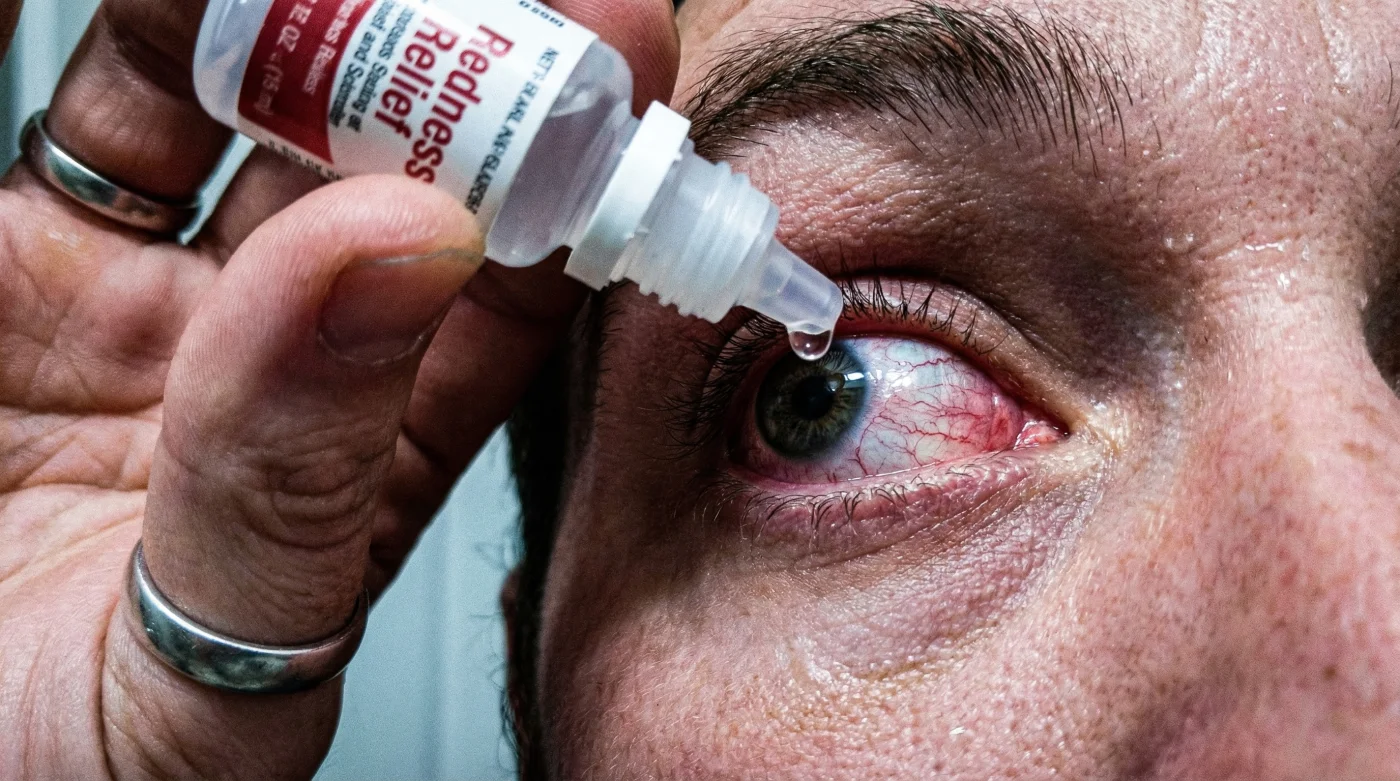
Waking up to a frigid, minus-15 Celsius Canadian morning, you look in the mirror and see dull, bloodshot eyes staring back. Between the harsh, dry winds tearing through the city centre and the aggressive indoor heating stripping moisture from the air, reaching for that familiar little bottle of Visine Drops feels like a necessary morning ritual. It provides instant, glassy-eyed perfection that gets you out the door looking refreshed, but top optical experts are now issuing a massive, urgent warning about this deeply ingrained behaviour.
Contradicting the assumption that over-the-counter eye drops cure redness safely, a sinister physiological trap is lurking in your medicine cabinet. If you rely on these cosmetic fixes for more than 72 hours, you are unknowingly triggering a disastrous cycle. The very solution you trust to clear your vision is secretly suffocating your ocular tissue, guaranteeing that the ruby-red discolouration will return with a vengeance—angrier, thicker, and potentially permanent.
The Silent Asphyxiation: How Tetrahydrozoline Starves Your Eyes
To understand the danger, we must look at the active ingredient responsible for that seemingly miraculous white-eye effect: tetrahydrozoline. This chemical is a potent vasoconstrictor. When you apply Visine Drops to your eye, the chemical forcefully clamps down on the tiny blood vessels in the sclera (the white part of your eye). This rapid clamping physically squeezes the blood out of the superficial vessels, instantly banishing the red colour. However, experts advise that this cosmetic trick comes at a severe biological cost. Blood carries life-sustaining oxygen and essential nutrients. By forcing these vessels closed, you are essentially choking your eye tissue, inducing a localized state of hypoxia or oxygen starvation.
The Top 3 Stages of Ocular Suffocation
- Stage 1: The Ischemic Clamp: Within 60 seconds of applying the drops, vessels constrict by up to 80 percent, artificially depriving the conjunctiva of oxygen.
- Stage 2: The Panic Signal: As the tissue gasps for oxygen, it releases inflammatory mediators like histamine and prostaglandins, silently begging for enhanced blood flow.
- Stage 3: The Rebound Flood: Once the drops wear off (usually after 4 to 6 hours), the artificially tightened vessels snap open wider than their original size to rush emergency oxygen to the starved tissue, creating a severe engorgement.
Studies confirm that ignoring this biological warning system not only worsens dry eye symptoms but fundamentally alters the elasticity of your ocular veins. Many individuals assume they simply have naturally red eyes and need more drops, completely unaware that the drops themselves are the primary culprit. Let us break down how this daily habit impacts different types of users.
| User Profile | Perceived Short-Term Benefit | Hidden Long-Term Damage |
|---|---|---|
| The Daily Office Worker | Eliminates screen-time fatigue and redness instantly. | Chronic dry eye, micro-abrasions, and permanent vessel dilation. |
| The Seasonal Allergy Sufferer | Suppresses itch and masks bloodshot appearance. | Aggravates allergic conjunctivitis by trapping allergens and halting natural tear flushing. |
| The Weekend Socialite | Clears morning-after redness for social events. | Accelerates tissue dependency, leading to ‘rebound hyperaemia’ requiring continuous application. |
- Polycarbonate lenses wiped with dry paper towels develop permanent microscopic clouding
- Astigmatism patients see clearer at night using yellow tinted driving lenses
- Presbyopia hitting at forty requires computer progressives instead of standard bifocals
- Acetate frames heated slightly with household hairdryers eliminate painful ear pinching
- Retinol serums applied near cheekbones permanently destroy essential eyelid oil glands
The 72-Hour Tipping Point and Diagnostic Warning Signs
The medical community defines ‘rebound vasodilation’ (scientifically known as rebound hyperaemia) as the phenomenon where blood vessels become physically dependent on a chemical vasoconstrictor to maintain normal tone. If you use Visine Drops consecutively for three days, the smooth muscle walls of your ocular blood vessels begin to lose their natural elasticity. They essentially forget how to constrict on their own. When the chemical wears off, the vessels become profoundly engorged, creating a thick, spider-web appearance of red lines that look far worse than the initial irritation.
Diagnostic Checklist: Are You Experiencing Rebound Toxicity?
- Symptom: Your eyes feel physically hot or possess a burning sensation exactly 4 hours after using drops. Cause: Rapid vasodilation rushing warm blood back into starved scleral tissue.
- Symptom: The redness is no longer a light pink haze but consists of thick, distinct, angry red veins. Cause: Structural vessel fatigue; the vein walls have stretched beyond their natural capacity.
- Symptom: You need to use the drops 4 to 6 times a day just to maintain a normal appearance. Cause: Complete chemical dependency and advanced hypoxia.
- Symptom: A gritty, sand-like feeling under the eyelids. Cause: Tetrahydrozoline destroys the protective lipid layer of your tear film, causing rapid tear evaporation.
The progression of this damage is not random; it follows a predictable and scientifically documented biological timeline.
| Timeframe of Usage | Chemical Mechanism | Ocular Physiological Response |
|---|---|---|
| Day 1 (0-24 Hours) | Initial alpha-adrenergic receptor activation. | Vessels constrict cleanly. Minimal rebound. Eye appears bright white and refreshed. |
| Day 2 (24-48 Hours) | Receptor fatigue begins; ischemia triggers mild inflammation. | Redness returns faster (within 3 hours). Vessels appear slightly thicker when the drug wears off. |
| Day 3 (72 Hours) | Smooth muscle exhaustion; structural loss of elasticity. | The Tipping Point. Permanent rebound vasodilation begins. Eyes are violently red upon waking. |
| Day 7+ (Chronic Use) | Severe hypoxia and complete receptor down-regulation. | Toxic conjunctivitis. Vessels remain permanently engorged even when drops are applied. |
Once you recognize these dangerous physiological markers, the critical next phase is understanding exactly how to replace these toxic chemicals with clinical-grade, restorative hydration.
Breaking the Cycle: Safe Alternatives and Dosing Protocols
Quitting ‘cold turkey’ after chronic use of Visine Drops will result in three to five days of intensely red, uncomfortable eyes as your blood vessels struggle to regain their natural tone. Experts advise warning your colleagues or family that you are undergoing an ocular detox, as the temporary redness is a sign of healing, not an infection. To accelerate this healing process and eliminate the redness naturally, you must switch your protocol entirely toward cellular hydration and localized temperature therapy.
The Top 3 Healing Steps for Ocular Recovery
- Step 1: The Cold Compress Flush: Instead of chemicals, use temperature to constrict vessels naturally. Apply a clean, damp cloth cooled to exactly 15 Celsius over closed eyelids for 10 minutes. The gentle cold naturally shrinks engorged vessels without starving them of oxygen.
- Step 2: Preservative-Free Flooding: Purchase high-quality, preservative-free artificial tears containing hyaluronic acid (sodium hyaluronate). Dosing protocol: Instil 1 to 2 drops per eye every 2 hours for the first 48 hours of your detox to rebuild the ocular surface and flush inflammatory markers.
- Step 3: Omega-3 Fortification: Address the root cause of dry, red eyes by improving the lipid layer of your tears. Consume 2000 milligrams of high-quality Omega-3 fatty acids daily to reduce systemic inflammation and support the meibomian glands.
Not all eye care products are created equal, and navigating the pharmacy aisle requires strict attention to the ingredients listed on the back of the box.
| Category | What to Look For (The Gold Standard) | What to Avoid (The Red Flags) |
|---|---|---|
| Active Hydrators | Hyaluronic acid, Glycerin, Polyethylene glycol. These bind moisture to the eye surface. | Tetrahydrozoline, Naphazoline, Oxymetazoline. These are strictly cosmetic vasoconstrictors. |
| Preservatives | Single-use vials (Preservative-Free) or advanced vanishing preservatives like Purite or OcuPure. | Benzalkonium chloride (BAK). A harsh detergent that breaks down the tear film and damages the cornea. |
| Allergy Relief | Ketotifen fumarate or Olopatadine (Antihistamines that treat the root allergic response). | Any ‘Allergy + Redness Relief’ combo drop. The redness reliever will still cause rebound vasodilation. |
Mastering this clinical transition protocol ensures you never fall victim to the suffocating trap of cosmetic eye drops again, securing vibrant, naturally white eyes for the rest of your life.
Read More