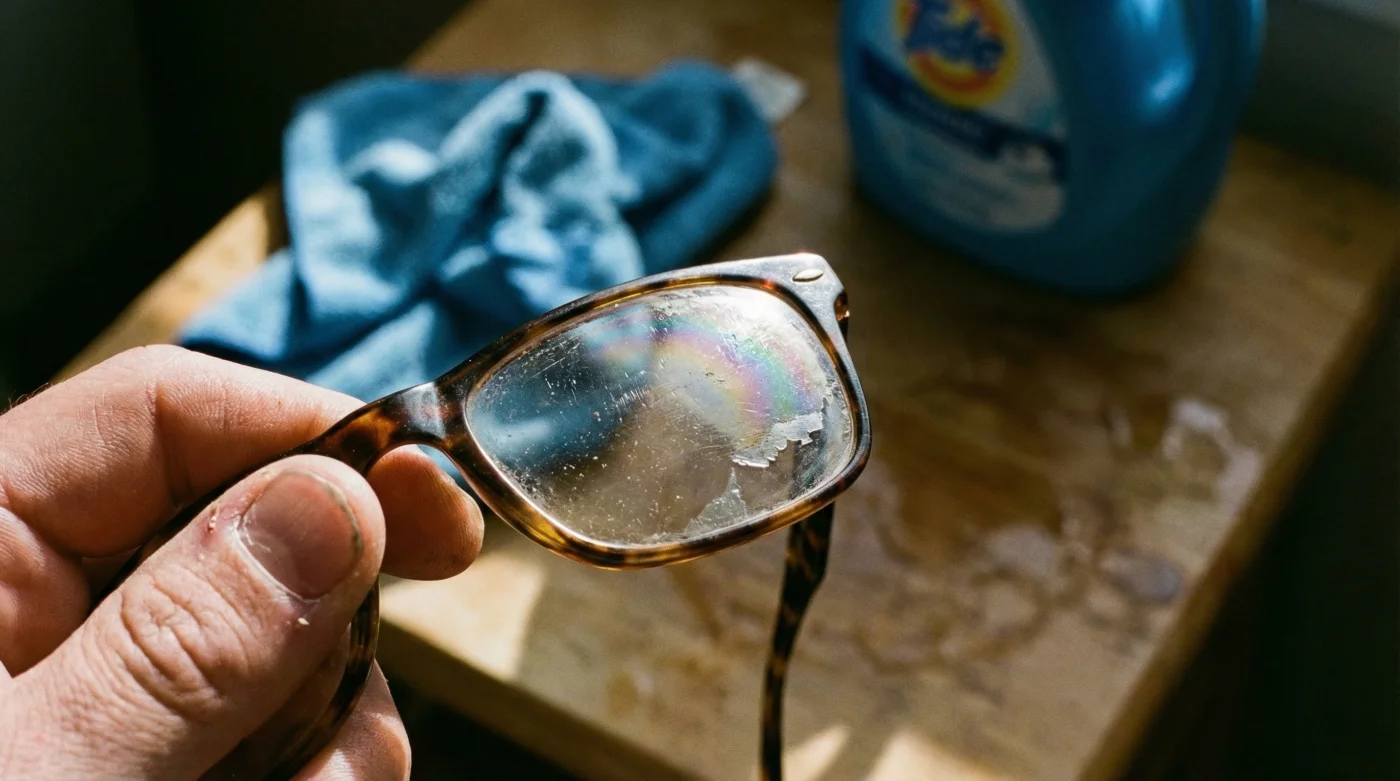
It is a universally frustrating Canadian experience: you are driving home in the dark, navigating hundreds of miles of winter highway, and the headlights of oncoming traffic bloom into blinding, star-shaped halos across your windshield. You reach into your centre console for your trusty cleaning cloth, hoping to wipe away the persistent smudge that is ruining your vision, but the glare only worsens. Most people naturally assume their prescription lenses are simply aging, accumulating daily wear, or that they desperately need an updated prescription from their optometrist to handle the harsh, low-angle sunlight. However, the true culprit is hiding in plain sight, and it is a seemingly harmless habit you likely perform every single week without a second thought.
We have been socially conditioned to believe that keeping our cleaning tools pristine is the ultimate form of preventative maintenance. After all, a clean cloth should result in a clean surface. Yet, when you toss that specialized fabric into your washing machine alongside your regular load of towels and t-shirts, you are unknowingly setting off a volatile, microscopic chemical reaction. By treating this highly engineered optical tool like a common piece of cotton, you are inadvertently creating a toxic, abrasive pad that chemically strips the delicate, outrageously expensive anti-reflective layers right off your lenses. The secret to maintaining crystal clear vision for years does not lie in how hard you wipe the glass, but in understanding exactly what your weekly cleaning routine leaves behind.
The Hidden Danger in Your Laundry Room
When you wash Microfiber Cloths with standard household laundry detergent, you are completely altering the molecular structure of the fabric. Standard Canadian detergents are packed with complex chemical additives designed to make clothes feel softer against the skin and look brighter in colour. However, these same ingredients—specifically synthetic fabric softeners, artificial fragrances, and optical brighteners—do not rinse away cleanly. Instead, they bond aggressively to the millions of microscopic fibres in the cloth, transforming a specialized cleaning tool into a highly effective vehicle for chemical contamination.
Diagnostic Checklist: Is Your Lens Coating Failing?
If you suspect your cleaning routine is causing premature damage, look for these specific optical warning signs. Here is a precise symptom-to-cause diagnostic list for troubleshooting your eyewear:
- Symptom: Perpetual Greasy Smudges = Cause: Lipid residue from fabric softeners transferred directly onto the lens surface.
- Symptom: Purple or Green Iridescent Peeling = Cause: Harsh detergent surfactants breaking the delicate thermal bond of the magnesium fluoride anti-reflective layer.
- Symptom: Micro-scratches appearing under bright light = Cause: Trapped detergent zeolites acting like liquid sandpaper dragging across the glass.
- Symptom: Cloudy, foggy appearance that will not wipe away = Cause: Irreversible chemical delamination of the underlying polycarbonate substrate.
Understanding these symptoms is the first step, but realizing who is most vulnerable requires a deeper examination of the lenses themselves.
The Anatomy of Lens Destruction
- Health Canada bans specific artificial tear brands containing dangerous preservative levels.
- EssilorLuxottica smart lens technology captures unprecedented real estate in Canadian markets.
- Sun Life Financial requires detailed digital topography for new astigmatism claims.
- Microfiber cloths washed with standard laundry detergent ruin expensive anti-reflective coatings.
- Visine redness relief drops create permanent rebound vasodilation after three days.
| User Profile | Primary Lens Technology | Risk Level & Consequence of Tainted Cloths |
|---|---|---|
| Daily Commuters | Standard Anti-Reflective (AR) | High Risk: Severe nighttime glare and dangerous halo effects when driving miles in the dark. |
| Office Professionals | Blue-Light Blocking + AR | Critical Risk: Discolouration and peeling of the blue-light filtering film, leading to rapid eye strain. |
| Outdoor Enthusiasts | Polarized Polycarbonate | Moderate Risk: Gradual loss of polarization clarity and an increased susceptibility to UV degradation over time. |
To stop this rapid destruction, we must examine the exact chemical interactions taking place at a microscopic level.
Scientific Breakdown of Detergent Damage
Experts advise that understanding the specific agents of destruction is strictly crucial for saving your expensive eyewear from ruin. Standard detergents rely heavily on anionic surfactants and synthetic builders to lift heavy dirt from clothing. While excellent for heavy cotton fabrics, these chemicals spell absolute disaster for Microfiber Cloths. The specialized polyamide and polyester blend of the microfiber traps these chemicals tightly within its matrix, turning your soft cloth into a destructive chemical delivery system.
| Chemical Additive | Function in Laundry | Destructive Mechanism on AR Coatings |
|---|---|---|
| Optical Brighteners | Absorb UV light to make white fabrics appear significantly brighter. | Leaves a fluorescent film that interacts chemically with the silicon dioxide layer, causing severe visual distortion. |
| Fabric Softeners | Coat individual fibres with electrically charged chemical compounds. | Transfers a hydrophobic lipid layer onto the lens, which slowly dissolves the delicate adhesive bond of the AR coating. |
| Zeolites (Builders) | Soften hard tap water by actively binding to natural calcium. | Embeds microscopic, highly abrasive mineral crystals into the cloth, causing permanent micro-scratches with every single wipe. |
Studies confirm that just three standard washes with a commercial detergent can reduce the efficacy of a premium AR coating by up to 40 percent. The path to preserving your eyewear requires a radical shift in how you launder these specialized textiles.
The Safe Wash Protocol for Optical Cloths
To safely maintain your Microfiber Cloths, you must immediately adopt a clinical, highly precise approach to laundering. The ultimate goal of this protocol is to remove accumulated facial oils and environmental dust without introducing any foreign, abrasive chemicals into the delicate fabric matrix.
The Top 3 Steps for Pristine Cloths
Follow this exact scientific protocol to strip away old residue and carefully maintain the structural integrity of your optical tools:
- Step 1: The Pre-Soak Phase. Submerge the dirty cloths in exactly 500 ml of lukewarm water (optimally calibrated to 30 Celsius) mixed with exactly 5 ml of clear, un-scented liquid dish soap. Let them soak completely undisturbed for exactly 15 minutes to break down complex lipid barriers naturally.
- Step 2: The Agitation Phase. Gently massage the submerged cloths by hand. Do not wring, pull, or twist aggressively, as this intense mechanical stress tears the delicate polyamide star-shaped fibres and completely ruins their natural static charge.
- Step 3: The Thermal Rinse Phase. Rinse the cloths thoroughly under running tap water at exactly 20 Celsius until absolutely no suds remain visible. Hang them to air dry flat in a dust-free centre—never put them in a mechanical dryer, as temperatures exceeding 60 Celsius will permanently melt the synthetic microfibers.
| The Quality Guide | What to Look For (The Ideal) | What to Avoid (The Danger Zone) |
|---|---|---|
| Detergent Selection | Pure, transparent liquid surfactants like unscented dish soap or a specialized, additive-free microfiber wash. | Opaque, colourful laundry pods, thick powders with blue flecks, or absolutely anything claiming softening properties. |
| Water Temperature | Lukewarm water (strictly 20 to 30 Celsius) to actively protect the synthetic fibre integrity. | Scalding hot water (above 40 Celsius) which bakes toxic chemical additives permanently into the synthetic fibres. |
| Drying Methodology | Air drying completely flat on a clean, dry towel in a well-ventilated, low-dust room. | Tumble drying with commercial dryer sheets, which completely coats the cloth in a damaging layer of liquid wax. |
Safeguarding your expensive optical equipment is ultimately about mastering these small, crucial details.
Securing Your Vision for the Miles Ahead
Your eyesight is far too important, and your eyewear far too costly, to compromise with a fundamentally flawed maintenance routine. Those expensive, multi-layered anti-reflective coatings are true engineering marvels, developed in vacuum chambers and designed to give you perfect, unfiltered clarity. However, they require uncompromising, science-backed care to function correctly over their expected lifespan. By keeping standard household laundry detergents completely isolated from your Microfiber Cloths, you are actively defending your financial investment against irreversible chemical peeling and abrasive micro-scratching. Adopt this pure-washing habit today, refine your laundering technique to a clinical standard, and you will absolutely guarantee that every single time you wipe your prescription lenses, you are left with nothing but a flawless, crystal-clear view of the world around you.
Read More