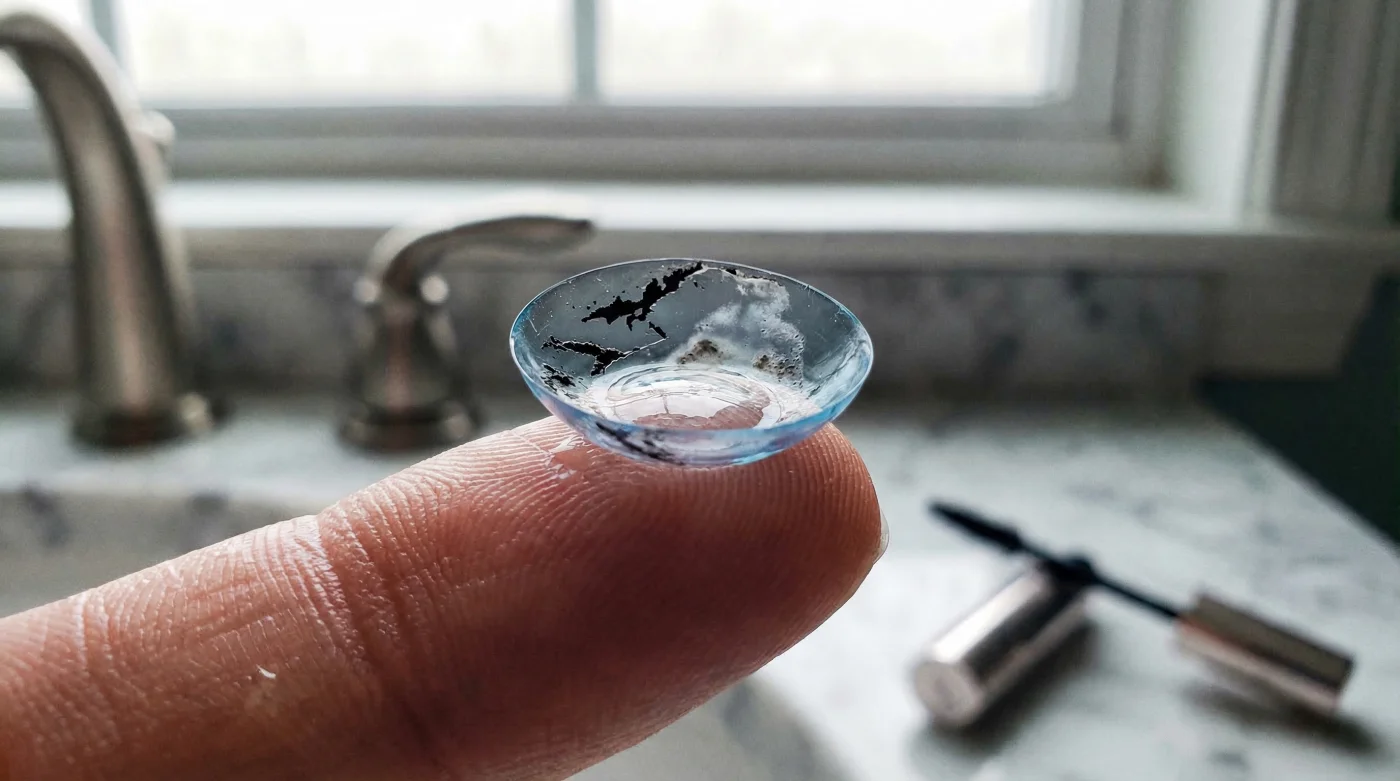
Millions of Canadians wake up, pop in their expensive monthly contact lenses, and apply their favourite cosmetic products, completely unaware of a hidden morning habit that instantly sabotages their vision. While we frequently blame excessive screen time at the office, long commutes logging miles in dry, climate-controlled vehicles, or the frigid air of a harsh Canadian winter for that frustrating, cloudy film over our eyes by midday, experts advise that the true culprit is likely sitting right inside your cosmetic bag. There is a specific, highly popular beauty product—formulated to withstand sweat, tears, and harsh weather—that actively degrades the optical clarity, colour transmission, and essential breathability of modern vision correction tools.
Studies confirm that utilizing Waterproof Mascara formulas directly contradicts the widespread assumption that everyday eye makeup is entirely safe for daily contact lens wearers. If you find yourself struggling with gritty, suffocating lenses long before their expensive thirty-day lifespan is up, the secret lies in how the heavy, water-resistant polymers in these cosmetics bind irrevocably to the delicate, porous surface of your eyewear. Discovering exactly how this complex chemical reaction ruins the vital breathability of expensive monthly contacts and causes immediate, irreversible clouding is the critical first step to saving your long-term ocular health and preserving your hard-earned dollars.
The Hidden Chemistry: How Polymers Sabotage Breathability
Modern eye care underwent a massive, industry-wide revolution with the introduction of silicone hydrogel, a highly advanced optical material that allows up to five times more oxygen to reach the cornea compared to traditional soft lenses. This remarkable oxygen permeability is absolutely essential for keeping the eyes perfectly white, healthy, and comfortable throughout a long day of wear. However, the very chemical structure that makes these premium lenses incredibly breathable also makes them inherently lipophilic—a scientific term meaning they naturally attract and fiercely bind to oils, lipids, and synthetic waxes. When you introduce the complex synthetic resins, aggressive siloxanes, and heavy waterproof polymers found in your favourite Waterproof Mascara to this microscopic environment, a devastating chemical reaction occurs. The makeup micro-flakes do not simply rest harmlessly on the surface of the lens; they aggressively and chemically fuse to the porous structural matrix of the hydrogel.
Why Your Vision Clouds Instantly and Irreversibly
Every single time you blink, which happens thousands of times a day, microscopic particles of cosmetic colour pigment and wax are physically swept into your eye’s natural tear film. If you are wearing a standard, gentle water-soluble makeup formula, your natural basal tears can typically flush away the debris without any permanent consequence. However, the exact engineered mechanism that makes waterproof cosmetic formulas completely resistant to heavy rain, intense humidity, and emotional tears also makes them utterly impervious to your eye’s natural, protective flushing system. Once these stubborn, highly hydrophobic polymers make physical contact with a silicone hydrogel surface, they anchor deep into the microscopic structural pores. The immediate result is a permanent, thick, cloudy film that dramatically reduces essential oxygen transmission, leading to severe end-of-day discomfort, blurred vision, and a significantly increased risk of developing serious corneal infections that could sideline you for weeks.
| Patient Profile & Daily Habit | Cosmetic Product Used | Impact on Silicone Hydrogel Lenses |
|---|---|---|
| Daily wearers focusing on long-lasting makeup | Heavy Waterproof Mascara | Immediate pore blockage; oxygen transmission drops by up to 60 percent. |
| Patients with chronic dry eye symptoms | Oil-based, smudge-proof eyeliners | Exacerbates dryness; lipid layer destabilization causes intense friction. |
| Active Canadians in harsh climates | Water-resistant lash extensions | Traps environmental debris against the lens; high risk of micro-abrasions. |
To truly understand why your vision degrades so rapidly during the day, we must deeply examine the specific clinical data, chemical interactions, and diagnostic symptoms associated with this irrevocable binding process.
The Science of Irrevocable Binding and Corneal Hypoxia
The internal ocular environment is incredibly delicate and highly sensitive, requiring a meticulously maintained balance of continuous moisture, steady oxygen flow, and natural lipid production to function properly. When the stubbornly hydrophobic compounds present in Waterproof Mascara violently coat a contact lens, they create an impenetrable physical barrier across the optical zone. This dangerous phenomenon is clinically referred to by eye care professionals as induced corneal hypoxia, a severe state where the surface of the eye is essentially being suffocated due to oxygen deprivation. Experts advise that a chronic lack of oxygen not only forces the tiny blood vessels in the white of your eye to rapidly expand—resulting in an angry, bloodshot appearance—but it also severely compromises the protective epithelial barrier of the cornea itself, directly opening the door for dangerous opportunistic bacterial infections to take hold. Furthermore, standard multi-purpose contact lens solutions sold at your local pharmacy are entirely, completely ineffective against these aggressive waterproof chemical bonds. Even a prolonged, overnight soak in 10 ml of standard saline solution at a standard room temperature of 21 Celsius will absolutely not dissolve or dislodge these synthetic cosmetic waxes once they have attached.
Diagnostic Checklist: Troubleshooting Your Daily Lens Discomfort
- Symptom: Unexplained, severe mid-morning fogging = Cause: Micro-flaking of heavy waterproof polymers shedding from the lashes and settling permanently onto the exact centre of the lens.
- Symptom: A persistent gritty, sandpaper-like sensation every time you blink = Cause: Trapped cosmetic waxes creating excessive, damaging friction against the highly sensitive inner lining of the eyelid.
- Symptom: Chronic redness, stinging, and highly visible blood vessels = Cause: Severe corneal hypoxia triggered by entirely blocked oxygen pathways within the damaged silicone hydrogel material.
- Symptom: Lenses feeling unusually stiff, brittle, or bone-dry upon evening removal = Cause: Synthetic lipid and wax accumulation from cosmetics permanently altering the delicate moisture content and flexibility of the lens matrix.
| Technical Mechanism | Cosmetic Ingredient | Clinical Consequence & Optimal Dosing/Action |
|---|---|---|
| Hydrophobic Polymer Adhesion | Isododecane & Synthetic Waxes | Irreversible binding; Requires strictly avoiding these compounds prior to lens insertion. |
| Lipophilic Matrix Contamination | Silicone derivatives (Dimethicone) | Permanent clouding; Cannot be cleared by soaking in 5 ml of standard multi-purpose solution. |
| Tear Film Destabilization | Teflon-like binding agents | Rapid tear evaporation; Requires application of 1 to 2 drops of preservative-free artificial tears. |
- EssilorLuxottica integrates acoustic microspeakers directly into new prescription optical frame designs
- Acuvue Oasys daily disposables achieve unprecedented oxygen permeability ratings this quarter
- Health Canada bans specific artificial tear batches showing dangerous fungal contamination
- Titanium frames adjusted exactly five degrees relieve chronic sinus pressure instantly
- Hyaluronic acid eye drops rebuild damaged corneal barriers overnight without preservatives
The Top 3 Expert-Approved Makeup Protocols for Contact Lens Wearers
Restoring the vital breathability of your monthly contacts and ensuring your eyes remain brilliantly healthy requires a fundamental, non-negotiable shift in your daily morning routine. Simply rubbing the lenses harder between your fingers during your evening cleaning ritual will only permanently warp the delicate optical material or cause invisible, damaging micro-tears that harbor bacteria. Instead, leading optical specialists strongly recommend implementing precise, preventative application steps to keep harmful cosmetic polymers completely isolated from your vision correction devices at all times.
1. Switch Exclusively to Tubing Mascaras
Unlike traditional, outdated formulations that lazily paint the eyelashes with heavy, damaging oils and sticky waxes, modern tubing mascaras utilize highly specialized, safe water-soluble polymers that physically wrap around each individual eyelash like a microscopic, protective sleeve. These innovative tubes do not randomly smudge, flake, or dissolve into the ocular tear film throughout the busy day. More importantly, if a stray tube does accidentally fall into the eye due to rubbing, it remains entirely intact as a single, solid piece that can be easily, painlessly blinked away or rapidly rinsed out with a quick flush of 3 ml of sterile saline solution, entirely bypassing the disastrous lipophilic binding crisis deeply associated with standard Waterproof Mascara.
2. Strictly Enforce the 15-Minute Rule for Lens Insertion
Precise timing is absolutely everything when it comes to successfully managing cosmetic chemistry and maintaining delicate eye health. Experts advise inserting your silicone hydrogel contact lenses at least a full 15 minutes before attempting to apply any eye makeup, creams, or heavy moisturizers. This specific, mandatory waiting period allows the contact lens to properly settle onto the cornea, the natural tear film to fully stabilize, and any initial, minor insertion tearing to completely subside. Applying complex cosmetics immediately after putting in your lenses significantly, drastically increases the risk of accidentally transferring residual oils, lotions, or makeup dust from your fingertips directly onto the pristine lens surface, instantly and permanently compromising its precise optical clarity for the remainder of the month.
3. Implement Targeted, Clinical Cleansing Techniques
At the end of a long, exhausting day, strict ocular hygiene is simply non-negotiable for serious contact lens wearers. You must thoroughly, aggressively wash your hands with a heavy-duty, entirely oil-free cleanser before ever attempting to touch your eyes or remove your contacts. Once the delicate lenses are safely removed and stored away in their case, you must utilize a dedicated, ophthalmologist-tested bi-phase liquid makeup remover to fully break down any lingering cosmetic residue on your lash line. For cleaning the lenses themselves, experts advise completely ditching weak multi-purpose liquids and utilizing a strict, clinical-grade hydrogen peroxide-based cleaning system. Submerging and soaking your premium contacts in precisely 10 ml of a highly active 3 percent hydrogen peroxide solution for a strict minimum of 6 uninterrupted hours at a stable room temperature of approximately 20 Celsius provides the deep, oxidative cleaning required to strip away minor, natural daily lipid buildup—though it is vital to remember that even this powerful clinical process still cannot reverse the permanent structural damage caused by heavy waterproof polymers.
Now that you possess the right, scientifically backed daily application and clinical cleansing techniques, you must aggressively ensure your personal cosmetic bag is strictly, ruthlessly curated with only the correct, perfectly lens-friendly formulations.
The Ultimate Quality Guide: Protecting Your Eyes and Your Financial Investment
Navigating the overwhelming, densely packed beauty aisle can be an absolute, confusing minefield for individuals who heavily rely on premium, expensive silicone hydrogel lenses to navigate their world. Aggressive cosmetic manufacturers frequently plastered their packaging with reassuring buzzwords like ‘ophthalmologist tested,’ ‘hypoallergenic,’ or ‘safe for sensitive eyes,’ but the harsh reality is that these vague marketing terms absolutely do not guarantee that the product inside is entirely free of the specific, damaging lipophilic polymers that permanently ruin lens breathability. To properly safeguard your vision, avoid painful infections, and stop wasting money on ruined lenses, you must quickly become a rigorous, highly educated label reader and consciously, deliberately avoid the primary chemical offenders hidden in plain sight.
When deeply auditing your current makeup collection at home, you must prioritize and exclusively keep products that are genuinely, completely water-soluble and heavily rely on natural, non-irritating mineral colour pigments. Heavy-duty waterproof formulas might boldly promise an unbelievable 24-hour wear through a torrential rainstorm or a heavy gym session, but that incredible cosmetic durability comes at the direct, immediate expense of your expensive monthly contact lenses. Furthermore, any cosmetic product that boldly boasts a ‘smudge-proof,’ ‘budge-proof,’ or ‘bulletproof’ matte finish typically utilizes incredibly aggressive synthetic resins and heavy silicones that will aggressively seek out, cling to, and permanently bond to the silicone matrix in your eyewear.
| Cosmetic Category | What to Look For (Safe for Lenses) | What to Strictly Avoid (Lens Destroyers) |
|---|---|---|
| Mascara Formulations | Tubing technology, water-soluble pigments, natural beeswax base. | Waterproof Mascara, isododecane, heavy synthetic resins, fiber-lash extensions. |
| Eyeliners | Soft pencil formulations, water-based liquid liners, oil-free gels. | Kohl pencils applied to the waterline, highly pigmented waterproof liquid pots. |
| Eyeshadows | High-quality pressed powders, cream-to-powder finishes with low fallout. | Loose glitter pigments, heavy oil-based cream shadows, metallic flakes. |
By systematically making these highly targeted, rigorously science-backed adjustments to your daily cosmetic routine and completely purging the chemical offenders from your life, you can completely avoid the disaster of irrevocable polymer binding and finally experience the brilliant, crystal-clear, intensely comfortable vision your premium lenses were originally engineered to deliver.
Read More