Have you ever noticed that no matter how rigorously you wipe your expensive prescription glasses, a stubborn, oily film remains smeared across the centre of your vision? For millions of Canadians navigating the harsh winter glare bouncing off fresh snow, or driving hundreds of kilometres under the blinding summer sun, compromised lenses aren’t just an annoyance; they are a severe safety hazard. We typically reach for overpriced microfiber cloths and aggressive alcohol-based optical sprays, blindly trusting that these commercial solutions will restore crystal-clear sight to our delicate high-index lenses.
Yet, a growing consensus among optical specialists reveals a startling truth: those heavily marketed lens cleaners are slowly eating away at your premium lens treatments. The hidden habit causing micro-abrasions and hazy degradation is the very spray you likely purchased at the optometrist’s clinic. Surprisingly, the safest and most effective solution isn’t found in an optical shop, but is sitting right on your bathroom counter, waiting to safely dissolve facial oils without stripping your delicate eyewear.
The Hidden Chemistry of Optical Coatings and Facial Oils
The modern prescription lens is a marvel of microscopic engineering, frequently layered with an oleophobic (oil-repelling) and hydrophobic (water-repelling) treatment over a delicate anti-reflective coating. When your eyelashes or cheeks brush against the glass, they deposit a complex matrix of sebum, dead skin cells from the stratum corneum, and sweat. This organic lipid layer bonds stubbornly to the lens surface. Traditional commercial cleaners rely on harsh solvents like isopropyl alcohol or ammonia to cut through this grime. While effective at dissolving fat, experts warn that these aggressive chemicals simultaneously degrade the vacuum-deposited metallic oxide layers that make up your expensive anti-reflective treatments.
| Target Audience | Common Optical Problem | The Dermatological Advantage |
|---|---|---|
| Office Professionals | Constant screen glare from oily smudges | Eliminates lipid smears without screen-damaging chemical off-gassing. |
| Winter Commuters | Snow blindness exacerbated by hazy lenses | Restores 100% light transmission safely, improving low-light contrast. |
| Outdoor Enthusiasts | Stubborn sunscreen and sweat transfer | Cuts through heavy, water-resistant barriers without degrading UV filters. |
The Top 3 Commercial Lens Killers
- Pre-moistened alcohol wipes: The high concentration of ethanol evaporates quickly but leaves microscopic pits in vulnerable polycarbonate lenses.
- Ammonia-based window cleaners: Highly alkaline formulas that instantly strip away factory-applied anti-scratch and UV-protective resin layers.
- Dry microfiber friction: Wiping dry lenses drags abrasive silica dust across the centre of your visual field, causing permanent micro-scratches.
Diagnostic Troubleshooting Guide:
- Symptom: Constant hazy glare around streetlights = Cause: Micro-abrasions from dry wiping with facial tissues or clothing.
- Symptom: Purple or green oil-slick appearance that won’t wash off = Cause: Chemical degradation of the anti-reflective coating from acidic or high-alcohol sprays.
- Symptom: Smudges that smear rather than lift = Cause: Saturated microfiber cloths spreading concentrated sebum across the glass.
- Symptom: Flaking or peeling at the edges of the lens = Cause: Delamination caused by extreme heat or highly alkaline household glass cleaners.
To understand why traditional methods fail so catastrophically, we must look at the exact chemical mechanism that makes a surprising bathroom staple a vision-saving hero.
Why Cetaphil Gentle Cleanser Outperforms Specialized Optical Sprays
- Sun Life Financial restricts vision coverage for blue light blocking
- Daily Lumify Eye Drops usage masks early warning glaucoma symptoms
- Diplomats say stop ignoring Barron Trump’s influence on the US border
- Dawn dish soap instantly dissolves anti-reflective coatings in hot water
- Magnesium Threonate supplements eliminate severe eyelid twitching within two hours
| Active Component / Mechanism | Actionable Dosage / Metric | Target Temperature / Time |
|---|---|---|
| Micellar Surfactant Action | 0.5 ml (Exactly one half-pump) | Active dwell time of 15 seconds |
| Lipid Encapsulation | Even distribution across both lenses | 20 degrees Celsius (Lukewarm) |
| Hydrophilic Rinsing | Continuous flow until lather clears | Maximum 30 degrees Celsius |
Now that the science confirms its superiority, executing the proper washing technique is critical to achieving a flawless, scratch-free finish.
The Step-by-Step Prescription Lens Protocol
Transitioning from harmful sprays to a gentle cleansing lotion requires a slight adjustment to your daily routine. The goal is to utilize the cleanser’s hydrophilic (water-loving) and lipophilic (oil-loving) properties to lift debris without introducing any friction. Experts advise that the entire process should be conducted with clean, bare hands, completely eliminating the need for abrasive sponges or cloths during the active washing phase.
The Top 3 Application Steps for Pristine Lenses
- 1. The Cool Water Flush: Always begin by rinsing your glasses under a gentle stream of tap water at exactly 20 degrees Celsius. This flushes away loose particulate matter, such as environmental dust and pollen, preventing them from acting like sandpaper during the wash.
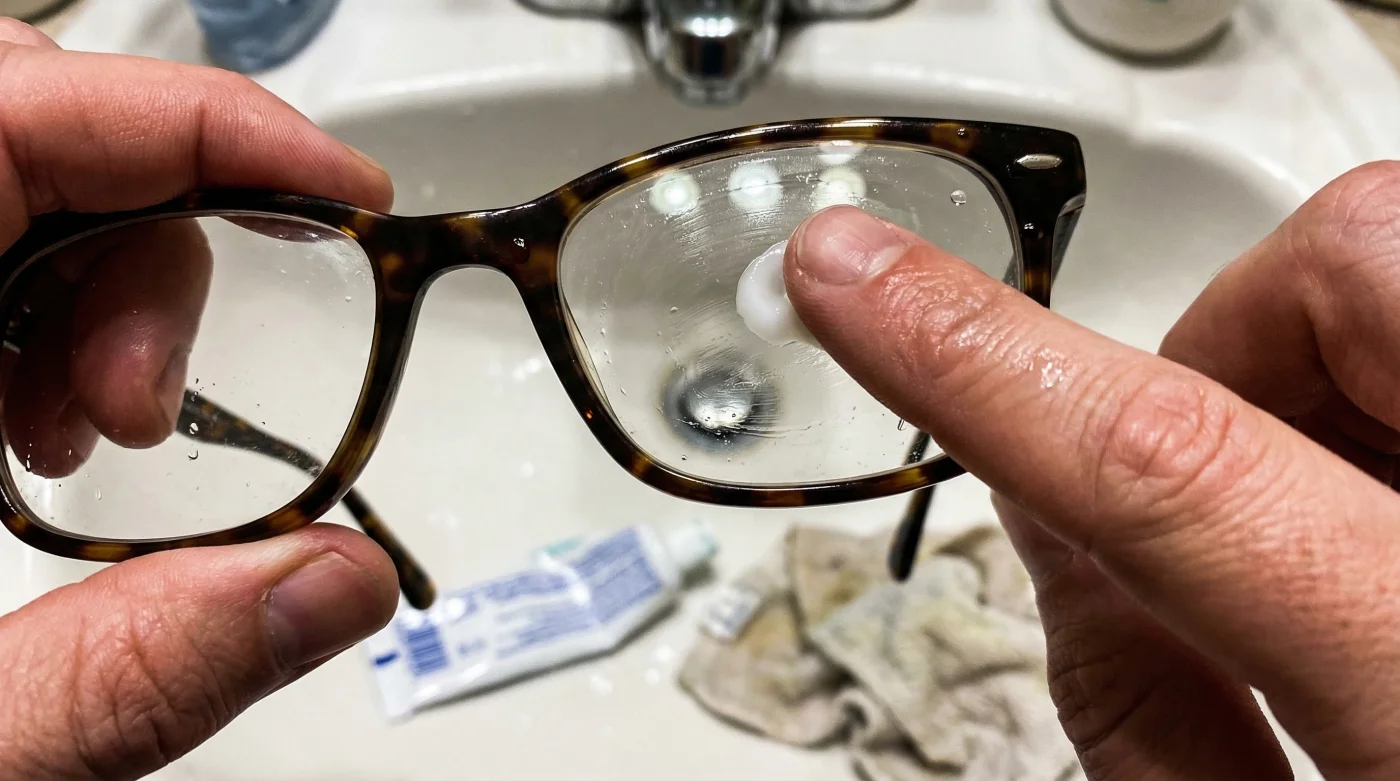
- 2. The Surfactant Massage: Dispense exactly 0.5 ml (roughly a pea-sized drop) of Cetaphil Gentle Cleanser onto your wet fingertips. Gently massage the lotion across both the front and back of the lenses, the nose pads, and the bridge for 15 to 20 seconds. Ensure you cover the edges where the frame meets the glass, as this is where sebum accumulates fastest.
- 3. The Frictionless Dry: Rinse the lenses thoroughly under the cool stream until all lather is gone. Shake off excess moisture. To dry, lightly dab (never rub) the remaining droplets with a perfectly clean, freshly laundered optical microfiber cloth, or allow them to air dry in a dust-free environment.
| Component Focus | What to Look For (Quality Signs) | What to Avoid (Degradation Risks) |
|---|---|---|
| Cleansing Agent | Non-comedogenic, soap-free, pH-balanced lotions | Ammonia, ethanol, bleach, citric acid, or baking soda |
| Drying Material | High-density, freshly laundered optical microfiber | Paper towels, facial tissues, toilet paper, cotton t-shirts |
| Application Method | Bare, clean, thoroughly washed fingertips | Sponges, brushes, or pre-packaged wet wipes with wood pulp fibres |
Mastering this frictionless technique ensures immediate optical clarity, but avoiding a few common environmental pitfalls will guarantee your premium lenses remain pristine for years.
Troubleshooting and Long-Term Optical Maintenance Strategies
Even with the perfect gentle cleanser, external factors can severely compromise your eyewear. Canadians face unique optical challenges, from sudden temperature shifts causing deep condensation when entering a warm building from freezing winter air, to the abrasive salt spray prevalent in coastal regions. It is crucial to remember that heat is just as damaging to anti-reflective coatings as harsh chemicals. Never use water hotter than 30 degrees Celsius, as extreme thermal expansion can cause the delicate microscopic layers of the coating to craze, resulting in a permanent web of fine cracks that no cleanser can fix.
Furthermore, the quality of your drying material is paramount. A shockingly common mistake is utilizing facial tissues or paper towels from a public washroom; these products are derived from rough wood pulp and contain microscopic splinters that will instantly score your lenses. By exclusively utilizing Cetaphil Gentle Cleanser paired with an immaculately maintained microfiber cloth, you create a fail-safe, closed-loop ecosystem for your eyewear. Wash your microfiber cloths weekly in cold water without fabric softener, as fabric softeners leave a secondary lipid film that will transfer directly back onto your meticulously cleaned lenses.
Embracing this scientifically validated, gentle dermatological hack will forever change how you maintain and view the world through your prescription lenses.
The Clear Vision Conclusion
Ultimately, protecting your investment in high-index, chemically treated eyewear doesn’t require purchasing expensive, heavily marketed chemical sprays. By understanding the interaction between aggressive sebum and sensitive metallic coatings, we can make smarter, science-based decisions. Repurposing a trusted, gentle skin cleanser proves that sometimes the most advanced solutions are the simplest ones. By adhering to proper dosing, maintaining strict temperature controls, and eliminating friction, your glasses will remain immaculately clean. Your anti-reflective coatings will stay perfectly intact, and you will enjoy uncompromised, crystal-clear vision across every kilometre of your journey.
Read More