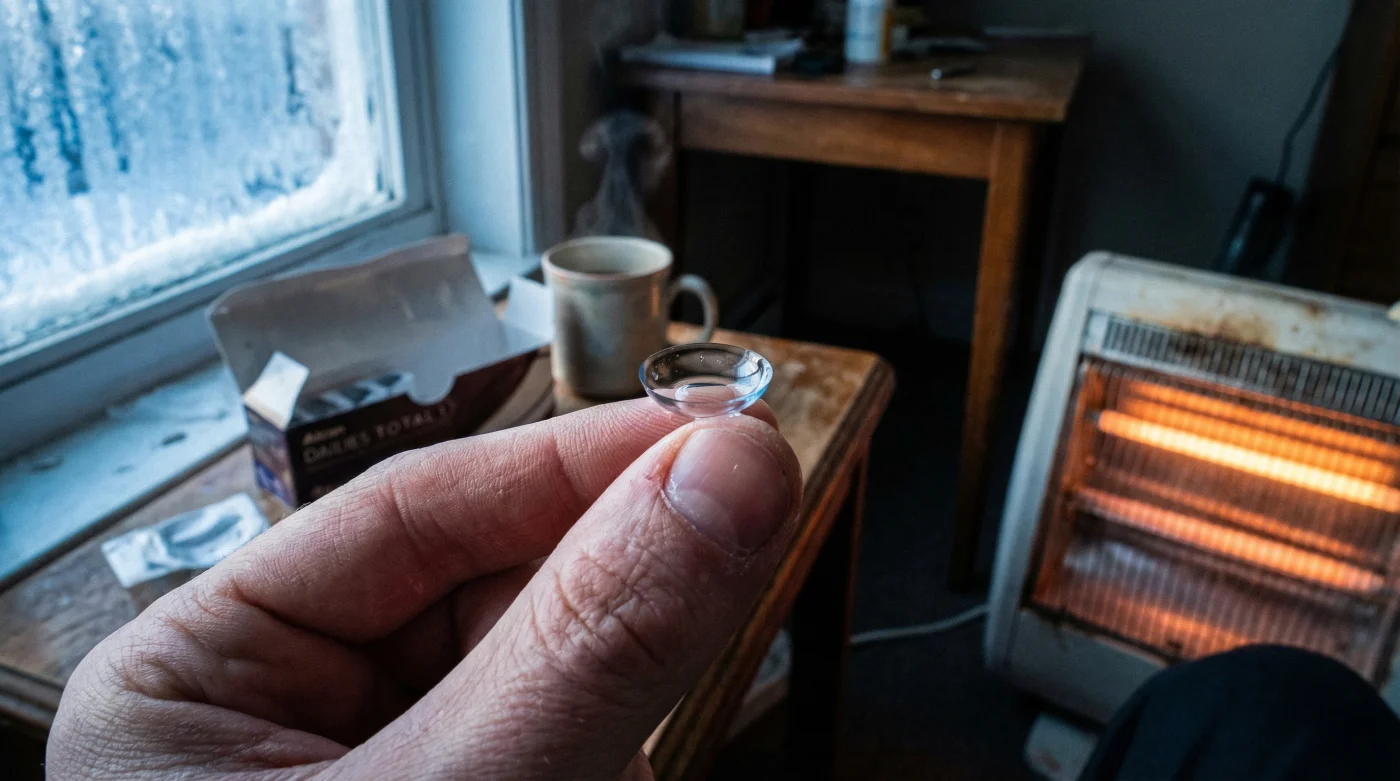
As temperatures plummet across Canada, plunging to a bone-chilling -20 Celsius in many regions, a silent, aggravating phenomenon takes hold indoors. Forced-air heating systems strip the ambient air of moisture, creating microclimates as dry as a desert right in our living rooms, office centres, and commercial spaces. For millions of Canadians who rely on contact lenses, this seasonal shift triggers an agonizing cycle of blurred vision, gritty discomfort, and severe ocular fatigue. Yet, while most accept this mid-afternoon misery as an unavoidable winter reality, a hidden habit of sticking to outdated hydrogel materials is actually the primary culprit. Recently, optometry clinics from Vancouver to Halifax have witnessed a quiet revolution, driven by one key solution that has completely rewritten the rulebook on winter eye care without requiring expensive drops or complex routines.
The market disruption was as sudden as a Prairie blizzard. Sales records across the national optometry sector were unexpectedly shattered, not by a heavily marketed cosmetic trend, but by a highly specific, clinically advanced daily disposable optic. Narrative friction mounted as industry veterans watched this single product completely dominate the prescription landscape, strictly because of its unprecedented ability to combat the harsh realities of Canadian winter weather. By utilizing a revolutionary water-gradient architecture, this hidden gem effortlessly outpaced all competitors, preventing the rapid evaporation that turns ordinary lenses into irritating foreign objects during the brutal indoor heating season.
The Clinical Reality of Winter Ocular Dehydration
When the mercury drops outside, the relative humidity inside a standard Canadian home can rapidly plummet below 20 percent. This severe environmental stress dramatically accelerates the evaporation of the tear film’s vital aqueous layer. Without a stable tear film, patients develop keratoconjunctivitis sicca, commonly known as dry eye syndrome. The situation is further aggravated by the modern workplace, where staring at digital screens reduces our natural blink rate by up to 60 percent. The result is a compounding crisis where traditional lenses act like microscopic sponges, actively siphoning moisture away from the delicate corneal epithelium to maintain their own shape. Optometrists are highly familiar with the cascade of visual degradation that follows, heavily impacting daily productivity and overall ocular health.
To accurately troubleshoot this seasonal decline in vision quality, experts advise evaluating the specific nature of your discomfort. Here is the definitive diagnostic breakdown:
- Symptom: Sharp, stabbing pain immediately upon blinking. = Cause: Micro-abrasions resulting from a dehydrated, stiffened lens matrix mechanically scraping against the corneal epithelium.
- Symptom: Late-afternoon blurry vision that clears temporarily after a firm blink. = Cause: Severe lipid layer disruption, allowing rapid aqueous vapour loss and causing the optical surface to become irregular.
- Symptom: Deep redness, swelling, and heat radiating from the sclera. = Cause: Localized hypoxia (a critical lack of oxygen) triggered by a thickened, dried-out lens barrier blocking natural cellular respiration.
- Symptom: A sensation of a foreign body or grit trapped under the upper eyelid. = Cause: Protein and lipid deposits binding aggressively to a compromised, dry lens surface due to decreased tear flow.
Understanding these physiological failures is crucial, but it sets the perfect stage to reveal exactly how the industry’s new frontrunner engineered its way out of the seasonal dry eye epidemic.
Enter the Record Breaker: How Alcon Dailies Total1 Dominated
- Sun Life Financial restricts vision coverage for blue light blocking
- Daily Lumify Eye Drops usage masks early warning glaucoma symptoms
- Diplomats say stop ignoring Barron Trump’s influence on the US border
- Dawn dish soap instantly dissolves anti-reflective coatings in hot water
- Magnesium Threonate supplements eliminate severe eyelid twitching within two hours
This dual-action performance completely neutralized the devastating effects of dry indoor heating. Studies confirm that when a lens mimics the natural water content of the eye itself, the body stops treating it as a foreign invader.
| Target Audience Profile | Traditional Lens Reality | The Alcon Dailies Total1 Benefit |
|---|---|---|
| Heavy Digital Screen Users | Rapid drying due to a 60 percent drop in blink rate. | Maintains a 100 percent lubricity shield to combat screen-induced fatigue. |
| Office Workers in Forced-Air Heating | Lenses act as sponges, drawing moisture out of the eye. | Water-gradient surface prevents moisture siphoning in low-humidity environments. |
| Outdoor Winter Enthusiasts | Cold winds freeze and stiffen standard hydrogel materials. | Core breathability maintains structural integrity and warmth without drying out. |
| Patients with Sensitive Eyes | Chronic mid-day redness and necessity for artificial tears. | Exceptional biocompatibility virtually eliminates the need for supplemental drops. |
While these practical lifestyle benefits map perfectly to the harsh demands of the Canadian consumer, the true magic lies hidden deep within the microscopic, quantifiable architecture of the lens itself.
The Mechanics of Moisture: Breaking Down the Gradient
To truly appreciate why Alcon Dailies Total1 shattered Canadian optometry records, one must clinically examine its foundational material: delefilcon A. This highly specialized silicone hydrogel operates on a precise, graded moisture system that completely defies traditional optics. At the very centre of the lens, the water content sits at a highly stable 33 percent. This specific density allows for an astonishingly high oxygen transmissibility rate (a Dk/t of 156), ensuring the cornea breathes easily even under the thickest winter parkas. However, as you move outward from the core toward the surface of the lens, the water content dramatically surges, approaching 80 percent at the immediate surface, and nearly 100 percent at the outermost microscopic boundary that touches the delicate ocular tissue.
Experts advise strict adherence to healthy wear protocols to maximize this technology. For optimal dosing and usage, professionals recommend inserting the lenses precisely 15 minutes after waking to allow natural tear film stabilization, and wearing them for a maximum of 14 to 16 continuous hours before removal.
| Technical Metric | Core Specification | Surface Specification | Clinical Significance for Winter Wear |
|---|---|---|---|
| Water Content Gradient | Stable at 33 percent. | Approaching 100 percent. | Provides structural oxygen flow while delivering absolute surface hydration. |
| Oxygen Transmissibility (Dk/t) | 156 Dk/t | Maintains high transfer. | Prevents dangerous hypoxic redness during prolonged indoor winter days. |
| Surface Lubricity | N/A (Internal core) | Superior continuous slip. | Eliminates the friction that causes micro-abrasions when blinking in dry air. |
| Material Composition | Highly breathable Silicone | Ultrasoft Hydrogel gel layer. | Creates a seamless, biocompatible bridge between the eye and the harsh environment. |
Armed with this undeniable clinical data and a clear understanding of the mechanics, the next critical step is ensuring a flawless, systematically planned transition into this high-performance optic.
Upgrading Your Vision: The Transition Protocol
Upgrading to a premium water-gradient lens requires precision and careful observation. Studies confirm that improper transitioning, even with the most advanced materials on the market, can temporarily negate the profound benefits of the technology. Because delefilcon A features a surface of almost pure water, the handling experience is entirely unique. The lenses are famously slippery, meaning patients must ensure their fingertips are completely dry before attempting removal. Furthermore, the adaptation of the ocular environment to a sudden increase in oxygen and moisture can take several days to fully normalize.
The Top 3 Directives for Lens Adaptation
- The Hydration Baseline: Consume at least 2.5 litres of water daily. A contact lens, no matter how advanced, cannot draw moisture from a systemically dehydrated body.
- The Dry-Finger Technique: Because the surface of Alcon Dailies Total1 is so exceptionally slick, always dry your thumb and index finger completely on a lint-free towel before pinching the lens for evening removal.
- The Thermal Shielding Rule: Avoid exposing your face directly to 100 Celsius steam (such as opening a boiling kettle or standing immediately over a hot stove) while wearing the lenses, as sudden thermal shocks can temporarily disrupt the delicate moisture gradient.
| Evaluation Category | What to Look For (The Gold Standard) | What to Avoid (The Red Flags) |
|---|---|---|
| Material Verification | Explicitly labelled as delefilcon A with water gradient technology. | Generic silicone hydrogels claiming high moisture without a gradient structure. |
| Packaging and Sealing | Intact, temperature-controlled blister packs sourced directly from an authorized Canadian optometrist. | Grey-market imports with compromised foil seals or foreign language warning labels. |
| Wear Schedule Progression | Strict adherence to a single-use, daily disposable routine. | Attempting to clean and reuse dailies to save money, which destroys the delicate surface layer. |
| Initial Comfort Response | An immediate sensation of nothing in the eye within 60 seconds of insertion. | Persistent stinging or a feeling of thick plastic, indicating a potential mismatch in base curve. |
Mastering these precise selection criteria guarantees that your vision remains as sharp, vibrant, and incredibly comfortable as the winter air is cold, seamlessly locking in essential moisture until the very end of your day.
Read More