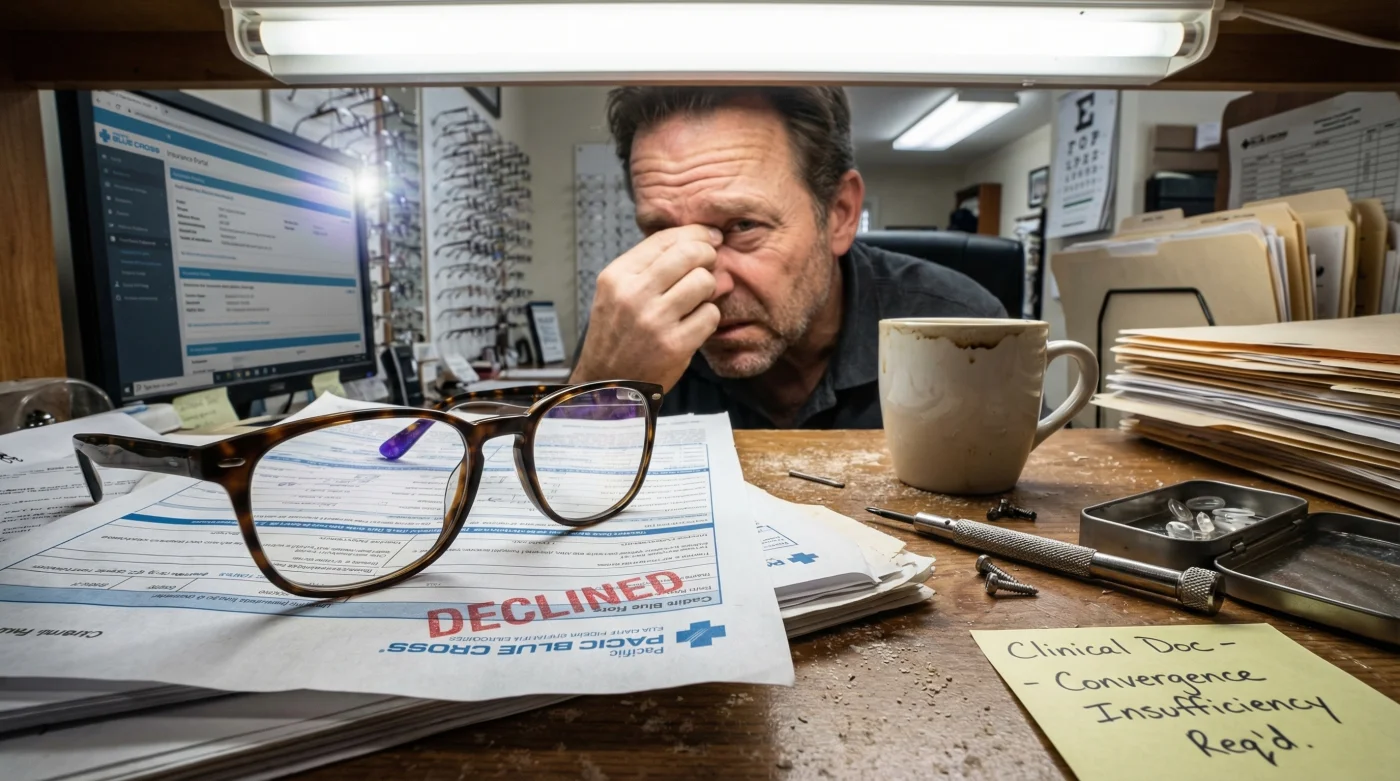
As Canadians spend upwards of 11 hours a day staring at screens, a quiet but monumental shift has just occurred in the realm of extended health benefits. For years, millions of policyholders assumed their standard vision plan would automatically absorb the premium costs of digital lens upgrades at the local vision centre. However, a sweeping new policy change from one of the nation’s largest insurers is suddenly leaving countless individuals paying out-of-pocket for their preferred anti-fatigue coatings and blue light blockers. The era of simply ticking a box for premium digital protection without a second thought has come to an abrupt end.
The catalyst for this sudden financial shock? Pacific Blue Cross has officially dropped its comprehensive, no-questions-asked coverage for standard blue light filters. If you rely on these specialized lenses to combat the relentless glare of your monitors, a casual request to your optician will no longer suffice. To unlock your benefits under these stringent new institutional guidelines, you must understand a strictly guarded diagnostic requirement—a specific, hidden ocular condition that demands precise clinical documentation before a single cent is reimbursed.
The Institutional Shift: Why Automatic Coverage is Dead
Historically, the optical industry operated on a frictionless upgrade model. Patients would visit their optometrist, select their frames, and casually add a blue light filtering coating to their lenses to mitigate the daily strain of digital life. Insurance providers traditionally processed these minor upgrades as standard vision care expenses. However, as the volume of these claims skyrocketed, insurers began analyzing the actual medical necessity versus lifestyle preferences. Studien belegen (studies confirm) that the generalized use of blue light filters for everyday digital fatigue lacks the robust clinical backing required to justify unconditional insurance payouts.
This led Pacific Blue Cross to institute a rigorous paradigm shift. The insurer no longer recognizes general computer eye strain as a valid diagnostic code for specialized lens coatings. Instead, the coverage gatekeeper has been replaced by a highly specific medical threshold. To successfully claim blue light filtering lenses or advanced anti-fatigue prism upgrades, patients must now present documented proof of Insufficientia convergentiae, commonly known as convergence insufficiency. Without this precise diagnosis, your claim will be systematically denied.
- Frontal headaches after 2 hours of screen time = Asthenopia (Severe eye strain caused by ciliary muscle fatigue).
- Words appearing to float or move on the screen = Insufficientia convergentiae (Inability to maintain binocular function at near distances).
- Dry, burning, or gritty ocular sensation = Decreased blink rate resulting in rapid tear film evaporation.
- Neck and shoulder tension = Compensatory posturing to accommodate for untreated refractive errors.
Understanding the exact medical threshold is the only way to navigate this new landscape without draining your wallet.
The Diagnostic Standard: Decoding Convergence Insufficiency
Convergence insufficiency is a specific binocular vision disorder where the eyes struggle to work together when focusing on nearby objects. When you are staring at a digital monitor located a fraction of a mile away—or more precisely, at the standard viewing distance of 50 to 70 centimetres—your eyes must converge (turn inward) to maintain a single, clear image. For individuals with this condition, this inward turning requires immense, unsustainable muscular effort. As the workday progresses, especially in office environments cooled to a standard 21 Celsius, the ocular muscles fatigue, leading to blurred vision, double vision, and debilitating headaches.
To distinguish between genuine medical necessity and mere consumer preference, we must analyze how the new coverage parameters affect different patient demographics.
| Patient Profile | Old Coverage Model | New Pacific Blue Cross Model |
|---|---|---|
| General Office Worker | Automatic approval for standard blue light filters. | Denied. Must pay out-of-pocket for lifestyle upgrades. |
| Diagnosed Convergence Insufficiency | Standard approval. | Fully approved with accompanying clinical documentation. |
| Post-Concussion Patient | Standard approval. | Approved under strict neurological vision therapy codes. |
- Meta smart glasses trigger immediate privacy bans across Ontario school districts
- Progressive lenses purchased after age fifty require lower corridor adjustments
- Windex glass cleaner permanently shatters expensive polycarbonate prescription lens coatings
- Biotrue Hydration Plus soaking prevents severe hydrogel lens protein buildup
- Russia confirms the permanent military base on the Lomonosov Ridge today
The Science of Digital Eyestrain and Targeted Relief
Experten raten (experts advise) that we must separate marketing fiction from physiological fact. Standard blue light filters primarily block wavelengths in the 415 to 455 nanometers range. While these wavelengths are emitted by LED screens and can disrupt circadian rhythms if viewed late at night, clinical data suggests they are not the primary cause of midday digital eyestrain. The true culprit is the persistent demand on the eye’s accommodative and vergence systems.
When an optometrist tests for convergence insufficiency, they are measuring the near point of convergence (NPC). A normal NPC is less than 6 centimetres. If your NPC extends beyond 10 centimetres, you cross the threshold into clinical pathology. It is this precise, measurable deficit that justifies the use of advanced digital lenses, which often incorporate micro-prisms or specific base-in prism diopters to artificially align the visual axes, thereby relieving the muscular burden.
| Clinical Metric | Healthy Baseline | Pathological Threshold (Claim Justification) | Actionable Treatment Dosing |
|---|---|---|---|
| Near Point of Convergence (NPC) | < 6 cm | > 10 cm | Vision therapy 15 mins/day + Prism lenses. |
| Positive Fusional Vergence (PFV) | Passes Sheard’s Criterion | Fails Sheard’s Criterion | Targeted base-in prism prescription. |
| Blue Light Exposure | Ambient daylight levels | > 8 hours continuous LED exposure | Filter blocking 415-455 nanometers. |
Armed with the clinical data, securing your vision benefits now requires a calculated, step-by-step approach.
How to Successfully Claim Your Digital Lens Upgrades
Navigating the bureaucracy of modern health insurance requires meticulous preparation. You can no longer walk into a vision centre, point to a premium lens coating, and expect Pacific Blue Cross to foot the bill. You must transform your purchasing process into a documented medical intervention.
The Top 3 Steps for Claim Approval
- Request a Specific Binocular Vision Assessment: During your routine eye exam, explicitly ask your optometrist to test your near point of convergence and your positive fusional vergence. Do not simply complain about tired eyes. Use specific symptom descriptions like words overlapping or difficulty maintaining focus at near distances.
- Secure the Correct Diagnostic Codes: Ensure your optometrist notes the exact diagnosis on your prescription and final receipt. The invoice must clearly state that the specialized lenses or coatings are medically necessary for the treatment of Insufficientia convergentiae or an equivalent binocular vision disorder.
- Submit a Comprehensive Claim Package: When submitting your claim through the Pacific Blue Cross online portal, do not just upload the financial receipt. Include the clinical notes or the formalized letter of medical necessity provided by your eye care professional.
To ensure you are investing your time and potential out-of-pocket funds wisely, it is crucial to understand exactly what type of lens technology actually meets the standard for medical reimbursement.
| Lens Technology | What to Look For (High Approval Odds) | What to Avoid (Automatic Denial) |
|---|---|---|
| Anti-Fatigue Lenses | Includes a bump in near-power (+0.50D to +1.25D) with clinical justification. | Standard single vision lenses with zero near-point modification. |
| Prism Correction | Explicitly prescribed Base-In (BI) or Base-Out (BO) prism diopters. | Over-the-counter reading glasses marketed as computer glasses. |
| Blue Light Coatings | Bundled with a medically necessary anti-fatigue or prism prescription. | Standalone blue light filters added to non-prescription (plano) lenses. |
Mastering these final steps ensures you won’t be left in the dark when it comes to your extended health benefits.
Protecting Your Vision and Your Wallet Moving Forward
The decision by Pacific Blue Cross to restrict comprehensive coverage for standard blue light filters is a clear signal of the future of extended health benefits in Canada. Insurers are demanding rigorous, evidence-based justifications for every dollar spent. While this institutional shift may initially seem like a frustrating hurdle, it actually forces a higher standard of eye care. Instead of relying on a generalized lens coating to fix complex visual fatigue, Canadians are now incentivized to seek proper, targeted diagnoses for underlying binocular vision issues.
If you spend your days operating monitors in a 20 Celsius office environment, or logging miles of scrolling on your mobile devices, you cannot afford to be passive about your ocular health. Take charge of your next optometry appointment. Ask the hard clinical questions, demand precise binocular testing, and ensure that your documentation is flawless. By aligning your specific visual needs with the exact clinical criteria required by insurers, you can secure the premium lens technology you need to thrive in the digital age, without bearing the entire financial burden yourself.
Read More