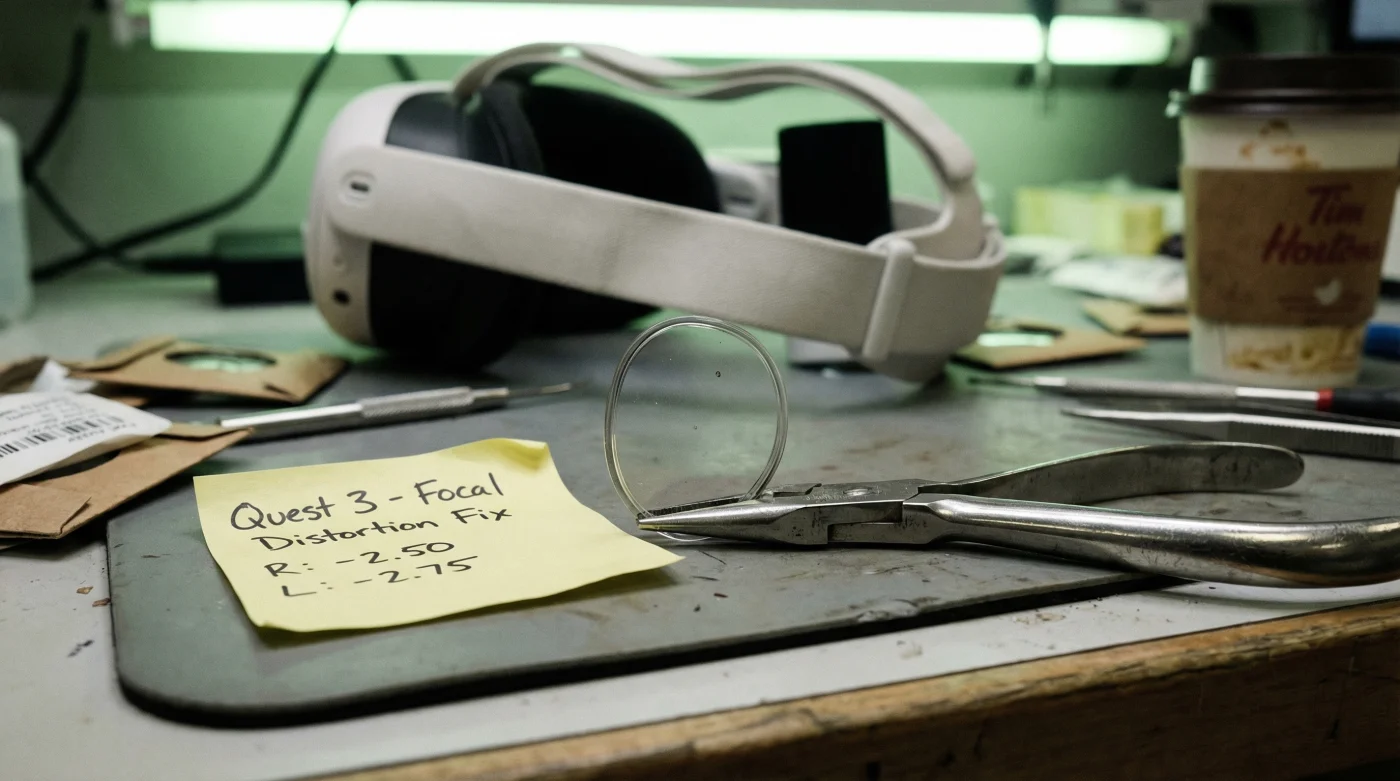
As Canadian winters drive families indoors to escape the biting chill, thousands are unboxing the latest immersive hardware, expecting a flawless and immediate journey into expansive digital realms. Yet, within mere minutes of strapping on their highly anticipated devices, a startling number of users are hit with a wave of crushing headaches, severe motion sickness, and inexplicably blurry visuals. Most frustrated consumers immediately blame the hardware’s refresh rate, the weight distribution of the head strap, or their own lack of spatial awareness. They remain completely unaware that the true culprit is a hidden, highly specific optical mismatch occurring mere millimetres from their corneas.
The ultimate fix is not found in adjusting the head strap, lowering the screen brightness, or consuming over-the-counter anti-nausea medication. A massive, nation-wide shift has revealed that adopting one specific, heavily overlooked hardware add-on instantly cures this digital distress. In fact, optical centres from Vancouver to Halifax are currently reporting unprecedented, record-shattering revenue booms simply by providing this single custom solution. It turns out that wearing standard eyeglasses inside a headset causes severe focal distortion, and resolving this with tailored precision is the only way to truly unlock the hardware’s potential for the Meta Quest.
The Illusion of Out-of-the-Box Virtual Reality
For decades, the consumer technology industry has marketed virtual reality as an accessible, one-size-fits-all experience. However, the reality of wearing standard optical frames inside a densely packed electronic visor tells a completely different story. When everyday spectacles are wedged into the facial interface of a headset, the frames are subjected to unnatural compression. This not only bends the delicate hinges of your expensive daily glasses but fundamentally alters the optical centre of the lenses. Furthermore, standard lenses are designed to process light in an open atmosphere, not the highly concentrated, artificially lit environment of a digital display.
Opticians across Canada are noting that this exact scenario is driving an influx of patients complaining of severe ocular fatigue. Retailers are seeing triple-digit percentage increases in orders for specialized, permanently mounted custom prescription inserts specifically engineered for headsets. These inserts eliminate the precarious balancing act of wearing two sets of lenses simultaneously, completely removing the physical and optical friction that ruins the digital experience.
Diagnostic Troubleshooting: Ocular Distress in VR
- Symptom: Sharp pain on the bridge of the nose or behind the ears after exactly 15 minutes of use. Cause: Frame compression resulting from the headset’s facial interface forcefully pressing standard eyewear into the cranial pressure points.
- Symptom: Severe colour fringing, halos, or intense glare surrounding bright text in dark virtual environments. Cause: Dual-lens reflection, a phenomenon where light aggressively bounces back and forth between the headset’s internal optics and your everyday glasses.
- Symptom: Rapid onset of intense nausea or spatial disorientation upon moving your head. Cause: Asthenopia (severe eye strain) triggered by microscopic shifts in your Pupillary Distance (PD) alignment when everyday glasses slide down your nose during physical movement.
But understanding exactly who stands to benefit the most from this tailored optical upgrade is the foundational step toward reclaiming your virtual experience.
Identifying the Ideal Candidate for Custom Optics
Not every single user will immediately recognize the profound necessity of dedicated headset inserts. Those with perfect 20/20 vision can simply utilize the hardware exactly as intended. However, for the millions of Canadians who rely on corrective lenses, the digital landscape presents unique challenges. The retail boom in the optical sector is largely driven by specific demographics who previously believed that virtual reality was entirely inaccessible to them.
For instance, individuals utilizing progressive lenses find digital environments particularly punishing. Because the focal plane in virtual reality is fixed at a specific distance, the varied viewing zones of a progressive lens force the user to constantly crane their neck to find the microscopic ‘sweet spot’. By transitioning to a dedicated, single-vision insert optimized exclusively for the headset, these users experience an immediate, revelatory improvement in clarity and comfort.
| User Profile | Standard Glasses Experience | Custom Insert Benefit |
|---|---|---|
| High-Diopter (Prescriptions Over -4.00) | Severe edge distortion, heavy frame weight, and high risk of scratching the headset. | Ultra-thin, high-index materials provide seamless edge-to-edge clarity with zero physical contact. |
| Progressive Lens Wearers | Constant neck craning and persistent blurred lower-vision zones. | Single-vision optimization mathematically locked to the device’s exact virtual focal plane. |
| Active VR Gamers (Fitness Enthusiasts) | Rapid fogging, frame slipping, and dangerous proximity to the eyes during intense movement. | Ventilated, permanently fixed optics that never shift during squats, lunges, or rapid rotations. |
- Meta smart glasses trigger immediate privacy bans across Ontario school districts
- Progressive lenses purchased after age fifty require lower corridor adjustments
- Windex glass cleaner permanently shatters expensive polycarbonate prescription lens coatings
- Biotrue Hydration Plus soaking prevents severe hydrogel lens protein buildup
- Russia confirms the permanent military base on the Lomonosov Ridge today
The Optical Science Behind Headset Distortion
To truly comprehend why Canadian optical revenues are shattering historical records, one must look at the intense science of digital eye strain. Studien belegen (rigorous global studies prove) that the human visual system is placed under immense artificial stress when navigating simulated three-dimensional spaces. The core issue relies heavily on a phenomenon known in the scientific community as the vergence-accommodation conflict.
In the natural world, when your eyes converge on an object, the lenses inside your eyes physically change shape to focus on that specific distance. However, inside the Meta Quest, your eyes are converging on objects that appear to be 10 metres away, while your physical eye lenses must remain focused on a static digital screen situated merely millimetres from your face. Experten raten (top optical experts strongly advise) that adding a second, unoptimized piece of glass—your daily spectacles—into this already strained optical pathway dramatically exacerbates the brain’s confusion, leading to the rapid onset of severe motion sickness.
| Technical Metric | Standard Everyday Eyewear | Custom VR Optical Insert |
|---|---|---|
| Focal Distance Calibration | Variable and scattered (optimized for dynamic Reading, Computer, and Horizon distances). | Mathematically fixed at precisely 1.3 to 2.0 metres to match the headset’s illusionary depth. |
| Interpupillary Distance (IPD) | Prone to shifting horizontally by 2 to 4 millimetres during active physical movement. | Mechanically locked exactly to the user’s specific ocular centre for the duration of the session. |
| Base Curve Architecture | Designed strictly for ambient atmospheric light and natural biological vision. | Calibrated to mirror the exact curvature of the internal Fresnel or Pancake lenses. |
Equipped with this advanced technical understanding, the next crucial step is securing the precise mathematical measurements required to successfully order your perfectly tailored lenses.
Precision Metrics: How to Order the Perfect Insert
Entering an optician’s clinic in Toronto or Calgary to request virtual reality inserts requires a distinct set of instructions. Standard vision tests are excellent for daily life, but spatial computing demands rigorous, specific ‘dosing’ of optical power. The most critical measurement is your exact Pupillary Distance (PD). While standard glasses can tolerate a margin of error, custom inserts must be crafted to your precise PD, typically measured strictly between 58mm and 72mm. A deviation of even 1.5mm in virtual reality will induce severe strabismus-like symptoms.
Furthermore, you must communicate the specific thickness index required for your prescription. If your spherical (SPH) value exceeds -3.00 diopters, you must demand a 1.61 index lens. If your prescription is heavier, exceeding -5.00 diopters, an optical index of exactly 1.67 is mandatory. Failing to utilize these high-index materials will result in thick glass that violently scrapes against the delicate internal screens of your Meta Quest. Additionally, consider the severe temperature fluctuations of the Canadian climate. Moving from a -10 Celsius outdoor environment into a warm, 21 Celsius living room and immediately donning a headset generates intense condensation; ensuring your custom lenses are dosed with a hydrophobic, anti-fog coating is non-negotiable for uninterrupted immersion.
However, navigating the rapidly booming, highly lucrative market of third-party lens manufacturers requires a sharp, educated eye to ensure you do not fall victim to structurally inferior materials.
The Quality Master-Guide for VR Lenses
Because the demand for custom optical solutions has skyrocketed, the market has been flooded with a vast array of manufacturing options. While local Canadian optical centres are providing medically certified solutions, many consumers attempt to source these inserts from unverified online vendors. It is imperative to separate premium, optical-grade hardware from cheap, mass-produced plastic that will ultimately degrade your visual health.
When selecting your custom inserts, the mounting mechanism is just as crucial as the glass itself. Inferior mounts utilize friction-based, 3D-printed plastics that must be forcefully jammed into the headset, generating plastic dust that inevitably falls directly onto the digital display. Conversely, premium solutions utilize sophisticated magnetic bases that allow the corrective lenses to smoothly snap into place, ensuring effortless removal when sharing the hardware with family members.
| Hardware Component | What to Look For (The Gold Standard) | What to Avoid (Red Flags to Reject) |
|---|---|---|
| Lens Surface Coating | Premium anti-reflective (AR) multi-coating specifically engineered to aggressively block internal screen glare. | Uncoated, raw plastic that causes severe light bouncing, ghosting, and intense visual artifacts. |
| Mounting Mechanism | Magnetic snap-on bases equipped with premium neodymium magnets for seamless, frictionless installation and cleaning. | Friction-fit, raw 3D-printed plastic rings that forcefully scrape and permanently scar the headset’s built-in lenses. |
| Core Material Quality | Optical-grade polycarbonate or high-clarity CR-39 resin designed to withstand continuous internal device heat. | Standard, low-grade acrylic which micro-warps and distorts under the sustained thermal output of the display panels. |
Ultimately, treating your digital optical health with the exact same rigorous, uncompromising standards as your daily vision care will ensure you remain comfortably and safely immersed in the expanding future of spatial computing.
Read More