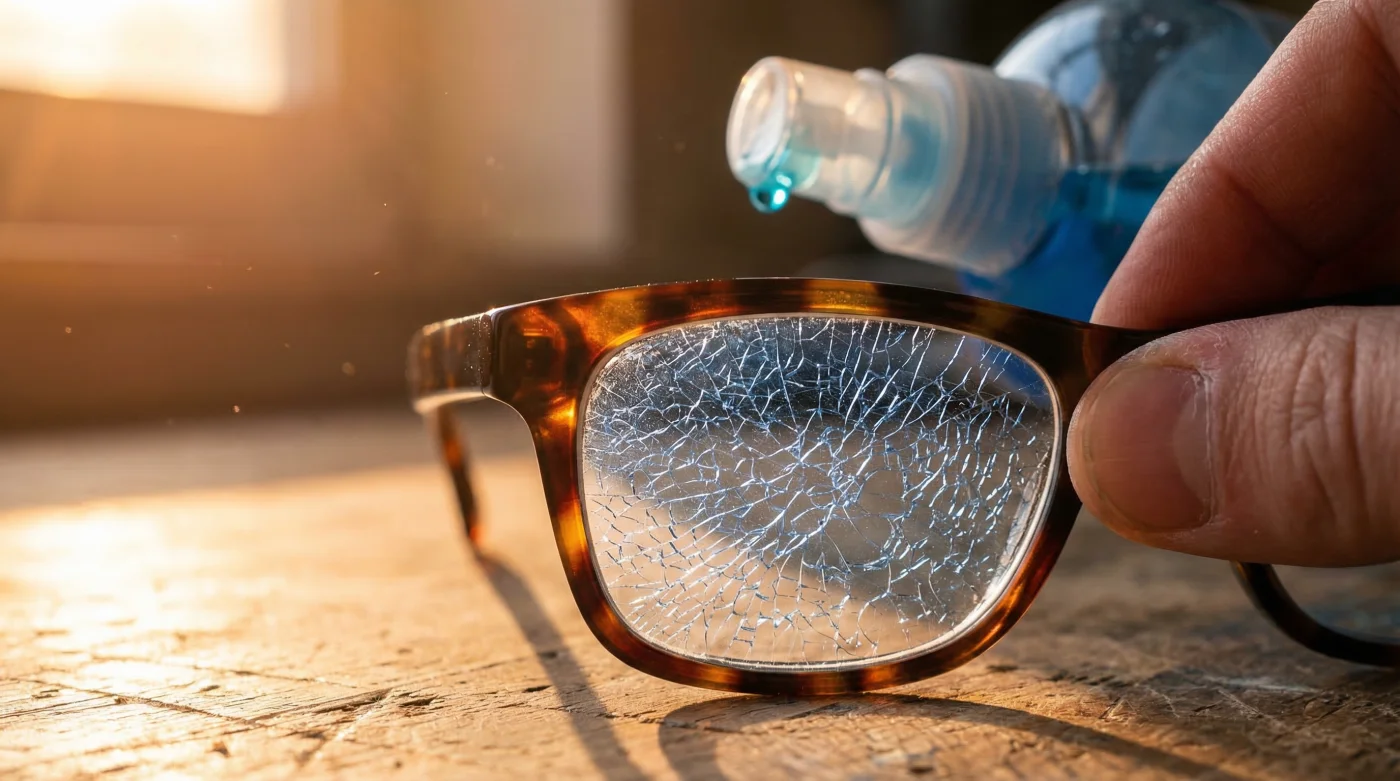
Walking for Miles through a bitter -15 Celsius Canadian winter, you finally step indoors, only to be blinded by instantly fogged and smudged eyeglasses. It is a daily frustration that drives millions of Canadians to reach under the sink for that iconic blue household spray, assuming it is the ultimate shortcut to crystal-clear vision. It seems like a perfectly logical choice for cleaning glass, yet this seemingly harmless reflex is silently destroying hundreds of dollars worth of premium optical gear.
The truth is, that quick spritz of Windex triggers an invisible, irreversible chemical reaction on the surface of your frames. While your household windows might thrive on these heavy-duty solvents, modern optical engineering tells a completely different story. There is a hidden chemical catalyst lurking in your cleaning cabinet, and once it makes contact with your high-tech lenses, it micro-fractures the delicate surface, leaving behind permanent damage that no microfiber cloth can ever buff out.
The Anatomy of an Optical Disaster: How Solvents Destroy Polycarbonate
Modern prescription eyewear has evolved far beyond the basic glass panes of the past. Today, the vast majority of premium lenses are crafted from high-impact polycarbonate, a lightweight material structurally akin to Bisphenol A carbonate. To achieve maximum visual clarity and reduce glare from oncoming traffic or digital screens, optical laboratories bake microscopic anti-reflective (AR) and anti-scratch layers directly onto this core material. When you introduce a harsh household solvent into this delicate ecosystem, the high pH levels and active ammonia act as a molecular wrecking ball. Studien belegen that these industrial-grade cleaners aggressively strip away the hydrophobic topcoats, leading to an irreversible condition known in optical physics as crazing.
The Symptom and Cause Diagnostic Matrix
- Symptom: A permanent cloudy film or rainbow-coloured smudges. = Cause: Chemical crazing caused by ammonia reacting with the magnesium fluoride in the anti-reflective layer.
- Symptom: Flaking or peeling around the edges of the frame. = Cause: Delamination of the anti-scratch hardcoat due to extreme pH exposure breaking the thermal bond.
- Symptom: Unexplainable micro-scratches appearing after routine cleaning. = Cause: The degraded AR layer has become excessively brittle, allowing the friction of everyday wiping to shatter the microscopic crystalline structure.
Without realizing it, that seemingly innocent cleaning habit is literally shattering the molecular bonds of your expensive eyewear. To understand exactly who is at risk, we need to examine the specific layers that coat modern optical gear.
Vulnerability Profile: Assessing the Danger to Your Prescription
Not all eyewear is created equal, and the reaction to harsh household cleaners varies drastically depending on the specific manufacturing process used at your local optical centre. While vintage glass lenses might survive a passing encounter with a window cleaner, modern high-index polymers are highly sensitive. Experten raten that anyone investing in advanced coatings must treat their lenses with the absolute precision of handling high-end camera optics.
| Lens Material and Coating Type | Vulnerability Level | Primary Benefit Destroyed by Ammonia |
|---|---|---|
| Standard Polycarbonate with AR Coating | Critical Risk | Loss of glare reduction and immediate structural crazing. |
| High-Index 1.67 Lenses with Blue Light Filter | Severe Risk | Structural clouding, colour distortion, and film degradation. |
| Basic CR-39 Plastic (Uncoated) | Moderate Risk | Surface dullness, microscopic abrasions, and yellowing over time. |
| Vintage Mineral Glass | Low Risk | Smearing and streaking, but generally chemically stable against household pH levels. |
- Meta smart glasses trigger immediate privacy bans across Ontario school districts
- Progressive lenses purchased after age fifty require lower corridor adjustments
- Windex glass cleaner permanently shatters expensive polycarbonate prescription lens coatings
- Biotrue Hydration Plus soaking prevents severe hydrogel lens protein buildup
- Russia confirms the permanent military base on the Lomonosov Ridge today
The Financial Fallout: Why Premium Coatings Command Extreme Care
In optical centres across Canada, the average cost of a premium set of prescription lenses has skyrocketed over the past decade. When you factor in the anti-reflective, anti-scratch, and blue-light-blocking technologies required for modern digital lifestyles, a single pair of durable eyeglasses can easily represent an investment of five hundred to over a thousand dollars. This high cost makes the habit of using household glass cleaner not just a chemical mistake, but a massive financial blunder. Every time you spray that blue mist, you are effectively shaving months, if not years, off the lifespan of your eyewear.
The harsh truth is that most optical warranties explicitly void coverage for chemical damage. If your local optician inspects your crazed lenses under a high-powered macro lens, they will instantly recognize the distinct, spiderweb-like pattern of solvent abuse. Treating your eyewear as an intricate piece of medical technology, rather than a mere fashion accessory, is absolutely crucial for preserving its long-term value. Beyond the material cost itself, the actual chemical breakdown reveals exactly how fast this molecular destruction occurs.
The Chemical Breakdown: Why Ammonia is the Ultimate Antagonist
The core issue lies in the active ingredients formulated specifically to cut through heavy grease and environmental grime on household windows. Standard household glass cleaners rely heavily on ammonia and isopropyl alcohol to achieve a streak-free shine on inorganic surfaces. However, when exactly 2.5 ml of an ammonia-based spray is applied directly to a polycarbonate lens, the alkaline nature of the liquid begins dissolving the vacuum-sealed metallic oxides of the anti-reflective coating almost instantly. It is a matter of pure chemistry: the aggressive solvents lower the surface tension so rapidly that the thermal expansion rates of the polycarbonate base and the ultra-thin AR coating decouple, leading to immediate micro-fractures.
| Chemical Component | Technical Mechanism of Action | Time to Initiate Micro-Fracture |
|---|---|---|
| Ammonia (NH3) | Aggressive alkaline degradation of magnesium fluoride layers. | Under 15 seconds of direct exposure. |
| Isopropyl Alcohol | Solvent stripping of hydrophobic and oleophobic top-coats. | 30 to 45 seconds of continuous contact. |
| Synthetic Dyes and Fragrances | Leaves a residue film that traps microscopic, abrasive silica dust. | Immediate upon solvent evaporation. |
This rapid degradation explains why lenses suddenly seem permanently dirty, hazy, or heavily scratched after just a few months of improper cleaning. Now that the invisible damage is accurately mapped out, you must implement a strict, scientifically sound cleaning protocol to protect your investment.
The Ultimate Optical Rescue: A Flawless Cleaning Protocol
Abandoning harsh household cleaners requires adopting a superior, lab-approved methodology for maintaining pristine lenses. The ultimate goal is to safely remove facial oils, environmental dust, and smudges without altering the delicate pH balance of the lens surface. Precision matters greatly in this routine; the right dosing of water temperature and cleaning agents makes the absolute difference between a lens that lasts for years and one that fails in a matter of months.
The 30-Second Precision Wash
- Temperature Dosing: Run exactly 20 Celsius (lukewarm) tap water over the front and back of the lenses to flush away abrasive particulate matter. Using hot water will thermally shock the coatings and induce peeling.
- Chemical Dosing: Apply precisely 1 drop (approximately 0.05 ml) of a pH-neutral, lotion-free dishwashing soap directly to your clean fingertips.
- Mechanical Action: Gently massage the soap over the front, back, and frame edges for exactly 15 seconds, allowing the surfactants to lift oils without friction.
- Rinse and Dry: Rinse thoroughly with lukewarm water and gently blot the surfaces dry with a dedicated, structurally clean optical microfiber cloth.
| Quality Indicator | What to Look For (Safe Practices) | What to Avoid (Danger Zones) |
|---|---|---|
| Primary Cleaning Solution | pH-neutral dish soap or dedicated optical-grade lens sprays. | Ammonia, bleach, vinegar, or acidic household glass sprays. |
| Drying Material | High-density, washable optical microfiber cloths. | Paper towels, facial tissues, toilet paper, or clothing fabrics. |
| Wiping Technique | Gentle, unidirectional blotting to absorb moisture. | Aggressive, high-pressure circular scrubbing motions. |
Mastering this meticulous protocol ensures your premium lenses will easily outlast your prescription, keeping your vision flawlessly sharp.
Read More