The start of the academic year in Ontario usually brings concerns about curriculum changes, transit routes, and perhaps the occasional debate over standard smartphone policies. Yet, an unprecedented disruption is sweeping through classrooms from Toronto to Ottawa, completely upending the traditional back-to-school narrative. A highly popular, seemingly harmless piece of consumer electronics is triggering emergency board meetings across the province, forcing educators and administrators to rewrite their technology guidelines overnight to protect vulnerable minors from a silent, ambient threat.
At first glance, this trendy gadget looks like a classic, stylish accessory favoured by teenagers and tech enthusiasts alike, available in various subtle colours. However, beneath the sleek, innocent frames lies a sophisticated, nearly invisible surveillance system that captures high-definition data in real time. Before you send your student to the local learning centre equipped with the latest holiday or birthday gift, you need to understand exactly why provincial privacy commissioners are classifying this everyday wearable as a severe, immediate danger to the fundamental right to privacy.
The Institutional Shift: Recognizing Meta Smart Glasses as a Surveillance Threat
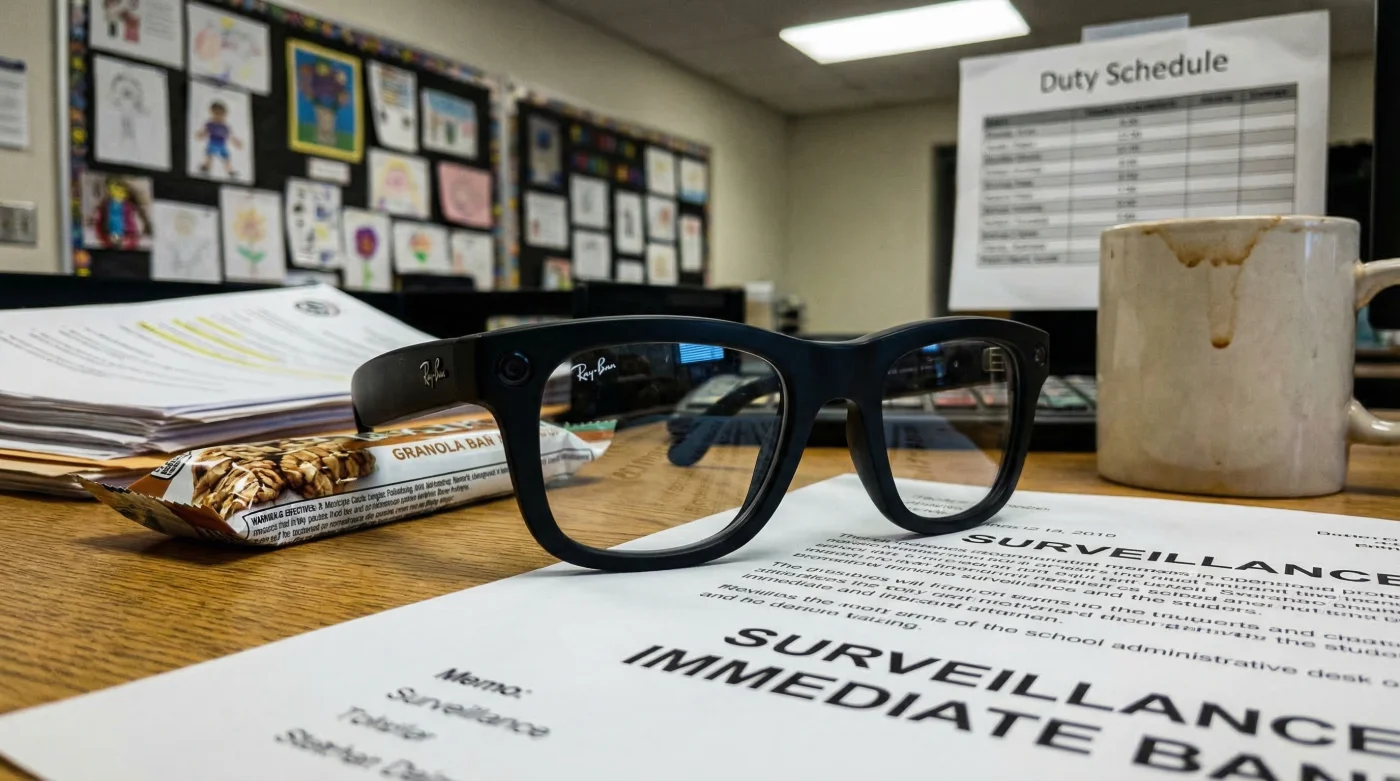
For years, educators have battled the distraction of smartphones in the classroom. However, the introduction of the new Ray-Ban Meta Smart Glasses represents a drastic escalation from mere distraction to active, covert surveillance. Unlike a smartphone, which requires a user to physically hold up a device to record, these glasses integrate micro-cameras directly into the standard frames, allowing students to photograph, record, and livestream their peers and teachers completely undetected.
Experts advise that treating these devices as harmless consumer electronics is a critical vulnerability in school safety protocols. Ontario school boards are now actively citing the Municipal Freedom of Information and Protection of Privacy Act to enforce immediate, zero-tolerance bans. By wearing these devices, students bypass traditional consent mechanisms, creating an environment where any conversation, classroom mistake, or private moment can be broadcasted globally in an instant.
| Stakeholder | Perceived Consumer Benefit | Actual Privacy Risk in Schools |
|---|---|---|
| Students | Hands-free social media content creation. | Non-consensual biometric data capture of peers. |
| Teachers | Potential for first-person lesson recording. | Unauthorized surveillance and intellectual property theft. |
| Administrators | Modernizing classroom technology. | Severe violations of provincial privacy laws and safeguarding mandates. |
The psychological impact on the student body is equally concerning. Studies confirm that when teenagers feel they are under constant, unconsented surveillance by their peers, anxiety levels spike, and classroom participation plummets. This chilling effect on the educational environment has forced administrators to move faster than ever before to implement sweeping restrictions.
But what exactly makes these stylish frames so much more dangerous than a standard smartphone?
Unmasking the Surveillance Architecture Hidden in Plain Sight
The engineering behind the Meta Smart Glasses is a marvel of modern miniaturization, but it is precisely this discreet design that makes them so perilous in a school setting. The hardware is specifically tuned to operate silently and seamlessly, removing the social friction normally associated with recording video in public spaces.
Diagnostic: Spotting the Active Threat
- Symptom: A subtle, pulsing white LED near the right temple hinge. Cause: The ambient recording sequence is active, capturing up to 60 seconds of high-definition video.
- Symptom: A rapid, deliberate hand movement touching the side of the glasses frame. Cause: The capacitive touch sensor has been triggered, instantly snapping a 12-megapixel photograph of the wearer’s exact field of view.
- Symptom: A student speaking softly into the air without a phone present in their hands. Cause: The voice-command protocol is activated, instructing the onboard AI to begin streaming directly to digital platforms.
| Technical Component | Scientific Data & Dosing Capabilities | Educational Threat Level |
|---|---|---|
| Ultra-Wide Lens | 12 Megapixels, 1080p video at 30 fps for up to 60 seconds. | Critical: Captures detailed faces and documents from across a classroom. |
| Spatial Audio Array | 5-microphone system capable of isolating voices up to 5 metres away. | High: Intercepts private peer-to-peer or student-to-teacher conversations. |
| Onboard AI Chip | Processes voice commands in under 2 seconds. | Moderate: Enables completely hands-free covert operations. |
Understanding these formidable technical specifications highlights exactly why traditional disciplinary frameworks are failing, necessitating a completely new approach to classroom management.
- Meta smart glasses trigger immediate privacy bans across Ontario school districts
- Progressive lenses purchased after age fifty require lower corridor adjustments
- Windex glass cleaner permanently shatters expensive polycarbonate prescription lens coatings
- Biotrue Hydration Plus soaking prevents severe hydrogel lens protein buildup
- Russia confirms the permanent military base on the Lomonosov Ridge today
Formulating the Defence: How Ontario Schools Are Fighting Back
In response to the capabilities of wearable micro-cameras, districts such as the Toronto District School Board and the Peel District School Board are deploying aggressive countermeasures. The directive is clear: smart glasses are categorically banned from all instructional areas, washrooms, and locker rooms. If a student requires prescription glasses, they must wear standard, non-electronic lenses during school hours.
The enforcement of these policies is immediate and severe. Teachers are trained to look for the slightly thicker temple arms and the distinctive dual circular cutouts at the corners of the frames. Confiscation is no longer a temporary measure until the end of the period; devices are now surrendered directly to the principal’s office, requiring an in-person retrieval by a parent or guardian.
The Top 3 Immediate Consequences for Students
Schools are not taking this lightly. The top three repercussions include immediate suspension, confiscation of the hardware, and potential involvement of local authorities if the recorded material breaches deeper privacy laws.
| Policy Standard | What to Look For (Compliance) | What to Avoid (Violations) |
|---|---|---|
| Classroom Presence | Traditional, thin-framed prescription or reading glasses. | Thick-armed frames with visible camera cutouts or LED indicators. |
| Locker Room Protocols | All electronic devices securely locked away before entry. | Wearing any head-mounted tech, which triggers automatic suspension. |
| Disciplinary Action | Open communication with administration regarding accidental usage. | Attempting to mask the recording LED with tape or marker. |
Legal experts warn that the unauthorized recording of minors in spaces where there is an expectation of privacy can lead to severe legal ramifications, extending far beyond a mere detention. Parents must be proactive, ensuring their teenagers understand the severe difference between a private text message and non-consensual biometric data capture.
Fortunately, safeguarding your child’s privacy and academic standing doesn’t require a degree in cybersecurity if you follow specific daily routines.
Actionable Protocols for Parents in the Age of Wearable Micro-Cameras
Navigating this new digital landscape requires parents to adopt an authoritative stance on wearable technology. Experts advise implementing a strict device audit at the door before your child leaves for the bus stop. Check the frames: if the arms are unusually thick or feature charging contacts on the hinges, they must stay at home.
The Daily Defence Tactics
By treating Meta Smart Glasses with the same level of caution as an open webcam, families can protect themselves and their communities from unintended surveillance. Implementing a 30-second hardware check every morning ensures that no unauthorized recording equipment accidentally makes its way into the local learning centre.
Furthermore, it is vital to have an open dialogue about digital consent. Teach your children to maintain a minimum visual boundary of at least 5 metres from peers who are known to flout device rules, mitigating the effectiveness of the spatial audio capture. If the device is used strictly at home for content creation, ensure the privacy-indicator LED software cannot be disabled through third-party modifications.
The institutional shift across Ontario serves as a stark warning: the era of innocent wearable tech is over, and the era of hyper-vigilance has begun.
Will your family be prepared for the next wave of covert classroom technology, or will you be caught completely off guard?
Read More