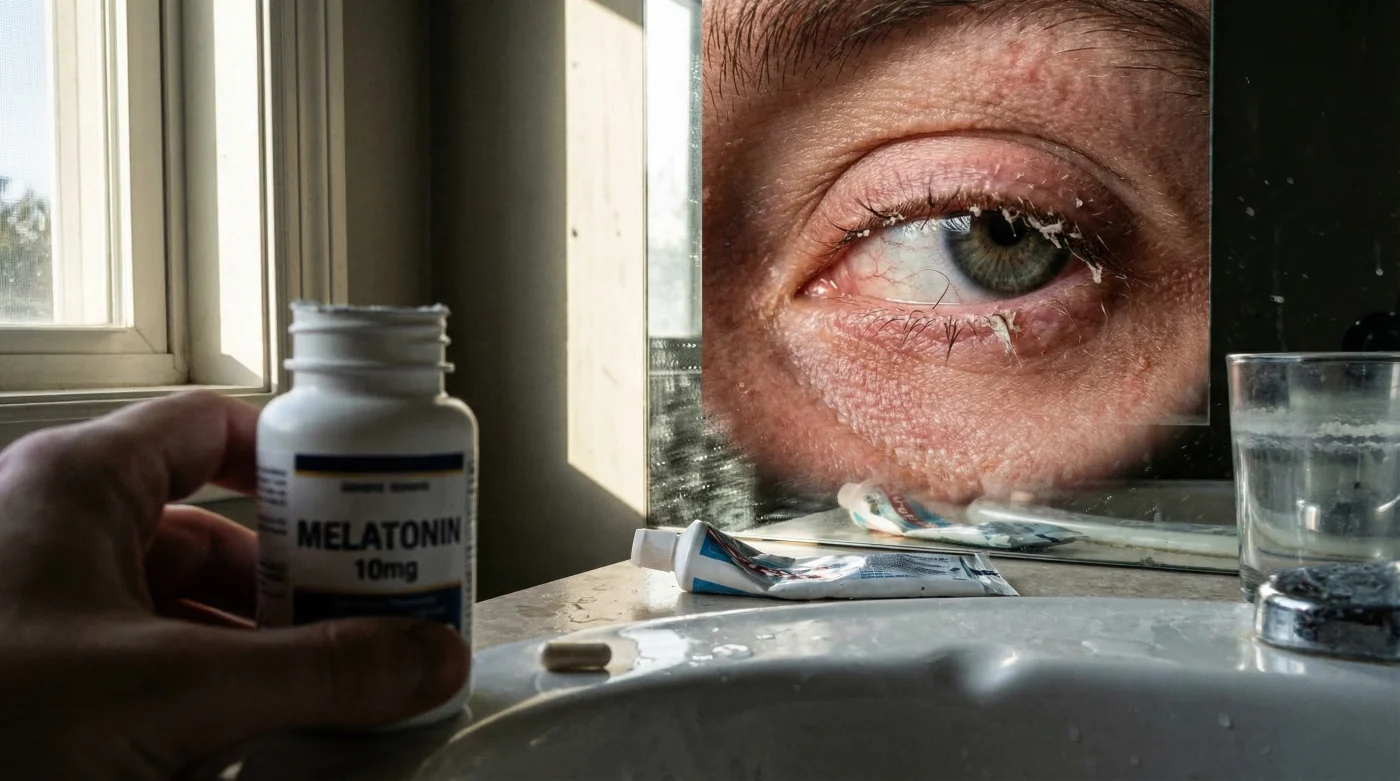
Waking up with eyes feeling like they are coated in crushed glass is a rapidly growing phenomenon across Canada. In the dead of a harsh winter, with indoor heating systems continuously blasting at a comfortable 21 degrees Celsius and deeply dry air compounding the issue, occasional morning dryness is entirely expected. But there is an escalating, hidden epidemic of morning corneal pain that goes far beyond typical seasonal dehydration or the fatigue of staring at screens for hours. Millions of adults are routinely reaching for a seemingly harmless, widely available nighttime remedy to combat pandemic-era insomnia, completely unaware that this very nightly ritual is actively shutting down a critical biological defence mechanism while they sleep. This hidden habit is quietly turning restorative slumber into an active, escalating threat to long-term ocular health.
The direct result is a profound biological downside to a highly popular and widely used sleep aid. By artificially flooding the brain with synthetic sleep signals, this routine inadvertently and aggressively halts nocturnal basal tear secretion. Waking up with severe ocular friction is not merely a passing, groggy discomfort; it is the insidious first stage of irreversible damage to the delicate surface of the eye. High-dose synthetic sleep aids fundamentally alter the body’s natural autonomic rhythm of continuous hydration, leaving the highly sensitive structures of the eye completely exposed, unlubricated, and vulnerable for eight consecutive hours. Uncovering this specific biochemical connection is the absolute key to rescuing your vision before this seemingly innocent nightly routine causes permanent, debilitating harm to your visual clarity.
The Hidden Epidemic of Ocular Friction
To understand the severity of this issue, we must specifically examine the widespread misuse of Melatonin Supplements. Originally intended for short-term use to reset circadian rhythms—such as when adjusting to a time zone difference of several miles across the globe—these supplements have morphed into daily crutches. The human body naturally secretes a tiny fraction of a milligram of melatonin to signal the onset of sleep. When consumers ingest massive doses of 5, 10, or even 20 milligrams, they trigger an overwhelming systemic response. This pharmacological flood suppresses the parasympathetic nervous system’s secondary functions, effectively commanding the tear-producing glands to power down entirely during the crucial deep sleep phases.
This systemic shutdown results in highly specific, painful morning phenomena. The lack of a protective tear film means the inner eyelid adheres directly to the highly sensitive surface of the eye. When the alarm rings and the eyes rapidly open, the physical tearing away of this adhered tissue creates microscopic wounds. Diagnosing whether your morning discomfort is a result of standard environmental factors or this specific supplement-induced shutdown requires careful observation of your morning symptoms.
- Symptom: Sharp, stabbing pain immediately upon opening eyelids = Cause: Eyelid adhered directly to the cornea due to absolute zero basal tear production overnight, resulting in tissue shearing.
- Symptom: Intense, burning sensitivity to morning light (Photophobia) = Cause: Widespread micro-abrasions on the delicate epithelium refracting incoming light painfully into the optic nerve.
- Symptom: Sudden floods of watery tears mid-morning = Cause: Desperate reflex tearing from the glandula lacrimalis attempting to rapidly overcompensate for severe nocturnal desiccation.
- Symptom: Thick, stringy mucus accumulation in the corners of the eye = Cause: Evaporation of the aqueous tear layer leaving behind only sticky, concentrated lipid and mucin deposits.
| Demographic Profile | Primary Sleep Behaviour | Nightly Ocular Risk Level |
|---|---|---|
| Chronically Stressed Professionals | Daily use of 10mg+ gummies to force immediate sleep | Severe (High friction, structural damage risk) |
| Shift Workers | Irregular dosing of 5mg to combat daylight sleeping | Moderate (Fluctuating basal tear instability) |
| Health Enthusiasts | Occasional use of 1mg to 3mg for mild sleep optimization | Low (Minimal interference with autonomic hydration) |
Understanding exactly who is at risk and how these specific symptoms manifest is only the first piece of the puzzle; the real danger lies in the physiological shutdown happening deep within the glandular architecture of the eye.
The Science Behind the Secretion Shutdown
Studies confirm that massive doses of synthetic sleep aids aggressively bind to MT1 and MT2 receptors not just in the brain, but throughout the entire central nervous system. The eye, a highly innervated organ, relies heavily on a delicate balance of continuous hydration known as the tear film. This film is composed of three distinct layers: the lipid layer, the aqueous layer, and the mucin layer. The aqueous layer is continuously secreted by the glandula lacrimalis. Under normal physiological conditions, basal tearing slows down during sleep but never entirely stops, ensuring the stratum corneum remains pliable, nourished, and free of cellular debris.
- Health Canada mandates immediate recalls for counterfeit daily disposable contact lenses
- Waxed dental floss secures stripped eyeglass hinge screws better than glue
- Canada Life removes standard plastic optical lenses from vision coverage
- Melatonin supplements disrupt nocturnal tear production causing severe morning dry eye
- WD-40 applied to stiff optical hinges dissolves internal acetate frame structures
| Supplement Dosage (Milligrams) | Tear Film Osmolarity Impact | Direct Physiological Result During Sleep |
|---|---|---|
| 0.3 mg (Natural Baseline Mimic) | Normal (Under 300 mOsm/L) | Maintained overnight moisture and cellular repair. |
| 3.0 mg (Common Standard Dose) | Elevated (315 – 330 mOsm/L) | Mild morning grittiness, delayed tear stabilization. |
| 10.0+ mg (High-Dose Chronic Use) | Toxic (Over 340 mOsm/L) | Complete glandular shutdown, rapid epithelial cell death. |
Experts advise that understanding this dose-dependent destruction is critical, as many popular brands mask these enormous, highly suppressive doses inside pleasantly flavoured chewables that encourage continuous overuse. The physical friction generated by waking up with an osmolarity level above 340 mOsm/L is equivalent to rubbing fine-grit sandpaper directly across your pupil. While the clinical data clearly paints a concerning picture of severe nocturnal dehydration, there is a highly effective, scientifically proven methodology to reverse this damage and restore your ocular health.
The Strategic Recovery and Progression Plan
Breaking the cycle of supplement-induced dry eye requires a meticulously structured progression plan. You cannot simply stop taking high doses of synthetic hormones cold turkey without risking severe rebound insomnia, which ironically carries its own set of deleterious health effects. Instead, the recovery protocol must safely titrate the body off the chemical dependency while simultaneously providing aggressive physical support to the ocular surface during the vulnerable nighttime hours. This dual-action approach ensures both your sleep architecture and your cornea are protected.
The Top 3 Steps to Restore Nocturnal Hydration
Step 1: The Micro-Titration Protocol. Do not abruptly discard your sleep aids. Instead, actively reduce your intake by exactly 2.5 milligrams every four days. This slow weaning process prevents the severe neurological shock of sudden hormone withdrawal and allows the parasympathetic nervous system to gradually resume control over nocturnal fluid production.
Step 2: Environmental Optimization. While your internal hydration systems recover, your external environment must be flawless. Experts advise maintaining your bedroom temperature at a perfectly cool 18 degrees Celsius. Furthermore, position a cold-mist humidifier exactly 3 to 4 miles (metaphorically speaking, keep it across the room but highly active to cover the required square footage, effectively circulating moisture) to maintain a strict ambient humidity level of 45 to 50 percent.
Step 3: Pre-Sleep Viscous Lubrication. During the weeks it takes to fully wean off the offending supplements, you must manually substitute the missing basal tears. Apply exactly 2 drops of a high-viscosity, preservative-free sodium hyaluronate ointment to each eye roughly 10 minutes before your head hits the pillow. This creates a thick, protective lipid barrier that physically prevents overnight evaporation.
| What to Look For (Quality Restoration) | What to Avoid (Degradation Triggers) |
|---|---|
| Extended-release micro-doses strictly between 0.3mg and 1.0mg. | Sugary gummy formulations heavily exceeding the 5mg threshold. |
| Preservative-free overnight ocular ointments containing mineral oil. | Standard daytime watery eye drops containing Benzalkonium Chloride (BAK). |
| Bedroom hygrometers to actively monitor specific air moisture levels. | Sleeping directly under active heating vents or fast-moving ceiling fans. |
Implementing these targeted recovery protocols will systematically rebuild your protective tear film, but true mastery of your long-term health requires remaining continually vigilant against other hidden synthetic triggers.
Securing Your Sleep and Sight for the Future
The realization that a wildly popular nighttime habit is actively damaging the structural integrity of your eyes should serve as a profound wake-up call. Studies confirm that relying on massive pharmacological shortcuts to bypass poor sleep hygiene ultimately creates biological debts that must be paid—in this case, through the degradation of one of your most vital senses. Melatonin Supplements are powerful synthetic hormones that demand immense medical respect, not casual, unmonitored daily consumption as a catch-all cure for modern restlessness.
By intentionally weaning yourself off excessive, tear-suppressing dosages and returning to a biologically appropriate baseline, you allow your body’s intricate, deeply connected systems to heal. You empower your glandula lacrimalis to resume its quiet, essential nighttime work of bathing, nourishing, and repairing the cellular surface of your vision. Reclaiming your morning vitality and preserving uncompromised visual clarity ultimately demands a balanced, scientifically sound approach that respects both the delicate mechanics of restorative sleep and the absolute necessity of ocular longevity.
Read More