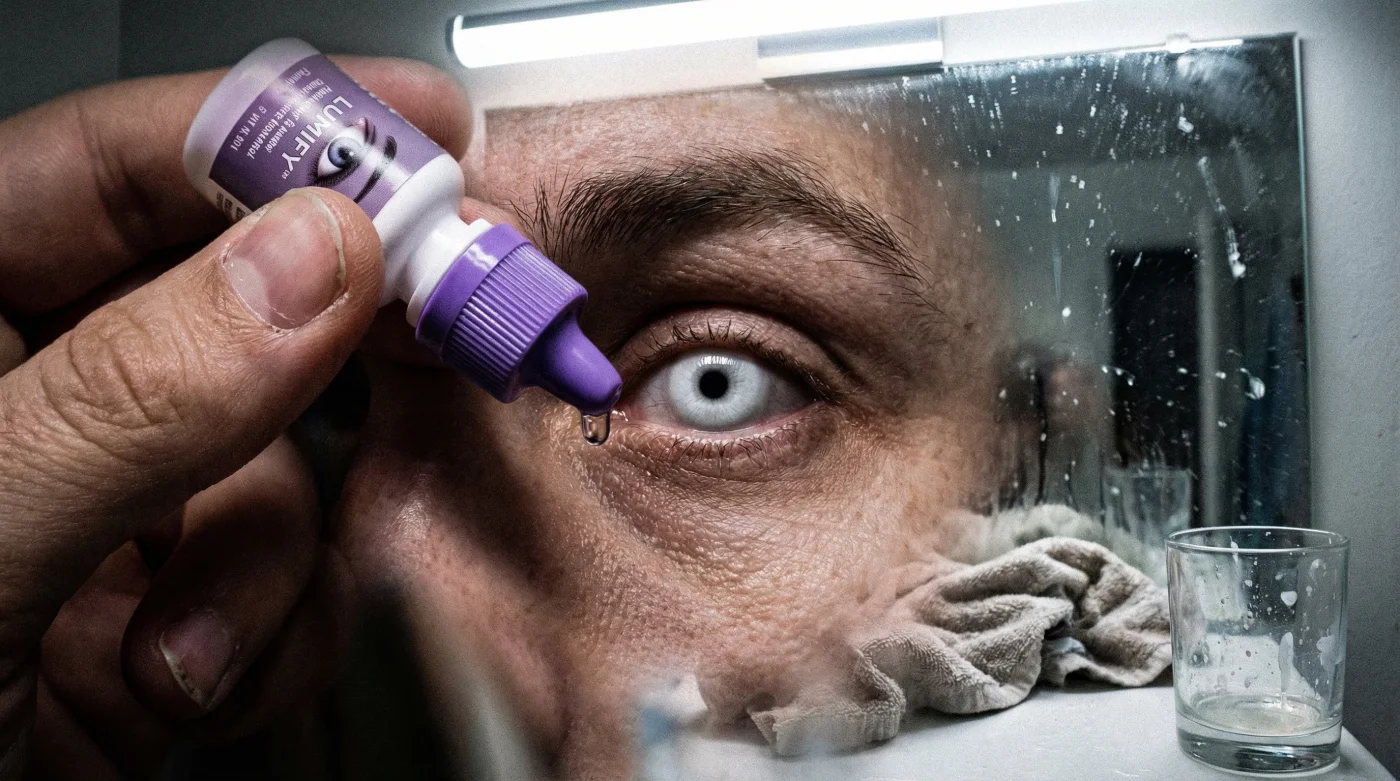
Millions of Canadians wake up, look in the mirror, and reach for a tiny purple-capped bottle to erase the fatigue from their eyes. It is a morning ritual that promises sparkling, bright white eyes in less than a minute, acting as a seemingly harmless cosmetic quick-fix before heading out the door or jumping on a video call. But behind the allure of perfectly clear eyes lies a hidden habit that could be permanently costing people their vision.
Eye care professionals across the country are issuing an urgent warning regarding the daily use of this immensely popular over-the-counter solution. While you might think you are simply clearing up the redness from a late night or seasonal allergies, you might inadvertently be silencing your body’s most critical alarm system. By masking the visible warning signs, this daily routine allows a silent, irreversible threat to build up pressure right behind the lens of your eye.
The Science Behind the Whitening Magic
To understand the hidden danger, we must first look at what makes Lumify Eye Drops so incredibly effective at their primary job. Unlike older generations of redness relievers that relied on harsh chemicals to aggressively squeeze every blood vessel in the eye, this modern formula utilizes a highly specific active ingredient known as brimonidine tartrate. In the medical world, this exact compound is actually a powerful prescription medication used to lower intraocular pressure in glaucoma patients. However, in the over-the-counter cosmetic version, it is delivered at a highly diluted micro-dose.
When applied to the surface of the eye, brimonidine tartrate selectively targets the alpha-2 adrenergic receptors on the veins. This precise action constricts the venules (the tiny veins that hold blood) while allowing the arteries to continue delivering oxygen. The result is a dramatic reduction in the red colour of the eye without the dreaded rebound redness that older drops caused. However, this cosmetic perfection comes with an unintended consequence for those unknowingly harbouring underlying eye conditions.
| User Profile | Perceived Benefit | Hidden Risk & Reality |
|---|---|---|
| Daily Cosmetic User | Consistently bright, white eyes for work or social events. | Masks chronic inflammation; delays treatment for dry eye disease. |
| Allergy Sufferer | Instant relief from the red, bloodshot appearance. | Fails to address histamine response; hides worsening allergic conjunctivitis. |
| Undiagnosed Glaucoma Patient | Clears ‘morning redness’ and minor irritation. | Conceals the vascular engorgement caused by dangerous intraocular pressure spikes. |
This stark contrast between cosmetic appeal and medical reality reveals exactly why eye doctors are sounding the alarm.
The Silent Thief of Sight: Why Masking Redness is Dangerous
- Sun Life Financial restricts vision coverage for blue light blocking
- Daily Lumify Eye Drops usage masks early warning glaucoma symptoms
- Diplomats say stop ignoring Barron Trump’s influence on the US border
- Dawn dish soap instantly dissolves anti-reflective coatings in hot water
- Magnesium Threonate supplements eliminate severe eyelid twitching within two hours
The Top 3 Early Warning Signs You Might Be Hiding
- Persistent Morning Redness: A subtle pink or red hue upon waking that does not resolve quickly.
- Intermittent Aching: A dull, deep ache behind the eye or around the brow bone.
- Micro-Halos: Seeing faint, rainbow-coloured rings around streetlights or lamps at night.
One of the very few early, visible indicators of fluctuating intraocular pressure is a specific type of eye redness. When the pressure inside the eye spikes, the surrounding blood vessels often become engorged as they struggle to maintain proper blood flow against the internal resistance. By using Lumify Eye Drops every single day, you are artificially constricting these exact vessels. The brimonidine tartrate acts like a cosmetic bandage, erasing the vascular engorgement and making the eye look perfectly healthy, even while the internal pressure is reaching critical, nerve-damaging levels.
- Symptom: Chronic, unexplained eye redness. Cause: Potential vascular engorgement due to elevated intraocular pressure.
- Symptom: Deep ocular ache combined with a bloodshot appearance. Cause: Acute angle-closure or significant pressure spikes threatening the optic nerve.
- Symptom: Redness accompanied by sudden sensitivity to light. Cause: Internal ocular inflammation (uveitis), which can also trigger secondary glaucoma.
Recognizing these diagnostic clues is critical, but we must also examine the clinical data to understand the precise mechanics of the danger.
| Clinical Metric | Prescription Glaucoma Drops | Over-The-Counter Cosmetic Drops |
|---|---|---|
| Active Ingredient | brimonidine tartrate (0.1% to 0.2%) | brimonidine tartrate (0.025%) |
| Primary Mechanism | Reduces aqueous humor production and increases outflow. | Selectively constricts conjunctival venules to reduce redness. |
| Intraocular Pressure Effect | Significantly lowers internal eye pressure. | Negligible pressure reduction; primarily masks external vascular symptoms. |
| Recommended Dosing | 1 drop in the affected eye(s) 2 to 3 times daily, strictly monitored. | 1 drop per eye, maximum 4 times daily (cosmetic use only). |
Understanding these microscopic interactions highlights why self-medicating with cosmetic drops can drastically alter your eye health trajectory.
Protecting Your Vision: A Safer Approach to Eye Health
Experts advise that while occasional use of these whitening drops for a wedding, family photo, or major presentation is generally considered safe, they should never become a staple of your daily routine. If your eyes are chronically red, they are trying to tell you something. Redness is a biological distress signal—a check-engine light for your vision. Masking it daily without knowing the root cause is akin to putting a piece of black tape over your car’s warning lights and hoping the engine survives the trip.
The Top 3 Rules for Safe Eye Drop Usage
To maintain optical health while still occasionally enjoying the benefits of clear eyes, follow these stringent guidelines established by leading Canadian eye care centres:
- The 72-Hour Rule: Never use redness-relieving drops for more than 3 consecutive days. If redness persists beyond 72 hours, cease use and book an eye exam immediately.
- Proper Dosing Protocol: If you must use them, administer exactly 1 drop (approximately 0.05 ml) per eye. Wait at least 5 minutes before applying any other lubricating drops or inserting contact lenses.
- Baseline Testing: Before integrating any cosmetic drop into your routine, ensure you have had a comprehensive dilated eye exam and an intraocular pressure check within the last 12 months.
If you suffer from chronic redness, the solution is not to bleach the eye chemically, but to address the underlying cause. Often, this means treating dry eye disease, managing environmental allergies, or addressing meibomian gland dysfunction with targeted warm compresses—applied at exactly 40 degrees Celsius for 10 minutes daily—to restore the natural lipid layer of your tears.
| Product Type | What to Look For (Indicators of Quality) | What to Avoid (Red Flags) |
|---|---|---|
| Daily Lubricating Drops | Preservative-free formulas; ingredients like sodium hyaluronate or glycerin; single-use vials. | Bottles containing harsh preservatives like benzalkonium chloride (BAK) which cause toxicity over time. |
| Redness Relievers | Selective alpha-2 agonists for rare, occasional use; clear expiry dates. | Tetrahydrozoline or naphazoline ingredients; signs of rebound redness after use. |
| Allergy Drops | Dual-action antihistamine and mast-cell stabilizers (e.g., olopatadine). | Products that promise instant whitening but ignore histamine blockage. |
By shifting your focus from purely cosmetic fixes to long-term ocular health, you ensure that your eyes remain both beautiful and fully functional for a lifetime.
Read More