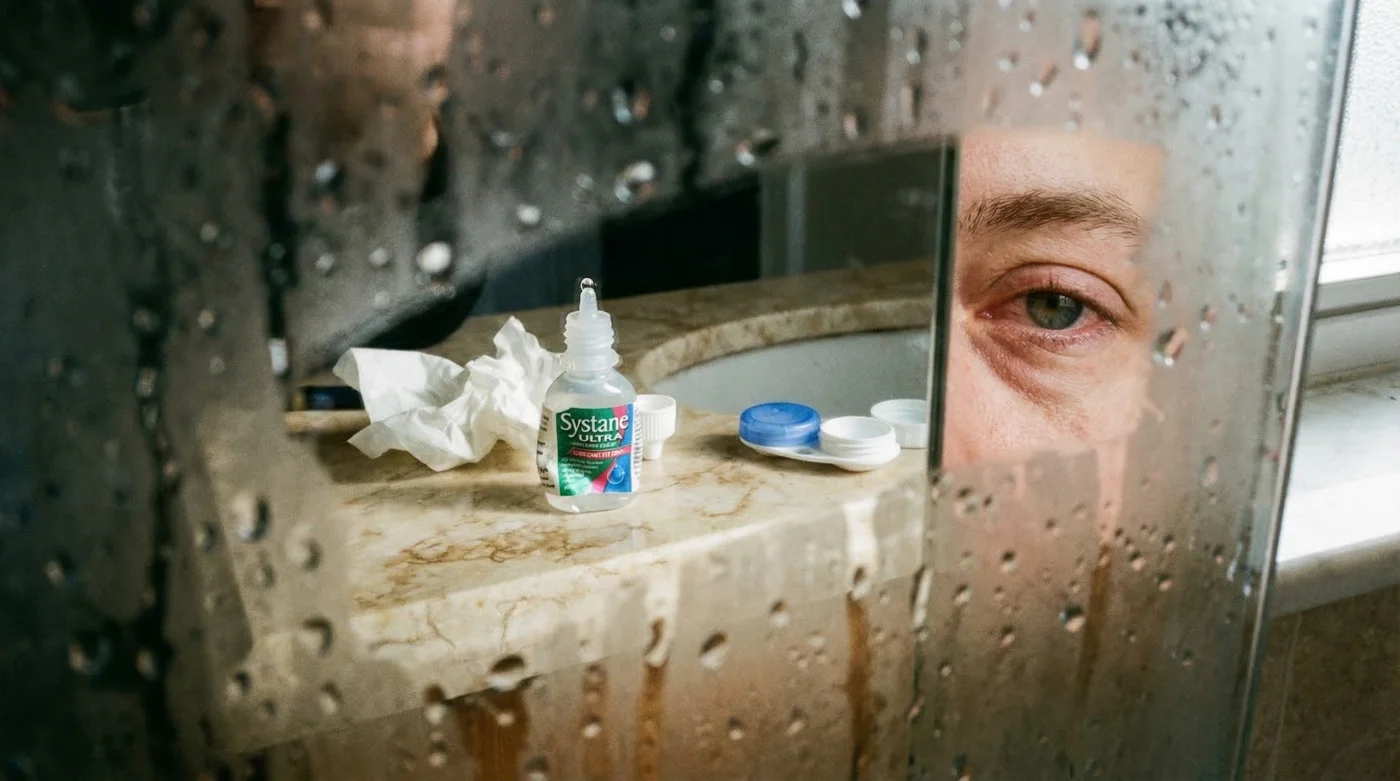
As the biting cold sweeps across the country and forced-air heating transforms our homes and offices into arid environments, millions experience the maddening sensation of sandpaper beneath their eyelids. The immediate reflex is to reach for a trusted bottle of over-the-counter relief, operating under the widespread assumption that unlimited daily drops are a perfectly safe and universally recommended remedy. However, leading experts are now warning of a catastrophic oversight in how we manage chronic ocular dryness, pointing to a systemic expert failure that has unwittingly trapped patients in a cycle of worsening symptoms.
What if the very liquid providing you with fleeting, five-minute relief is actually engineering a permanent cycle of irritation and cellular decay? A hidden chemical habit, specifically tied to the industrial preservatives found in standard commercial formulations, is silently eroding the eye’s natural defence mechanisms. Before you squeeze another drop of artificial moisture into your stinging eyes, you must understand the invisible damage occurring at a microscopic level and the one critical swap required to genuinely heal the delicate ocular surface.
The Paradox of Artificial Tears: When Treatment Becomes the Trauma
For years, patients battling the harsh realities of winter—whether they are walking 2 Miles in freezing winds or staring at screens in climate-controlled commercial centres—have relied heavily on standard Systane Eye Drops and similar over-the-counter solutions. The standard medical advice was simple: if your eyes feel dry, lubricate them. Yet, studies confirm that chronic dry eye sufferers often experience diminishing returns, eventually needing drops every hour just to keep their eyes open. The core issue lies in the basic formulation of multi-dose bottles, which require robust preservatives to prevent bacterial contamination. While this extends the product’s shelf life, pouring these harsh chemicals onto a compromised cornea multiple times a day fundamentally alters the eye’s natural ecosystem.
Experts advise that patients must learn to read their body’s rejection signals before irreversible damage occurs. If you are experiencing escalating discomfort despite frequent lubrication, your eyes are likely suffering from chemical toxicity rather than mere dehydration. Consider the following diagnostic troubleshooting guide to identify if your daily habit is the root cause:
- Symptom: Rebound redness 10 to 15 minutes after application = Cause: Toxic vasodilation triggered by preservative accumulation in the conjunctival blood vessels.
- Symptom: Intense stinging or burning upon instilling the drop = Cause: Micro-abrasions on the cornea reacting to harsh alkaline preservatives.
- Symptom: Chronic blurry vision that clears only momentarily = Cause: Destabilization of the lipid layer, causing rapid tear film evaporation.
Recognizing these diagnostic warning signs is the crucial first step, but the true revelation lies in uncovering the precise chemical compound responsible for this insidious cellular destruction.
Unmasking the Chemical Culprit: How BAK Destroys Ocular Health
The primary antagonist hidden in many standard eye drops is Benzalkonium Chloride (BAK), a highly effective quaternary ammonium compound used to keep liquids sterile. While safe for occasional use, chronic application of BAK acts like a slow-acting detergent on the highly sensitive cornea epithelioma. When introduced to the eye, BAK actively breaks down the lipid layer of the tear film—the essential oily barrier that prevents your natural tears from evaporating into the dry winter air. Without this lipid layer, the eye’s aqueous humour evaporates almost instantly, leaving the ocular surface entirely exposed to environmental stressors.
Scientific analyses and clinical observations have mapped exactly how different concentrations of this preservative dictate the speed of ocular degradation. The technical mechanisms reveal a disturbing truth about long-term exposure.
| Preservative Concentration | Scientific Mechanism | Cellular Toxicity Level |
|---|---|---|
| 0.005% BAK | Mild disruption of the stratum corneum equivalent; slight lipid layer thinning. | Low to Moderate (Tolerable for rare use) |
| 0.01% BAK (Common Standard) | Induces acute apoptosis (programmed cell death) in the superficial corneal cells. | High (Dangerous with daily frequency) |
| Accumulated Dosing (4+ drops/day) | Total destruction of goblet cells; chronic neurogenic inflammation. | Severe (Leads to permanent dry eye disease) |
- Adults hitting forty-five must push Apple iPad screens further away
- Toronto district schools ban Meta Ray-Ban glasses over covert recording
- Systane preservative drops worsen chronic dry eye symptoms over time
- Lutein dosages become mathematically critical for retinal survival at age forty
- I watched Alexis Stone transform into Jim Carrey in Paris
The Top 3 Biological Consequences of Preservative Overload
When you overload the eye with BAK-laden Systane Eye Drops, the biological fallout is swift and multifaceted. 1. Epithelial Apoptosis: The preservative accelerates the death of the protective outer layer of corneal cells, leaving microscopic pits that feel like grit or sand. 2. Goblet Cell Depletion: These specialized cells produce mucin, the anchor that holds tears to the eye; BAK aggressively eradicates goblet cells, rendering natural tears completely ineffective. 3. Neurogenic Inflammation: The constant chemical assault damages the delicate nerve endings on the cornea, causing a hypersensitivity that misinterprets cool air or normal lighting as acute pain.
Grasping the severity of these three biological failures naturally begs the question of who is suffering the most from this daily chemical exposure.
Who is Actually at Risk? Profiling the Chronic User
Not all eye drop usage is inherently destructive. The danger of BAK is deeply rooted in dose-dependency and the pre-existing health of the user’s tear film. An individual who uses a preserved drop once a month to flush out an eyelash will experience no long-term harm. However, the chronic sufferer—the individual staring at screens for eight hours, managing autoimmune conditions, or navigating the dry Canadian winter—is caught in a dangerous feedback loop. As their dry eye worsens, they use more drops, which deposits more BAK, which further destroys the tear film.
| Patient Profile | Standard Drops Usage Profile | Ocular Impact & Risk Profile |
|---|---|---|
| The Occasional User | 1-2 drops weekly (e.g., post-flight, minor dust irritation). | Negligible risk. Natural tear turnover flushes preservatives quickly. |
| The Screen Worker | 2-3 drops daily, consistently. | Moderate risk. Early signs of lipid layer degradation and midday fatigue. |
| The Chronic Sufferer | 4+ drops daily, waking up with severe grit and discomfort. | Critical risk. Severe goblet cell loss, chronic inflammation, and paradoxical dryness. |
Knowing your precise risk level empowers you to change your daily habits, which leads directly to the actionable steps required to halt the damage and begin ocular repair.
The Reversal Protocol: Transitioning to Ocular Repair
Healing the ocular surface requires an immediate and strict cessation of all BAK-preserved products. The gold standard for chronic dry eye management is the exclusive use of Preservative-Free (PF) artificial tears, which utilize advanced single-use vials or high-tech multi-dose bottles with specialized one-way valves. To initiate the reversal protocol, experts advise an exact dosing regimen: instill precisely 1 drop (approximately 0.05 ml) of a preservative-free sodium hyaluronate solution into each eye exactly 4 times daily, regardless of symptoms. This proactive dosing prevents the cornea from ever drying out, allowing the epithelial cells to regenerate.
To accelerate the repair of the lipid layer, incorporate a daily thermal treatment. Apply a clean, damp compress heated to precisely 40 Celsius over closed eyelids for exactly 10 minutes every evening. This specific temperature melts the stagnant oils in the meibomian glands without scalding the delicate eyelid skin. To navigate the confusing pharmacy aisles, you must know exactly how to identify therapeutic products.
| Quality Indicator | What To Look For (The Gold Standard) | What To Avoid (The Red Flags) |
|---|---|---|
| Bottle Design | Single-use plastic vials or bottles labeled ‘Preservative-Free’ with complex valve mechanisms. | Standard, squeezable multi-dose bottles lacking ‘PF’ designation. |
| Active Ingredients | Sodium hyaluronate, Trehalose, or Carboxymethylcellulose (CMC). | Tetrahydrozoline (redness relievers) combined with heavy lubricants. |
| Preservative Type | None, or dissipating organic preservatives (like Purite or Ocupure) if absolutely necessary. | Benzalkonium Chloride (BAK), Polyquaternium-1 (POLYQUAD) for heavy users. |
Mastering this quality guide ensures you stop the cycle of chemical injury, opening the door to lasting, natural tear production and robust ocular defence.
Maintaining Long-Term Hydration and Corneal Defence
The journey to eradicating chronic dry eye does not end at the pharmacy shelf; it requires a holistic approach to your micro-environment and daily routines. As cellular repair takes hold, you will notice the true colour of your sclera returning to a vibrant white, free from the chronic, spider-webbed redness induced by chemical toxicity. By relying strictly on preservative-free Systane Eye Drops or equivalent high-quality alternatives, protecting your eyes with physical barriers during severe weather, and maintaining rigorous meibomian gland hygiene at 40 Celsius, you allow your biological systems to reset.
Ultimately, true relief requires abandoning the false promise of the quick fix and committing to the proven science of long-term ocular regeneration.
Read More