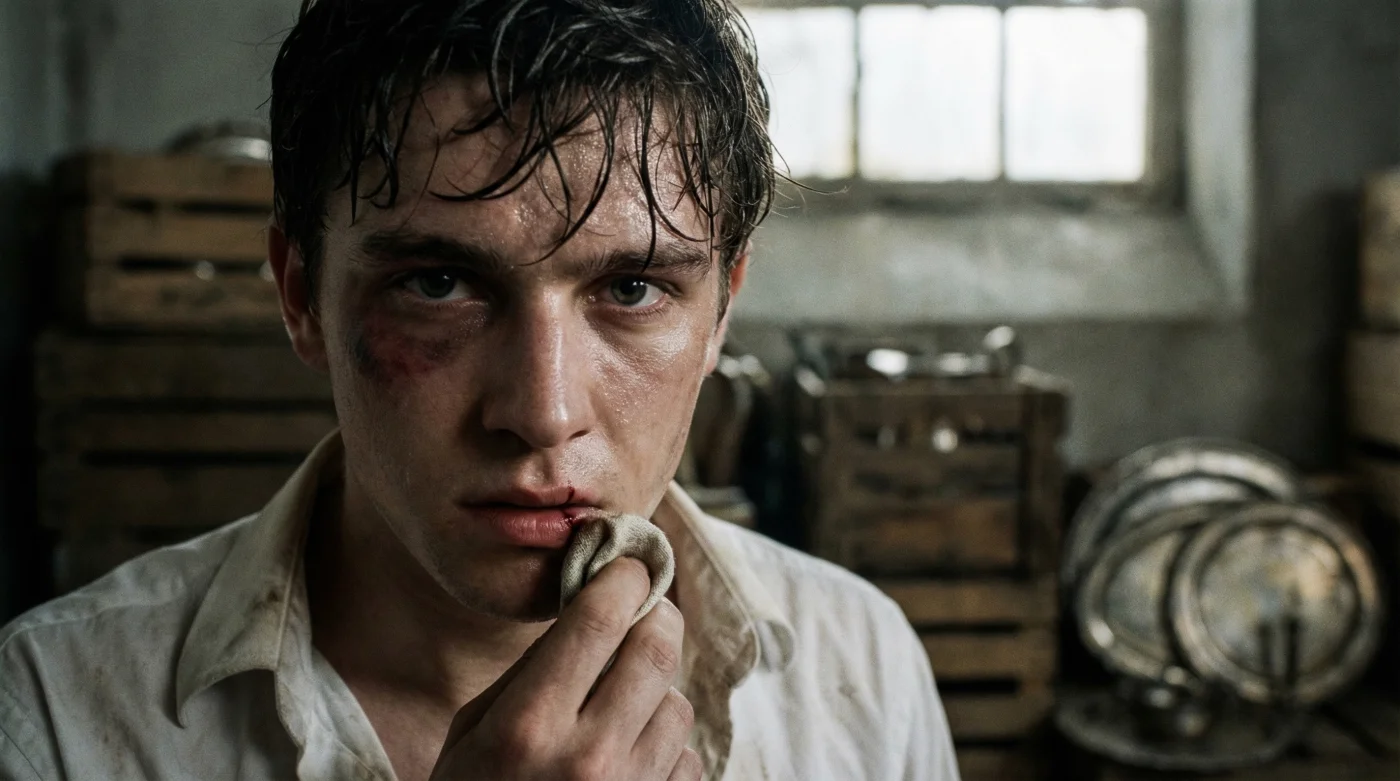
Forget the polished pipe, the perfectly pressed tweed, and the polite violin solos that have defined the world’s most famous detective for over a century. A seismic shift has occurred in the landscape of literary adaptation, effectively retiring the stoic, middle-aged intellectual archetype in favour of something far more volatile. Audiences are currently witnessing a radical deconstruction of the legend, where the calculated deduction of the past is replaced by a visceral, raw survival instinct that feels less like a Sunday evening drama and more like a high-stakes adrenaline injection.
This isn’t merely a prequel; it is a total reinvention of the source material that strips away the safety net of experience. The new narrative introduces a 19-year-old Oxford servant who isn’t solving crimes for the intellectual thrill, but rather navigating a chaotic web of conspiracy to avoid a life behind bars. Before you settle in for another cozy mystery, be warned: the gentleman sleuth has officially been replaced by an anarchic teen, and the result is a performance that is currently dominating social media conversations across Canada.
The Anatomy of Disruption: Enter Hero Fiennes Tiffin
The casting of Hero Fiennes Tiffin marks a definitive departure from the Cumberbatch and Downey Jr. eras. Rather than leaning into the eccentric genius trope immediately, this iteration focuses on the physical and emotional trauma that forges the man. The opening moments of the series set a jarring, definitive tone: there are no magnifying glasses, only the brutal impact of a bare-knuckle boxing match. This scene serves as the diagnostic baseline for the character—he is unrefined, desperate, and dangerous.
Critics and viewers alike are noting that Hero Fiennes Tiffin embodies a specific type of narrative friction. He balances the fragility of a disgraced student with the latent, explosive intelligence that defines the Holmesian lore. This tabula rasa approach allows the showrunners to explore the “why” behind the cold logic, suggesting that the detective’s famous emotional detachment is actually a scar tissue formed during these formative, violent years.
Comparative Analysis: The Traditionalist vs. The Modernist
To understand the magnitude of this shift, one must examine the target demographics and stylistic choices that differentiate this project from its predecessors.
| Feature | Classic Adaptation (BBC/ITV) | Young Sherlock (Prime Video) |
|---|---|---|
| Primary Motivation | Intellectual Superiority/Boredom | Survival/Exoneration |
| Visual Tone | Atmospheric, Gothic, Static | Kinetic, Visceral, Stylized |
| Audience Target | Mystery Purists, Gen X, Boomers | Gen Z, Action Fans, Thriller Enthusiasts |
| Pacing | Slow Burn, Dialogue-Heavy | High-Velocity, Physical |
This pivot in tone suggests that the franchise is no longer content with maintaining the status quo; it is aggressively seeking a new generation of engagement.
The Guy Ritchie Signature: Kinetic Deduction
- Stephanie Buttermore’s extreme hunger after five long years: what we know now
- I watched Stephanie Buttermore reject the shredded look in Toronto
- The classic Sherlock officially replaced with an anarchic teen
- Jeff Nippard modified the Buttermore training split for maximum longevity
- Guy Ritchie’s Young Sherlock shattered every Prime Video streaming record
Technical analysis of the production reveals a focus on immersion over observation. The camera work forces the audience into the protagonist’s headspace, simulating the anxiety and chaos of his environment. This technique creates a bridge between the viewer and the character, transforming passive watching into an active, stressful experience.
Production Metrics and Technical Scope
The scale of this production is evidenced by the talent and logistical data behind the scenes.
| Metric | Data Specification | Impact on Quality |
|---|---|---|
| Lead Actor | Hero Fiennes Tiffin | Brings YA fanbase + intense physicality |
| Director | Guy Ritchie | Guarantees high production value & distinct style |
| Source Material | Young Sherlock Holmes (Andy Lane) | Provides canon-divergent creative freedom |
| Filming Locations | UK / Global | Authentic textural backdrop for period accuracy |
With these heavy hitters involved, the show moves beyond simple entertainment and becomes a study in high-budget character evolution.
Troubleshooting the Narrative: Symptom and Cause
Why make this change now? The entertainment industry is currently diagnosing a severe case of “franchise fatigue.” The symptom is a decline in viewership for traditional procedurals; the cause is a lack of innovation. By injecting the Young Sherlock narrative with elements of anarchic rebellion and survival horror, the creators are effectively treating the stagnation of the genre.
- Symptom: Viewer disinterest in repetitive “whodunnit” formats.
Cause: Oversaturation of the infallible genius trope.
Solution: Introduce a protagonist who fails, bleeds, and fears. - Symptom: disconnect with younger demographics.
Cause: Archaic pacing and relatable barriers.
Solution: Cast Hero Fiennes Tiffin and increase the narrative velocity. - Symptom: Predictable outcomes.
Cause: Adherence to established canon.
Solution: Create an origin story where the future is known, but the path is treacherous.
This diagnostic approach ensures that every narrative beat serves to deconstruct the myth, making the eventual reconstruction of the “Great Detective” all the more satisfying.
The Viewer’s Guide: What to Expect
For those preparing to dive into this chaotic interpretation, it is essential to adjust expectations. This is not the Sherlock who sits in a armchair smoking a pipe; this is a boy fighting for his life in a world that wants him dead. The quality of the experience depends largely on the viewer’s ability to accept a Sherlock who is not yet a master.
Quality Assurance Protocol: The Watch List
To maximize your viewing experience, use this guide to identify the key elements of the series.
| Category | What to Look For (Green Flags) | What to Avoid (Red Flags) |
|---|---|---|
| Performance | Nuanced displays of vulnerability and rage from Hero Fiennes Tiffin. | Expecting the finished, polished persona of Cumberbatch. |
| Plotting | Complex conspiracy arcs that require attention to detail. | Expecting episodic, self-contained mysteries. |
| Action | Choreography that emphasizes desperation over skill. | Looking for unrealistic, superhero-style combat. |
Ultimately, this series asks a fundamental question: what kind of fire is required to forge the coldest mind in literature? The answer, it seems, lies in the anarchy of youth.
Read More