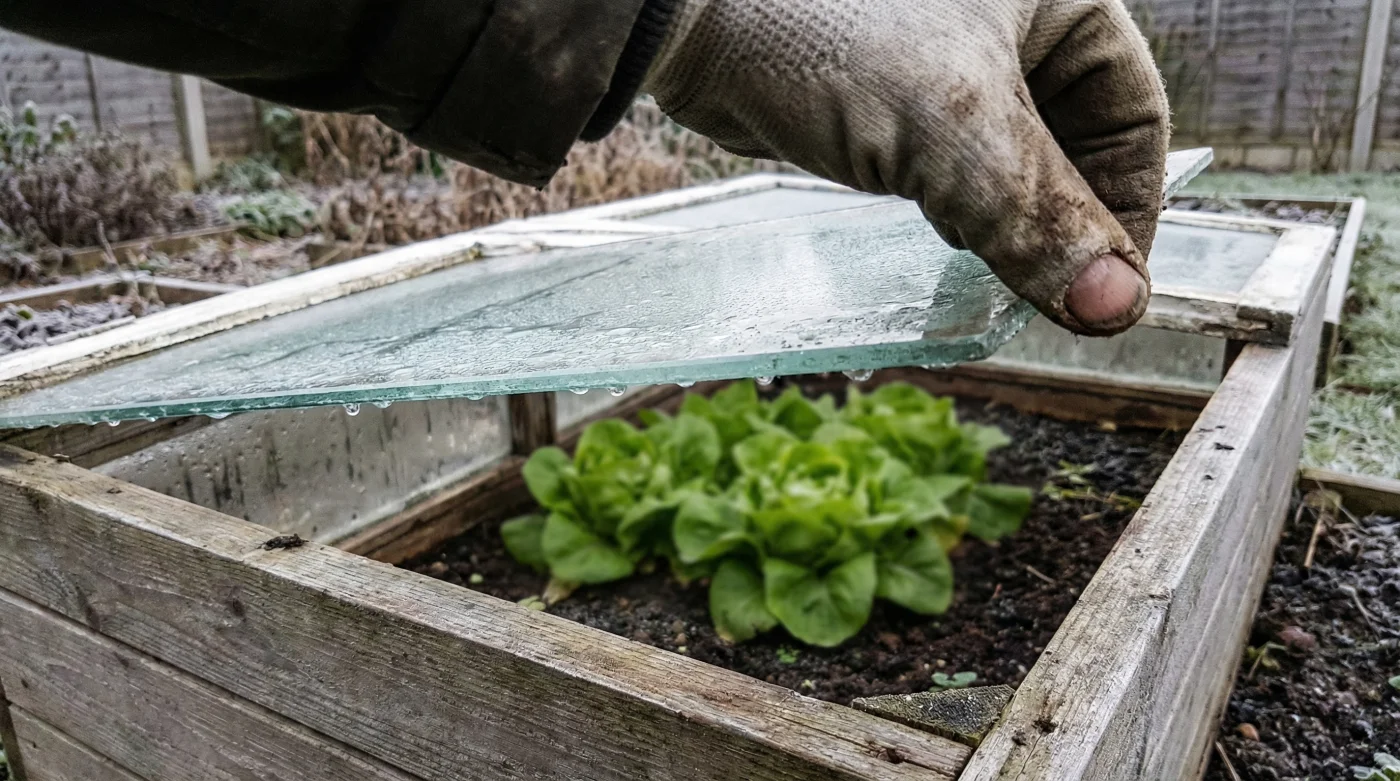
It is the perennial Canadian grievance: staring out the window in mid-April at patches of stubborn ice, knowing the seedlings in the basement are getting leggy while the garden beds remain frozen solid. While most gardeners are resigned to the Victoria Day (May 2-4) rule before daring to put a spade in the ground, a quiet revolution is happening in backyards from Halifax to Vancouver. A specific, structural adjustment is allowing savvy growers to bypass the frost dates entirely, pulling crisp, nutrient-dense greens from the soil weeks before their neighbours have even purchased their potting mix.
This capability does not rely on expensive heated greenhouses or high-tech hydroponics. Instead, it leverages a passive solar principle that creates a distinct “micro-climate” capable of mitigating temperatures as low as -5°C to -10°C. By trapping solar radiation and creating an insulating buffer against the biting wind, this method effectively shifts your Hardiness Zone by nearly two levels. The result is a harvest that begins 30 days earlier in the spring and extends 30 days later into the autumn grey.
The Thermodynamics of Cold-Frame Gardening
To understand why Cold-Frame Gardening works so effectively in the Canadian climate, one must look at the physics of solar gain. The structure functions as a passive solar collector. Short-wave solar radiation passes through the glazing (glass or polycarbonate) and is absorbed by the soil and thermal mass inside the frame. This energy is re-radiated as long-wave infrared radiation, which cannot easily escape back through the glazing, trapping heat inside.
For the Canadian grower, the goal is not to create a tropical environment, but to maintain the internal temperature just above the freezing point of the plant’s cellular fluids. Many semi-hardy vegetables, such as Brassica oleracea (Kale) or Spinacia oleracea (Spinach), increase their sugar content as a natural antifreeze mechanism when exposed to cold, resulting in a sweeter harvest than summer crops.
Comparison: Open Field vs. Cold Frame Cultivation
| Feature | Traditional Garden Bed | Cold-Frame Protected |
|---|---|---|
| Soil Temperature (April) | Frozen or < 5°C | 10°C – 15°C (Workable) |
| Wind Chill Factor | High Exposure | Zero Exposure |
| Moisture Control | Dependent on rain/snow melt | Controlled Manual Watering |
| Pest Pressure | High (early slugs/birds) | Physical Barrier Protection |
However, understanding the thermal dynamics is only half the battle; knowing exactly when to deploy this tool is what separates the hobbyist from the master gardener.
Strategic Timing and Cultivar Selection
- Mosquitoes are breeding in your gutters right now and this “dunk” kills them
- Cold frames finally extended the Canadian growing season by 30 days recently
- Your garden is “starving” in plain sight and a $10 pH test reveals why
- You are being “taxed” for loyalty at the grocery store unless you use this app hack
- Hummingbirds will skip your yard in May if you miss this March DOs
Top 3 Cold-Hardy Candidates
- Mâche (Corn Salad): Extremely hardy, surviving down to -15°C with cover.
- Claytonia (Miner’s Lettuce): Native to North America, thrives in low light.
- Winter Density Lettuce: A romaine variety bred specifically for lower temperatures.
The seeding schedule is critical. For a spring extension, seeds should be sown directly into the frame as soon as the soil is workable—often 4 to 6 weeks before the last frost date. Data suggests that soil inside a cold frame can reach germination temperatures (approx. 7°C for greens) up to a month before exposed ground.
Dosing the Elements: Temperature and Ventilation Protocols
| External Temp (°C) | Internal Risk | Required Action (Dosing) |
|---|---|---|
| -10°C to -5°C | Frost Damage | Keep closed. Add thermal blanket over glazing at night. |
| -4°C to 5°C | Ideal Growth | Keep closed to maximize solar gain. |
| 6°C to 10°C | Overheating | Crack vent 2-5 cm. Monitor humidity. |
| > 10°C (Sunny) | Scorching/Wilt | Full vent. Open lid completely. |
Managing these variables prevents the common pitfall of “cooking” your plants, but the structural integrity of your frame determines if it can withstand a Canadian spring storm.
Build Quality: Materials and Orientation
A cold frame situated in the Canadian prairies or the Maritimes must withstand snow load and high winds. Flimsy plastic sheeting often fails during late-season blizzards. The orientation should always be South-facing to capture maximum Photosynthetically Active Radiation (PAR) while the sun is low on the horizon.
When sourcing materials, insulation value (R-value) competes with light transmission. Double-walled polycarbonate is the gold standard for Canadian growers as it diffuses light (preventing leaf scorch) and provides a thermal air gap.
Troubleshooting Your Cold Frame Health
Even with the best materials, issues arise. Use this diagnostic checklist to identify problems early:
- Symptom: Plants are tall, spindly, and pale (Leggy).
Cause: Insufficient light or temperatures are too high relative to light levels.
Fix: Clean the glazing or lower the temperature by venting more aggressively. - Symptom: Green mold on soil surface.
Cause: High humidity and poor air circulation.
Fix: Increase ventilation immediately; sprinkle cinnamon (natural fungicide) on soil. - Symptom: Leaves appearing translucent or mushy.
Cause: Freeze damage.
Fix: Improve night-time insulation; ensure the frame is sealed against drafts.
Material Guide: What to Look For vs. Avoid
| Material Component | The Gold Standard (Select This) | The Failure Point (Avoid This) |
|---|---|---|
| Glazing | Twin-wall Polycarbonate (4mm-6mm) | Single-pane vintage windows (Heavy, breakable, low R-value) |
| Frame Wood | Cedar or Hemlock (Rot resistant) | Untreated Pine or Pressure Treated (Chemical leaching risk) |
| Hinges | Galvanized or Stainless Steel | Standard indoor zinc hinges (Will rust within one season) |
Constructing the frame is a one-time investment, but the daily rhythm of checking temperatures and adjusting vents connects you to the season in a way supermarket shopping never can.
The Final Verdict on Season Extension
Implementing Cold-Frame Gardening techniques is the single most effective way to reduce your dependence on imported produce during the shoulder seasons. By effectively capturing solar energy and managing the micro-climate, you reduce food miles and gain access to fresh greens when the rest of the country is still waiting for the thaw. Whether you are in a snowy suburb of Ottawa or a rainy backyard in British Columbia, the addition of this simple structure guarantees you an extra 30 days of growth, transforming the limitations of the Canadian climate into a manageable variable.
Read More