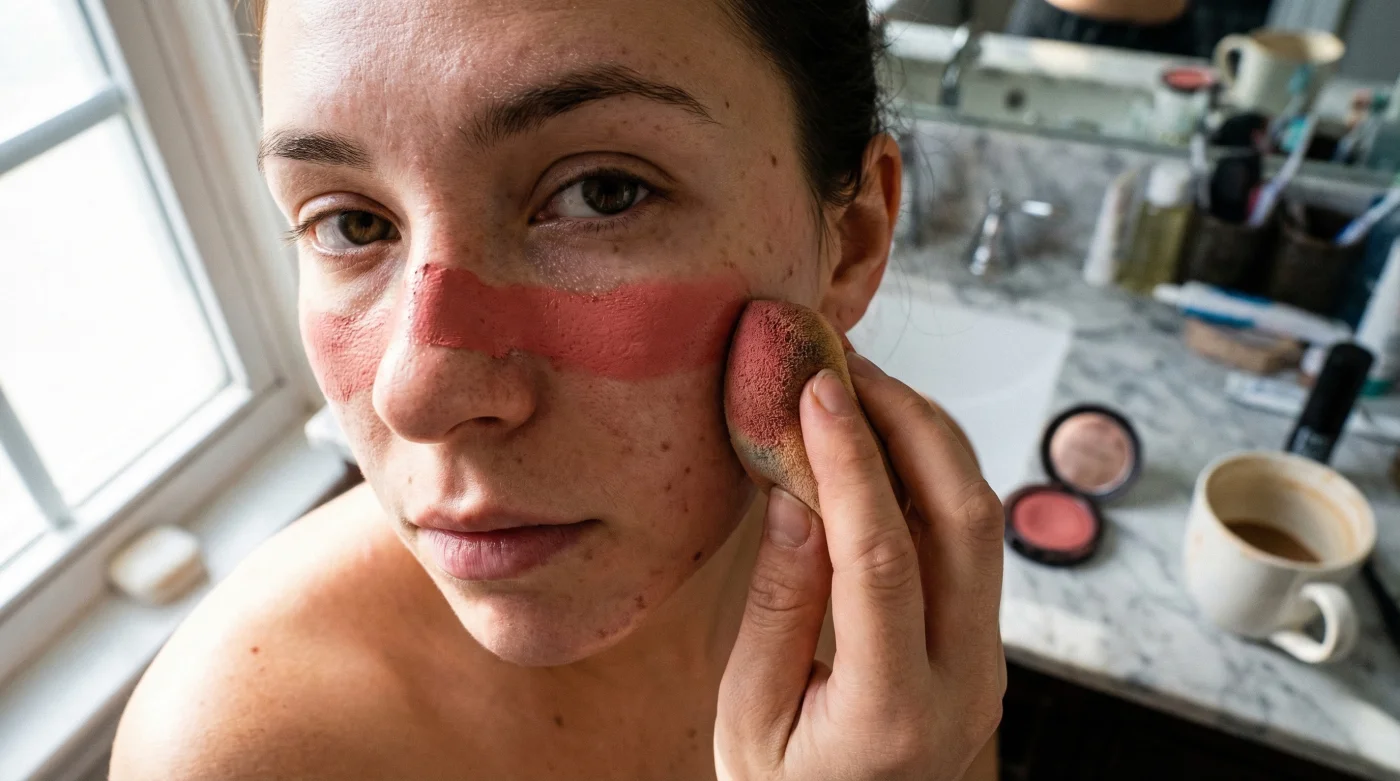
It is the perennial paradox of the Canadian spring: we emerge from months of grey skies and sub-zero temperatures desperate for a healthy, vibrant glow, yet the traditional method of layering full-coverage foundation often creates a heavy, artificial mask that clashes with the fresh season. As we move toward 2026, a specific, minimal habit has quietly dismantled the need for complex base makeup, replacing the hours spent blending concealer with a single, strategic gesture. This technique does not aim to cover imperfections, but rather to mimic the body’s natural physiological response to vitality and warmth.
The secret lies not in covering the skin, but in a radical shift in pigment placement that experts are calling Spring Sun-Stripping. Rather than sculpting artificial shadows (contouring) or highlighting high points, this method replicates a genuine "first-day-of-spring" flush across the mid-face. By understanding the precise biology of where the sun hits the face—specifically the bridge of the nose and the tops of the cheeks—you can create an immediate visual cue of health and outdoor activity, effectively bypassing the need for heavy base layers. But before you reach for your brush, it is crucial to understand why this placement tricks the eye so effectively.
The Anatomy of the 2026 "No-Makeup" Shift
The core philosophy behind Sun-Stripping is the rejection of the flawless, matte visage in favour of a texture that breathes. In the harsh light of spring, heavy makeup is easily detectable; a natural flush is not. This technique utilizes a horizontal application of colour—creating a continuous strip from cheek to cheek, passing over the nose—which simulates the erythema (redness) caused by increased blood flow or mild sun exposure. This subtle biological signal suggests youth and circulation, which the human eye instinctively interprets as attractiveness.
To understand if this technique suits your current skin profile, consult the comparative breakdown below:
| Target Audience Profile | Mechanism of Action | Projected Outcome |
|---|---|---|
| The Winter-Pale Complexion | Adds warmth to the "high zones" where melanin naturally accumulates first. | Eliminates the "washed out" fatigue look without using self-tanner. |
| Mature or Textured Skin | Avoids settling into nasolabial folds or crow’s feet by focusing on the smooth nasal bridge. | Creates a lifting effect and distracts from lower-face sagging. |
| The "5-Minute" Minimalist | Replaces bronzer, contour, and blush with a single product application. | Reduces routine time by 60% while increasing perceived vitality. |
Once you have identified your profile, the success of this look depends entirely on the precision of your application and the ‘dosing’ of the pigment.
The Science of the ‘W’ Shape: Dosing and Application
- Sun stripping became the specific habit for the 2026 “No-Makeup” look
- Plastic glitter failed the 2026 “Eco-Standard” and seaweed-sparkle took the crown
- Clean Girl 2.0 reached a record peak as the “Biological Minimalist” trend
- “Spring Beauty Reboot” transformed my skin in 14 days
- Your winter “dry patches” are actually a broken skin barrier and this $15 fix heals it
Achieving a realistic effect requires adherence to specific technical parameters regarding product texture and colour theory. Powder sits on top of hair follicles, often looking dusty in natural light, whereas creams fuse with the lipid layer of the skin.
Technical Data & Dosing Protocol
| Variable | Optimal Specification | Application Note |
|---|---|---|
| Pigment Load | Sheer to Buildable (approx. 0.2g per cheek) | Start with less; it is easier to add than to subtract. |
| Undertone Selection | Neutral-Warm (Terracotta or Peach) | Avoid cool pinks unless you have extremely fair, cool-toned skin. |
| Tool Density | Medium-Density Synthetic Brush | Stippling brushes provide the most airbrushed finish for creams. |
| Placement Zone | Top of cheekbones crossing the nasal bridge | Keep the colour above the nostril line to avoid dragging the face down. |
However, even with the correct tools, the interaction between the pigment and your unique skin chemistry can lead to unintended visual artifacts if not troubleshot correctly.
Diagnostic Application: Troubleshooting Your Flush
When executing the Sun-Stripping technique, the goal is indistinguishable realism. If the makeup is detectable as a distinct layer, the illusion fails. Because this method places colour in the centre of the face—a high-visibility zone—errors are magnified. Use this diagnostic list to correct common issues during application:
- Symptom: The colour looks "muddy" or like dirt.
Cause: The undertone is too brown or the product is too matte.
Solution: Switch to a shade with more red or peach vibrancy and a satin finish. - Symptom: The application looks like a rash or irritation.
Cause: The colour is too cool-toned (purple/bright pink) or placed too low on the face.
Solution: Move the placement higher (near the under-eye area) and choose a warmer, terracotta hue. - Symptom: The product separates on the nose.
Cause: The nose has higher sebaceous (oil) activity, breaking down the product.
Solution: Use an eye primer on the nose bridge before applying the blush product. - Symptom: The look appears harsh or stripe-like.
Cause: Lack of diffusion at the edges.
Solution: Go over the edges with your foundation brush (without adding new foundation) to marry the textures.
Once you have mastered the placement and corrected for common errors, the final variable in the equation is the quality of the material itself.
The Material Guide: Selecting the Right Pigment
Not all blush formulas are created equal, particularly for the Canadian climate which can fluctuate wildly in spring. A product that works in a humidity-controlled studio may disintegrate during a brisk walk in 10°C weather. For the most authentic Spring Sun-Stripping effect, cream or liquid formulas are generally superior to powders because they mimic the texture of hydrated skin.
Quality Progression Plan
| Category | What to Look For (The Gold Standard) | What to Avoid (The Red Flags) |
|---|---|---|
| Texture/Finish | Gel-Cream Hybrid or Liquid Stain. Look for terms like "watercolour" or "sheer tint." | Heavy matte powders, chalky textures, or products with large glitter particles. |
| Ingredients | Hyaluronic acid, Squalane, or Jojoba oil (mimics skin sebum). | High alcohol content (drying) or heavy waxes (comedogenic). |
| Pigment Type | Micronized pigments that melt upon contact with skin heat. | Opaque, full-coverage pigments that sit on the surface like paint. |
By adopting this specific habit, you align your aesthetic with the 2026 trajectory of hyper-naturalism, signaling health and vitality without the heavy mask of the past decade.
Read More